Ancient news stories

The identity of a mysterious artifact found in Devon almost 160 years ago has finally been revealed. New research has identified it as a pendant made from the tooth of a gray seal, which would have been worn by an ancient human more than 15,000 years ago. The findings of the study are published in the journal Quaternary Science Reviews.

As long as 220,000 years ago—far earlier than previously thought—people quarried rocks for their tools in places they specifically sought out. The study is published in the journal Nature Communications.

Between 2 million and 3 million years ago, humans appeared in Africa — but identifying them in the fossil record is turning out to be surprisingly difficult.

For decades, archaeologists have debated when the hominin ancestors of humans first started eating megafauna—animals weighing more than 1,000kg. In a new study published in eLife, our team of archaeologists studying the evolution of the earliest humans in Africa has identified one of the earliest cases of elephant butchery.

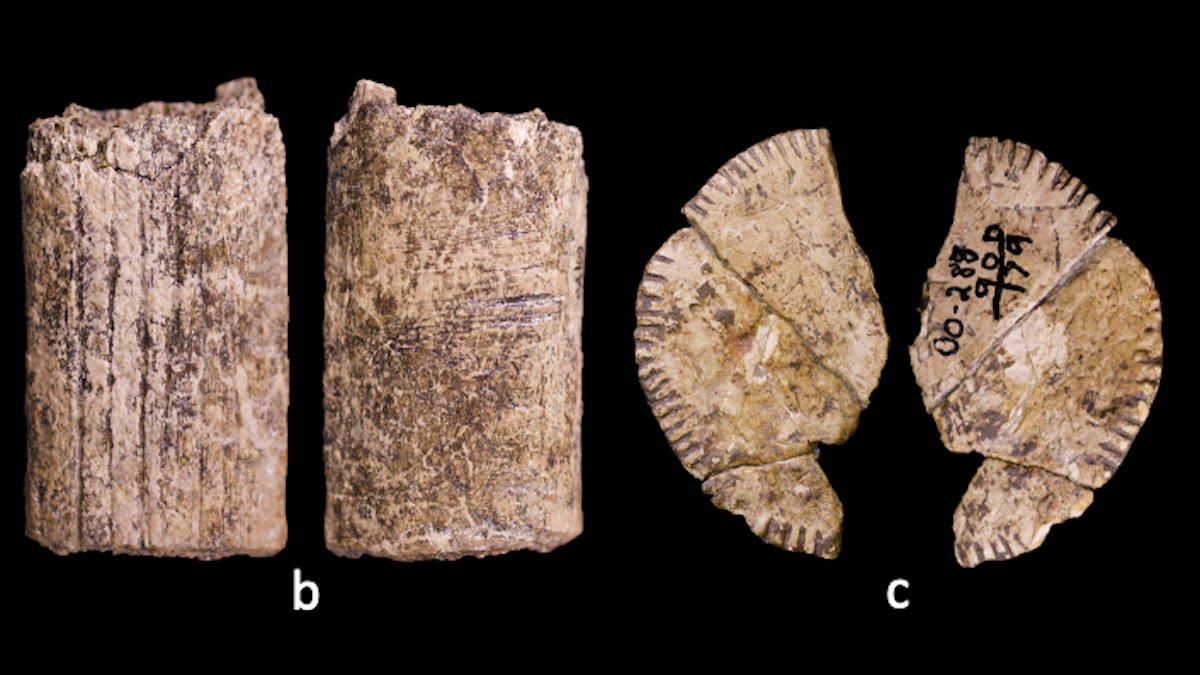
A new study may have identified the oldest known dice, dating back more than 12,000 years. The research was published in the journal American Antiquity.

The discovery of a 2,400-year-old metalworking workshop in Senegal provides new insights into the history of iron production in Africa. Despite decades of archaeological research, the origins of iron metallurgy in sub-Saharan Africa remain largely unclear. Yet this technological revolution—crucial for producing efficient agricultural tools—emerged there at least 3,000 years ago. The discovery, published in African Archaeological Review, provides new insights into late prehistoric metallurgical practices in Africa.

With artificial intelligence (AI) as an essential tool, San Diego State University researchers have discovered surprising similarities among ancient writing systems from Africa and the Caucasus region of Eurasia. Their study suggests that the Armenian alphabet may be more closely related in structure to the ancient Ethiopic writing system than linguists and historians previously thought. The paper is published in the journal Digital Scholarship in the Humanities.

A strange chunk of metal that lay hidden in the soil for thousands of years may shed new light on one of the most mysterious cultures in ancient China. The approximately 3,000-year-old Sanxingdui artifact appears to be an axe-like object made of iron – which likely came to Earth from space in the form of a meteorite.
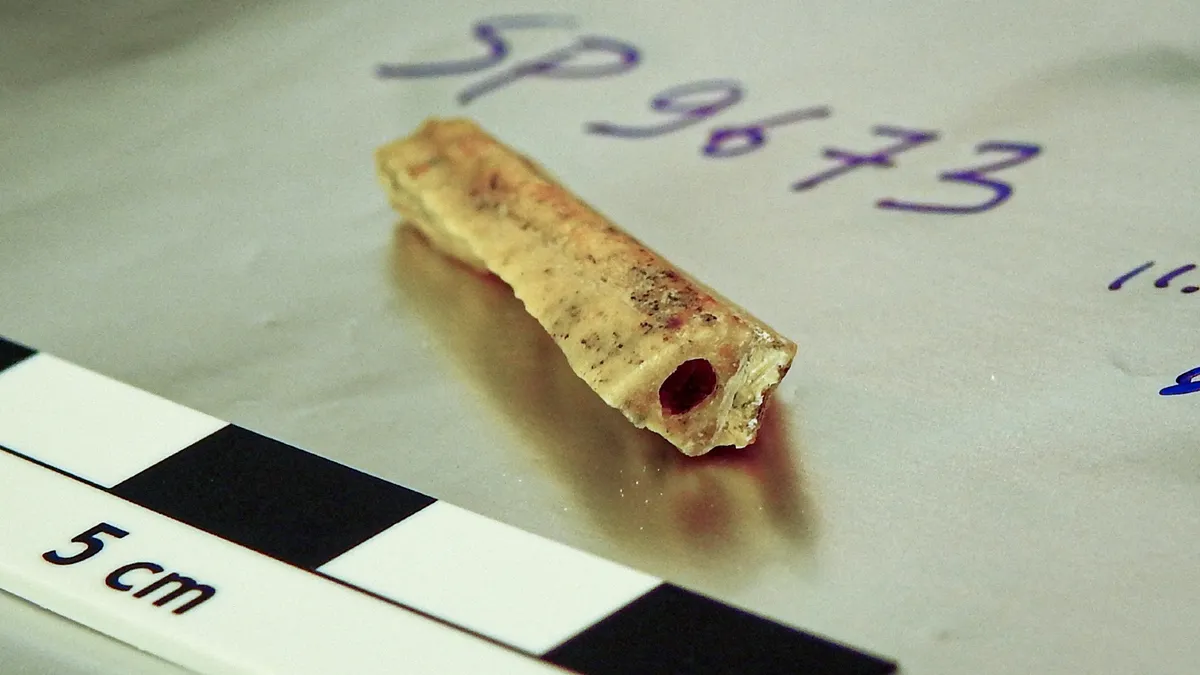
Two Neanderthals present at the same cave site 10 millennia apart were distant relatives, a tiny 110,000-year-old bone fragment from the Altai Mountains in Siberia reveals. The fragment has also produced the fourth full genome of a Neanderthal to date, shedding light on how small and isolated Neanderthals were long before they disappeared around 40,000 years ago. The study was published Monday (March 23) in the journal PNAS.

For decades, the massive stone circles of Rujm el-Hiri in the Golan Heights were considered a singular, mysterious anomaly—often dubbed “Israel’s Stonehenge.” However, new research led by Ben-Gurion University of the Negev (BGU) is rewriting that narrative…The study, published in the journal PLOS One, identified at least 28 additional large stone circles in the surrounding region.

The ancestor of apes was long thought to come from East Africa, but newly discovered fossils in Egypt may prompt a rethink. The discovery of an enigmatic ape’s 18-million-year-old fossils in Egypt hints that the ancestors of all living apes, a group that includes humans, may have originated in northeast Africa or Arabia, a new study finds. The study was published March 26 in the journal Science.

Archaeologists in Mexico have unearthed a square stone altar used for human sacrifices during the Toltec Empire more than 1,000 years ago.

The discovery of the oldest ever dog DNA suggests they have been our best friends for nearly 16,000 years – 5,000 years earlier than had previously been thought, new research said Wednesday… Two new studies published in the journal Nature sequenced the genomes from archaeological remains, shedding light on the elusive origins of our furry friends.

A study incorporating new DNA data and archaeological evidence has shown that the last Neanderthals in Europe experienced a major population turnover, resulting in little diversity in their gene pool prior to their disappearance some 40,000 years ago. The study has been published in the journal PNAS.

A paper published in the journal Quaternary International reveals a distinctive technological behavior at level TD10.2-BB of Gran Dolina (Atapuerca, Burgos), characterized by the almost exclusive use of local chert and linked to one of the earliest pieces of evidence of communal hunting in the human evolutionary record, dated to around 400,000 years ago.
War God: Night of Sorrows
Get your copy of War God: Vol III


Magicians of the Gods
Get your copy of Magicians of the Gods: