Humans news stories

The authors add, “Our study shows how, 400,000 years ago in the area of Rome, human groups were able to exploit an extraordinary resource like the elephant—not only for food, but also by transforming its bones into tools. The study was published on October 8, 2025, in the open-access journal PLOS One.

People who regularly use ayahuasca, a traditional Amazonian psychedelic drink, may have a fundamentally different way of relating to death. A new study published in the journal Psychopharmacology indicates that long-term ayahuasca users tend to show less fear, anxiety, and avoidance around death—and instead exhibit more acceptance. These effects appear to be driven not by spiritual beliefs or personality traits, but by a psychological attitude known as “impermanence acceptance.”

Studying nearly 1,000 moai statues, Binghamton University Professor of Anthropology Carl Lipo and the University of Arizona’s Terry Hunt found that the people of Rapa Nui likely used rope and “walked” the giant statues in a zig-zag motion along carefully designed roads. The paper is published in the Journal of Archaeological Science.

In experiments, their newly created model was able to directly communicate with a biological neuron in a remarkably lifelike, ‘quiet’ way. The study was published in Nature Communications.

Researchers Magnus Pharao Hansen and Christopher Helmke from the University of Copenhagen have presented a possible solution to the mystery in an article published in Current Anthropology.
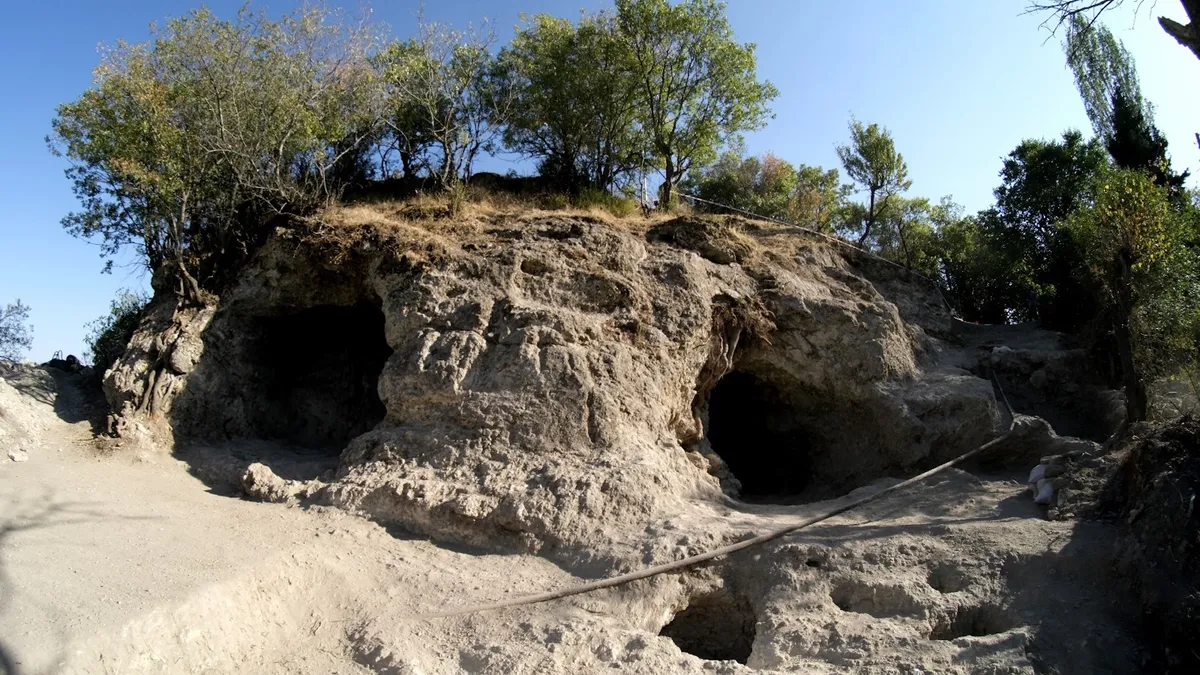
The temple may have been dedicated to a mother goddess worshipped by many cultures, including the Greeks and the Romans.

A natural psychedelic may do more than alter perception. A new study found that at sub-hallucinogenic doses, DMT shielded the brain from stroke damage in animal models, reducing inflammation, preserving the blood-brain barrier, and speeding recovery. The study was published in the journal Science Advances.
Image by ManuelSchottdorf (Wiki Commons)

An international group of researchers have discovered that birds on opposite sides of the planet produce almost identical ‘whining’ calls when beset by parasitic birds. The findings from this study have been published in Nature Ecology & Evolution.

In a recent study by Dr. Sawada and his colleagues published in Scientific Reports, 183 human bones were surveyed, of which 52 were found to be worked human bones, all of which belong to the Neolithic Liangzhu culture.

The finding “suggests that humans inhabited the land bridge region soon after it was exposed,” the researchers wrote in the study, which was published in the September issue of the journal Quaternary Science Advances.

he results of the study “Dynamics of early agriculture—multivariate analysis of changes in crop cultivation and farming practices in the Rhineland (Germany) between the 6th and early 4th millennium BCE” have been published in the Journal of Archaeological Science.
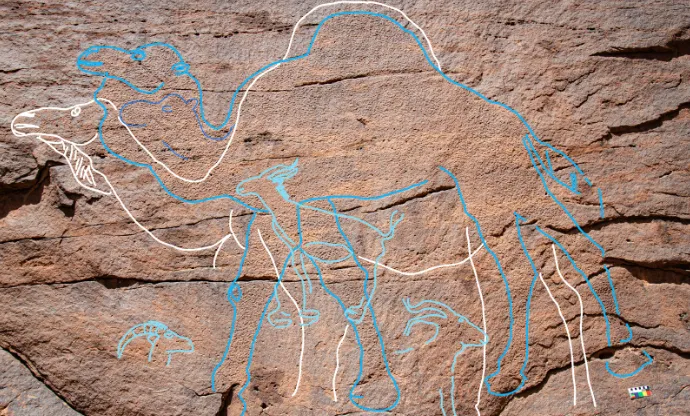
Archaeologists in Saudi Arabia have discovered hundreds of rock art engravings that were carved by humans more than 12,000 years ago. The study was published Tuesday (Sept. 30) in the journal Nature Communications.

New research, published in the journal Icarus, just revealed 63 newly discovered young asteroid families less than around 10 million years old. While many of these young families are likely to exist in our solar system, only 43 had been previously documented.

A new study published in The International Journal for the Psychology of Religion has found that adults who say they remember past lives tend to experience more symptoms of mental health issues, including anxiety and posttraumatic stress, than the general population.

This marks the first time in the world that nets from over 6,000 years ago have been digitally and physically resurrected in such detail. The research is published in the Journal of Archaeological Science.
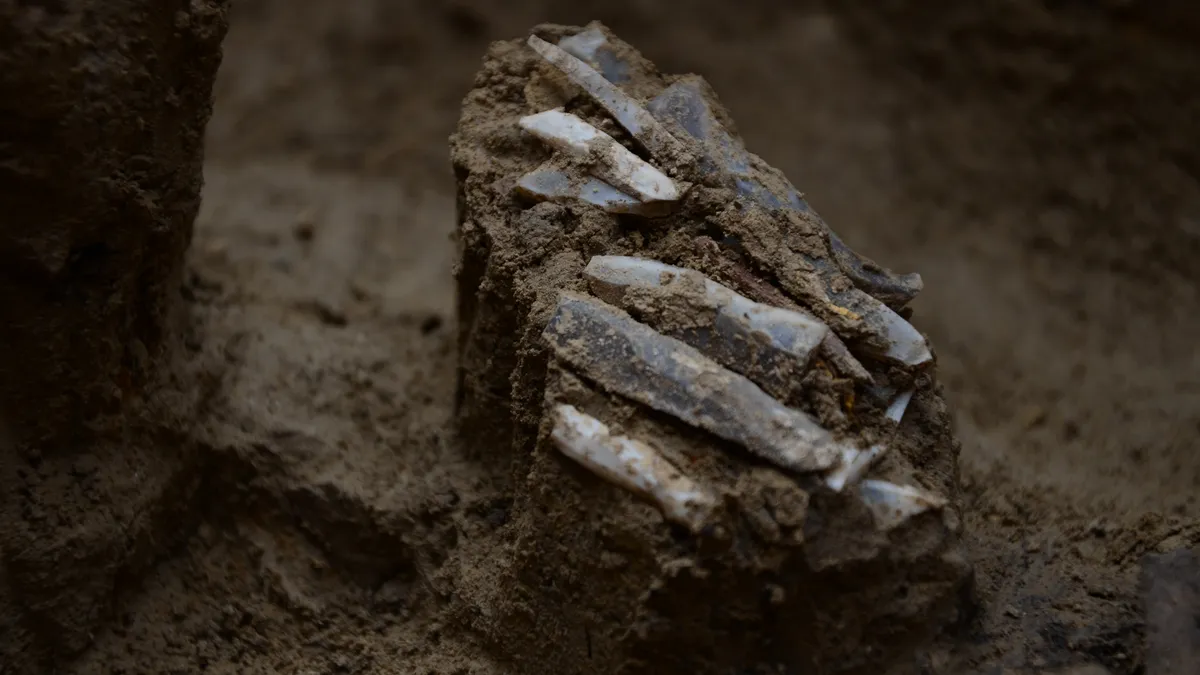
Archaeologists have found an extraordinary cluster of Stone Age artifacts that may have been the personal gear of a single prehistoric individual. The study was published Aug. 13 in the Journal of Paleolithic Archaeology.
War God: Night of Sorrows
Get your copy of War God: Vol III
Magicians of the Gods
Get your copy of Magicians of the Gods: