Misc. news stories
Is time real, or an illusion? The best answer may be neither: Both physics and philosophy suggest that time is a projection of the mind onto a timeless reality.

A new long-term follow-up study has found that a significant majority of individuals treated for major depressive disorder with psilocybin-assisted therapy were still in remission from their depression five years later. The findings were published in the Journal of Psychedelic Studies.
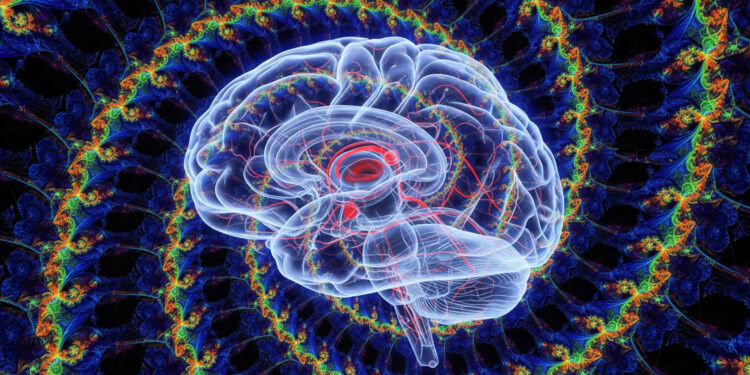
Long-term users of ayahuasca may process emotional experiences differently than those who do not use the substance, according to a new brain imaging study published in the Journal of Magnetic Resonance Imaging. The findings indicate that regular ritual use of the psychedelic brew is linked to changes in brain activity patterns and elevated psychological resilience, offering preliminary evidence that its long-term effects may extend beyond acute experiences.
A comprehensive peer-reviewed invited review published in Psychedelics by Dr. Kenji Hashimoto and colleagues (Dr. Mingming Zhao and Dr. Jianjun Yang) synthesizes the evolving landscape of MDMA-assisted psychotherapy, examining robust clinical evidence in treatment-resistant posttraumatic stress disorder while identifying promising applications in autism spectrum disorder, eating disorders, and existential distress.
People who regularly use ayahuasca, a traditional Amazonian psychedelic drink, may have a fundamentally different way of relating to death. A new study published in the journal Psychopharmacology indicates that long-term ayahuasca users tend to show less fear, anxiety, and avoidance around death—and instead exhibit more acceptance. These effects appear to be driven not by spiritual beliefs or personality traits, but by a psychological attitude known as “impermanence acceptance.”

A natural psychedelic may do more than alter perception. A new study found that at sub-hallucinogenic doses, DMT shielded the brain from stroke damage in animal models, reducing inflammation, preserving the blood-brain barrier, and speeding recovery. The study was published in the journal Science Advances.
Image by ManuelSchottdorf (Wiki Commons)

A new study published in The International Journal for the Psychology of Religion has found that adults who say they remember past lives tend to experience more symptoms of mental health issues, including anxiety and posttraumatic stress, than the general population.
A new long-term follow-up study has found that a significant majority of individuals treated for major depressive disorder with psilocybin-assisted therapy were still in remission from their depression five years later. The findings were published in the Journal of Psychedelic Studies.

A single dose of LSD eased anxiety symptoms for many folks and the benefits lasted up to three months, a new study reports. The findings were published Sept. 4 in the Journal of the American Medical Association (JAMA).

Cultural ideas are inextricably entwined with the people who do science, the questions they ask, the assumptions they hold and the conclusions they land on.

Classical psychedelics act on a surprisingly broad range of brain receptors, not just the serotonin receptor long associated with their hallucinogenic effects, according to new research published in the journal Neuron.

Results showed that a single dose of psilocybin had robust antidepressant effects in these individuals. Fifty percent demonstrated sustained depression reduction, while 43% experienced a sustained reduction in anxiety. The research was published in the journal Cancer.

Have you ever wondered why people who nearly die often describe speeding toward supernatural light, or seeing their life flash before their eyes? You may have also heard about the powerful psychedelic dimethyltryptamine (DMT), a class A illegal drug in the UK, and how it might generate the so-called near-death experiences. In a recent study, I compared both types of experience and found they share fascinating similarities – but also critical differences.

As her memory faded from Alzheimer’s disease in her late 50s, Tammy Maida began to lose track of her life. Car keys, eyeglasses and her purse disappeared multiple times a day.

New rules banning recreational cannabis use have put Thailand’s $1bn cannabis industry in limbo, with some stores fearing they will have to close

A new study has found that a psychedelic formulation inspired by ayahuasca can significantly alter how the brain processes faces—especially one’s own. The research shows that the compound changes both early visual perception and later self-referential processing, effectively weakening the brain’s usual distinction between self and others.
War God: Night of Sorrows
Get your copy of War God: Vol III


Magicians of the Gods
Get your copy of Magicians of the Gods: