Humans news stories

A new study sheds light on how prehistoric hunter-gatherer populations in Europe coped with climate changes over 12,000 years ago…The study has been published in PLOS One under the title “Large scale and regional demographic responses to climatic changesin Europe during the Final Palaeolithic.”

Today, the Sahara Desert is a sea of sand, but 7000 years ago it was a lush savanna full of hippos, crocodiles, elephants, and giraffes. During a humid, monsoon-heavy interval that spanned more than 5 millennia, people hunted, fished, and eventually herded livestock in a landscape now covered by shifting dunes. The findings are reported in a paper this week in Nature.

According to a report led by planetary astronomer Andrew Rivkin of Johns Hopkins University, 2024 YR4 has a small chance of smacking into the Moon when the asteroid next flies close to Earth in December 2032.

In a study just published in the Proceedings of the National Academy of Sciences, a team of international collaborators describe their discovery in China of the first complete example of a Middle Paleolithic technology previously seen only in Europe and the Middle East.

A team of Tel Aviv University researchers from the field of prehistoric archaeology has proposed an innovative hypothesis regarding an intriguing question: Why did ancient humans bring their young children to cave-painting sites—deep underground—through dark, meandering, hazardous passages? The paper is published in the journal Arts.

A new twin study published in Nature Communications provides evidence that how much people enjoy music is partly influenced by genetic factors. Researchers found that over half the variation in people’s sensitivity to musical pleasure can be traced back to genetic differences.
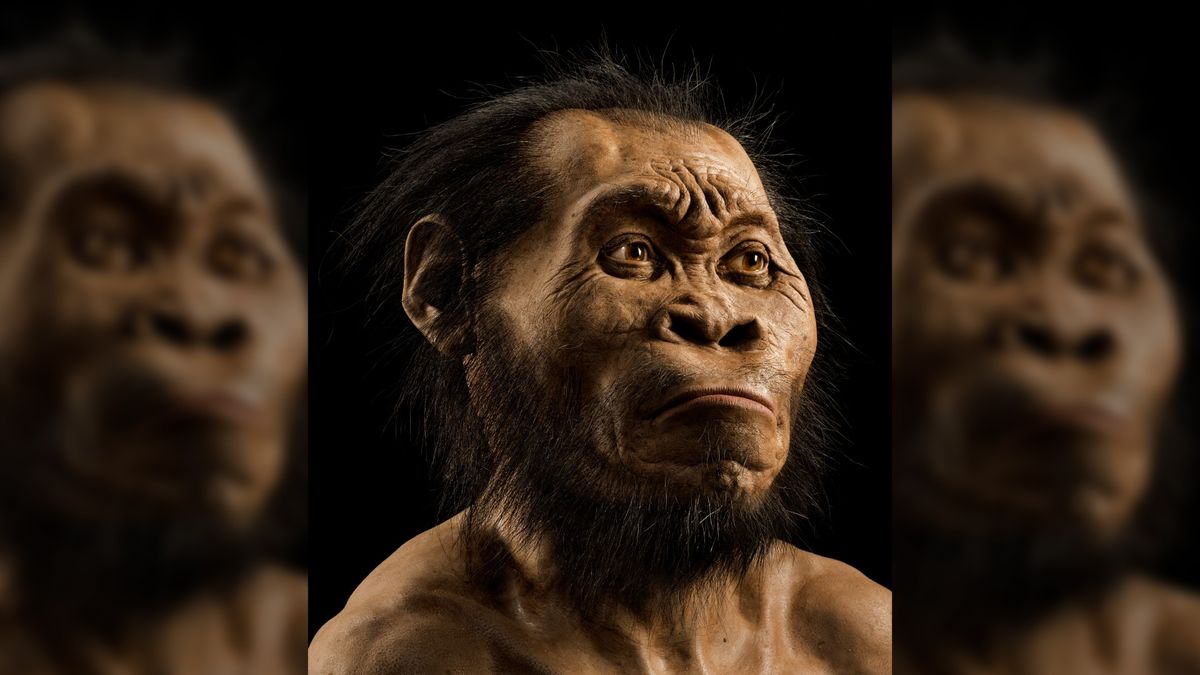
Controversial claim that Homo naledi buried its dead gets new proof from 2025 research study.
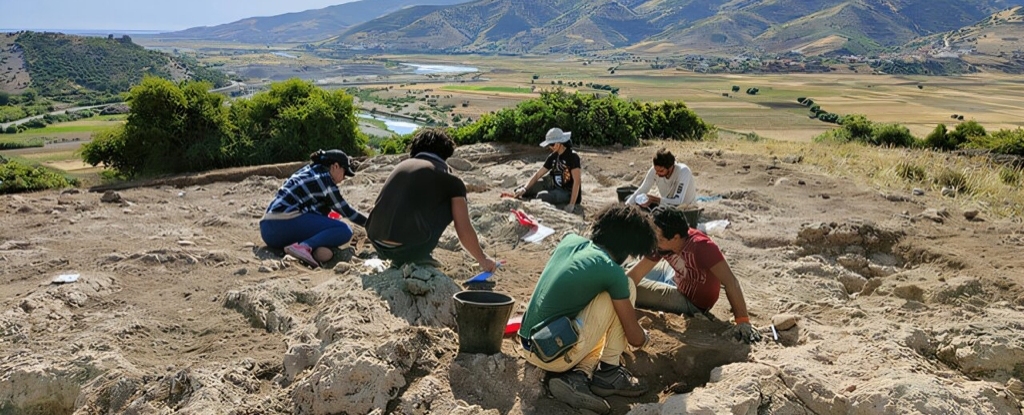
A new archaeological discovery at Kach Kouch in Morocco challenges the long-held belief that the Maghreb (north-west Africa) was an empty land before the arrival of the Phoenicians from the Middle East in around 800 BCE. It reveals a much richer and more complex history than previously thought.

Kwesia X grew up in south east London, surrounded by busy roads and tower blocks. When faced with tragedy and homelessness, she turned to nature to find peace. Now she’s working hard to bring the experience of the natural world to young people in the city, and they’re often amazed by the plants and creatures living in the concrete jungle. You can find her videos on her YouTube channel, City Girl in Nature.

A new brain imaging study has revealed that lysergic acid diethylamide (LSD) alters brain connectivity in ways that are notably different from methylenedioxyamphetamine (MDMA) and d-amphetamine…The research was published in Molecular Psychiatry.
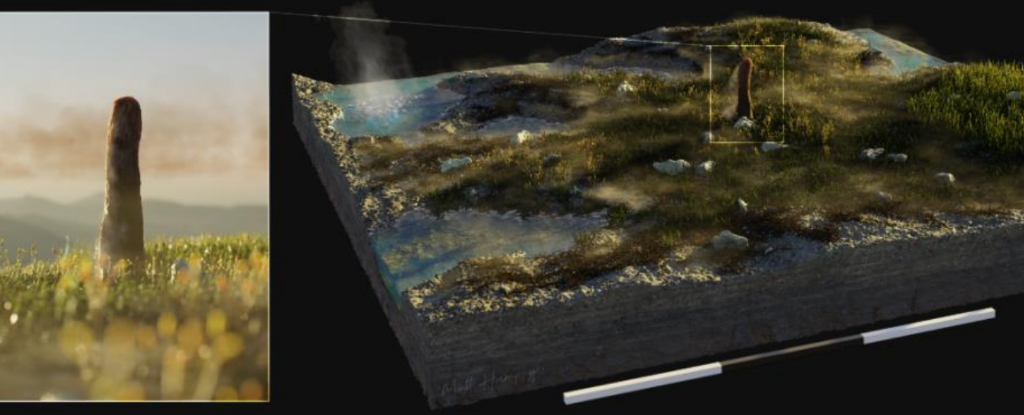
Researchers in the UK have now suggested in a report that is yet to be peer reviewed that there’s a very good reason these oddities don’t fit neatly on the tree of life – they belong to a branch all of their own, with no modern equivalent.

Colorado regulators are issuing licenses for providing psychedelic mushrooms and are planning to authorize the state’s first “healing centers,” where the mushrooms can be ingested under supervision, in late spring or early summer.

The mortar, pestle and cutting board in your kitchen are modern versions of manos and metates—ancient cooking implements found in archaeological sites around the world. The latest findings were published last month in the journal American Antiquity.
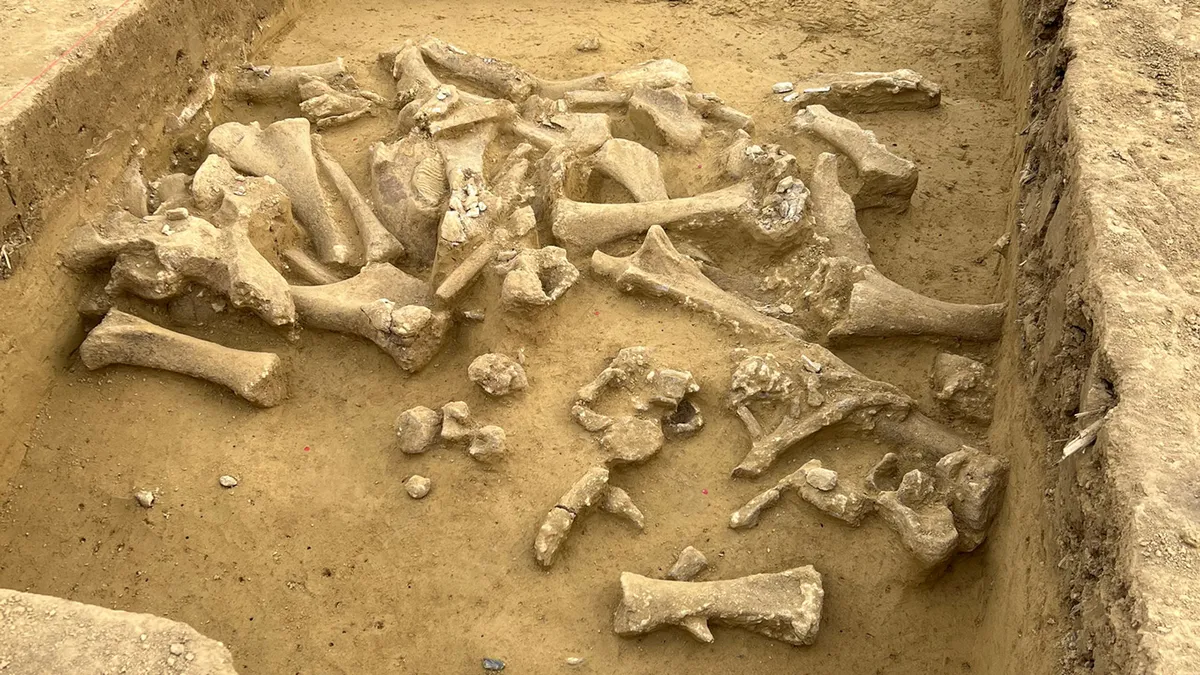
Archaeologists have discovered the remains of at least five woolly mammoths at a site in Austria. The remains suggest that ancient humans processed the mammoths’ ivory tusks 25,000 years ago.

The discovery of bone implements that are the oldest ever found, by far, casts light on human evolution. It shows that our hominin ancestors were able to think about and make this technology a lot earlier than anyone realised. The research was published in Nature.

In a recent case report published in Frontiers in Immunology, scientists in Canada described how an experimental treatment using a naturally derived substance called ibogaine appeared to improve symptoms and brain health in two individuals with multiple sclerosis.
War God: Night of Sorrows
Get your copy of War God: Vol III


Magicians of the Gods
Get your copy of Magicians of the Gods: