Humans news stories

A recent study published in the Journal of Affective Disorders has found that chronic opioid use may interfere with the brain’s ability to generate a placebo antidepressant response, but does not seem to reduce the effectiveness of ketamine.

Two thousand years before the Inca empire dominated the Andes, a lesser-known society known as the Chavín Phenomenon shared common art, architecture, and materials throughout modern-day Peru…one of their most powerful tools wasn’t farming. It was access to altered states of consciousness. That’s according to a new study that uncovered the earliest-known direct evidence of the use of psychoactive plants in the Peruvian Andes

“Theories are like toothbrushes,” it’s sometimes said. “Everybody has their own and nobody wants to use anybody else’s.”

Three scientists in the United Kingdom have modeled the impacts of an icy cometary collision with an Earth-like, tidally locked terrestrial planet…They found even relatively small cometary impacts can significantly disrupt the climate of a terrestrial (Earth-like) tidally locked planet, as well as deliver oxygen to the atmosphere and be a source of an exoplanet’s oceans. Their first of two papers on the topic was published in The Astrophysical Journal.

A small pilot study has found that psilocybin, the active compound in psychedelic mushrooms, may improve not only mood but also cognitive and motor symptoms in individuals with Parkinson’s disease. The results surprised the research team, who initially aimed only to evaluate the drug’s safety. Instead, participants experienced noticeable improvements that lasted for weeks following a single high-dose session.
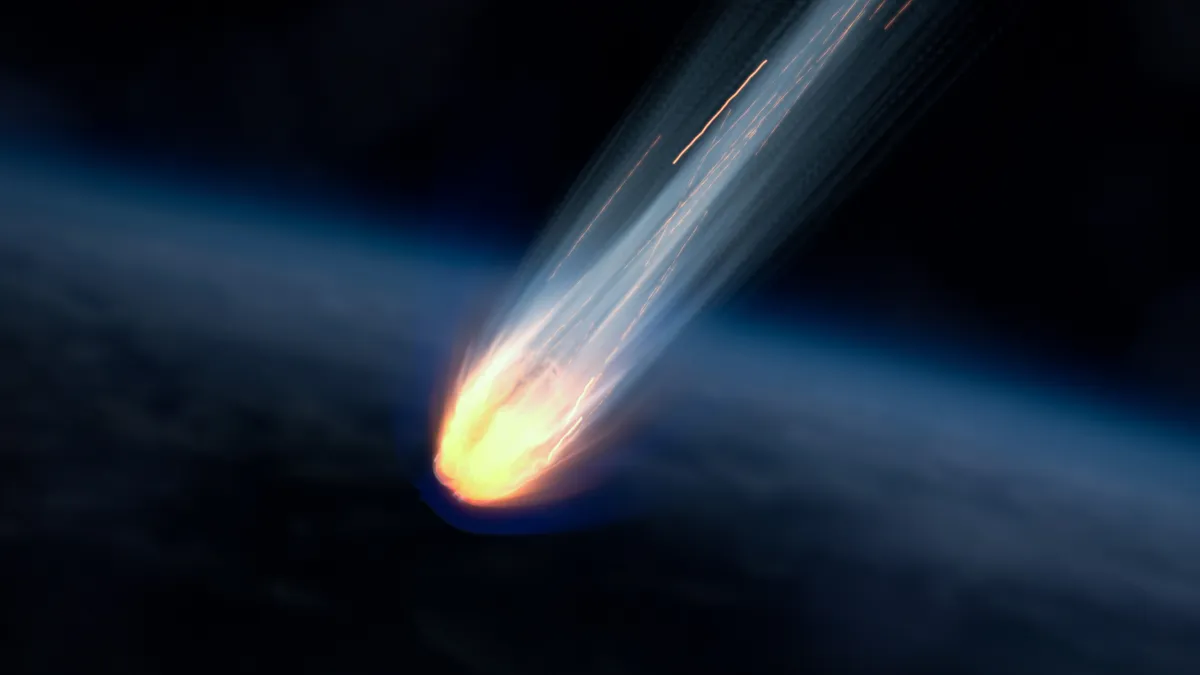
Researchers initially believed the unnamed meteorite hit Earth 1.17 billion years ago, creating the Stac Fada Member rock layer in northwestern Scotland. However, a new study has determined that the meteorite actually hit 990 million years ago — around 200 million years later than previously thought.

An interest in understanding the role that the Milky Way played in Egyptian culture and religion has led University of Portsmouth Associate Professor of Astrophysics, Dr. Or Graur to uncover what he thinks may be the ancient Egyptian visual depiction of the Milky Way. Combining astronomy with Egyptology…his findings are now published in the Journal of Astronomical History and Heritage.

The Picuris Pueblo, a sovereign nation in New Mexico, has oral histories and cultural traditions that link the tribe to the region of Chaco Canyon, one of the ancient centers of Pueblo culture and society. “We’ve been telling our stories as long as time immemorial,” said Picuris Lt. Gov. Craig Quanchello. But he said those traditions were often “overlooked and erased.” The findings, published Thursday in the journal Nature.
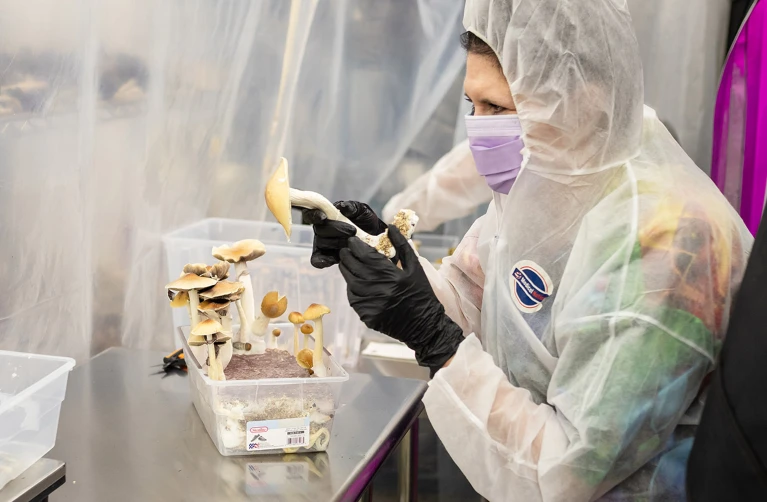
Physician Sue Sisley battles to study cannabis and psilocybin mushrooms for pain, addiction and PTSD.

For decades, scientists believed Vesta, one of the largest objects in our solar system’s asteroid belt, wasn’t just an asteroid and eventually concluded it was more like a planet with a crust, mantle and core. Now, Michigan State University has contributed to research that flips this notion on its head. The paper was published in Nature Astronomy.

A recent study conducted by Dr. Ana Paula Motta and her colleagues, in collaboration with the Balanggarra Aboriginal Corporation, has identified a new mid-to-late Holocene rock art style in Australia’s northeastern Kimberley region. The findings are published in the journal Australian Archaeology.
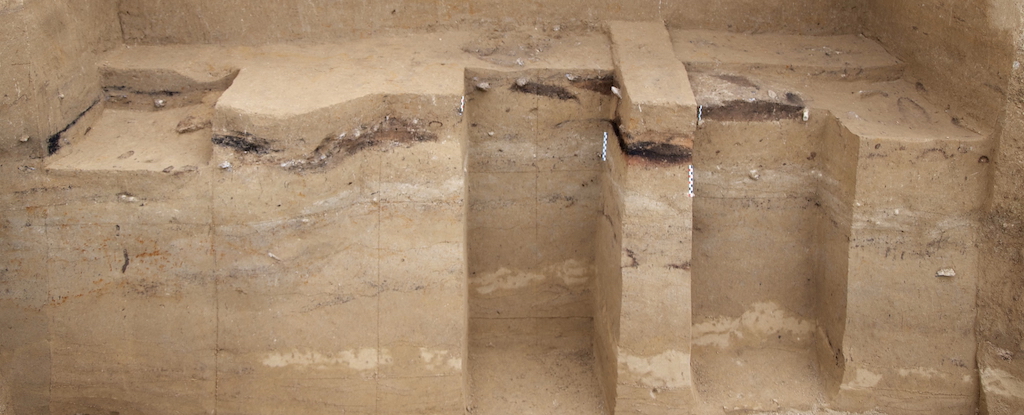
In a new study, researchers analyzed the remains of three ancient fireplaces found at an archaeological site in modern-day Ukraine, all of which are associated with human occupations at the site during the LGM. The study was published in Geoarchaeology.

Archaeologists in Peru said Thursday they found the 5,000-year-old remains of a noblewoman at the sacred city of Caral, revealing the important role played by women in the oldest center of civilization in the Americas.

Mass General Brigham researchers found that interactions between immune and brain cells drive fear responses, but treatment with psychedelics like MDMA and psilocybin may reverse these effects. Results are published in Nature.
Image by Matthew W. Johnson (Wiki Commons)

Following a recent study, Dr. Przemysław Bobrowski and his colleagues published new radiocarbon dates on Holocene (11,700 years ago to the present) sites located in the Tsakhiurtyn Hundi (Flint Valley) region of Mongolia. The work has been published in the journal Radiocarbon

A study led by Prof. Amos Frumkin from the Hebrew University of Jerusalem sheds new light on one of humanity’s most significant turning points: the Neolithic Revolution. Published in the Journal of Soils and Sediments, the study presents compelling evidence that catastrophic wildfires and soil erosion—driven by natural climate shifts—may have sparked the first widespread transition from hunting and gathering to farming in the southern Levant over 8,000 years ago.
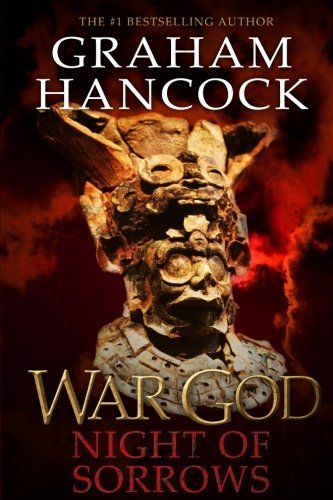
War God: Night of Sorrows
Get your copy of War God: Vol III
Magicians of the Gods
Get your copy of Magicians of the Gods: