
Tech news stories
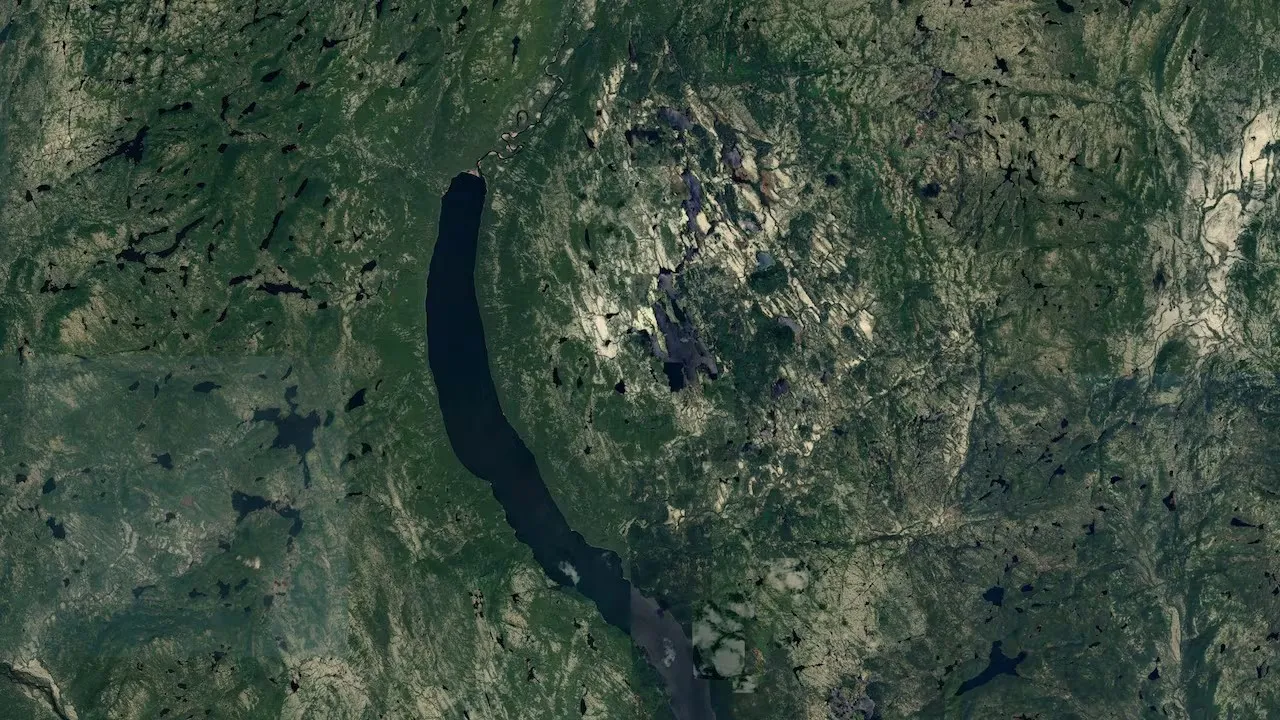
Joël Lapointe was using Google Maps to plan a camping trail through Quebec’s Côte-Nord region when he stumbled across a large indentation. Now, scientists have confirmed that the pit was indeed a meteor impact crater that dates back roughly 390 million years.

Researchers from the Universitat Autònoma de Barcelona (UAB) have created a database of carbon-14-dated samples that has aided in building a chronological framework of human occupation throughout the Holocene at the Aigüestortes i Estany de Sant Maurici National Park (PNAESM). The study was published in Archeologica Data.
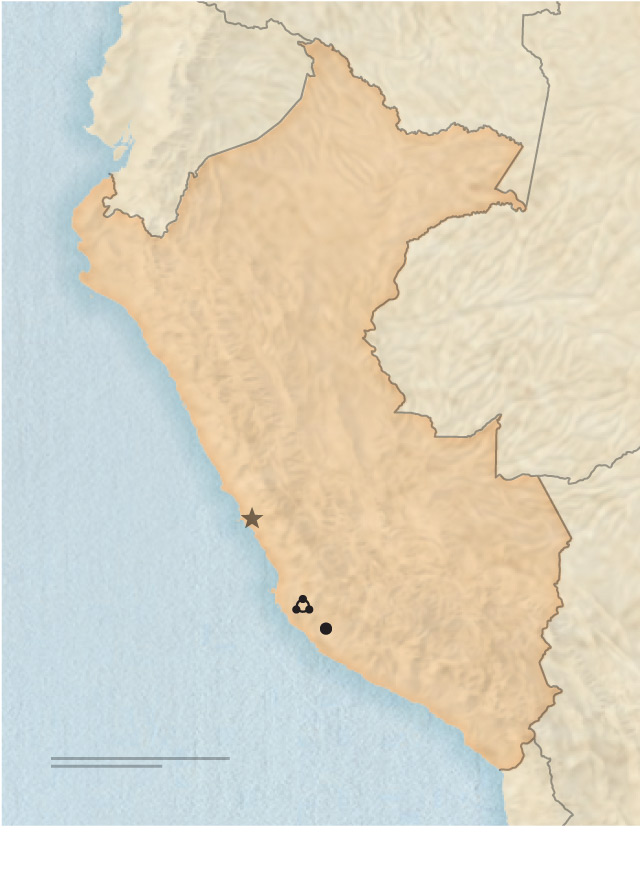
A century ago, scientists began to study enigmatic Nasca geoglyphs in Peru. Thanks to AI, the known number has nearly doubled, and these discoveries are providing new insights into what their messages meant.

Archaeologists from the University of Southampton have excavated and recorded a large timber platform hidden beneath what today appears to be a stone-built island, located in a Scottish loch. They used a technique called stereophotogrammetry to record the human-made island above and below the waterline as a single continuous structure, providing a perspective that wouldn’t have been possible using land or underwater survey alone. Their technique is described in an article in the journal Advances in Archaeological Practice.

The site dates back to 7100–6700 BCE during the Pre-Pottery Neolithic B (PPNB) period. A new study, published in the Journal of Archaeological Science, describes plaster floors from the site made by a technique previously thought to have been first developed by the Romans 8,000 years later. The finding has archaeologists looking at Neolithic craftsmen in a new light.

This snapshot is just a small part of one of the most comprehensive and spectacular views yet of the universe — a web-like structure formed by millions of galaxies, stretching back to near the dawn of time.

Members of the Atapuerca Research Team from the Institut Català de Paleoecologia Humana i Evolució Social (IPHES), the Centro Nacional de Investigación sobre la Evolución Humana (CENIEH), the University of Burgos, and the Center Européen de Recherche et d’Enseignement des Géosciences de l’Environnement (CEREGE) are involved in a study published in Quaternary Science Reviews reporting the earliest known evidence of the classic Acheulean in the Iberian Peninsula.

CERN scientists have uncovered a new proton-like particle, the Ξcc+, revealing a heavier and long-predicted member of the subatomic world.

It sounds like the opening of a sci-fi film, but US scientists recently uploaded a copy of the brain of a living fly into a simulation. In San Francisco, biotechnology company Eon Systems created a virtual insect that knew how to walk, fly, groom and feed in its virtual environment. Researchers in Australia, meanwhile, have taught a petri dish containing 200,000 human brain cells to play the iconic 90s shooter Doom. One experiment has pushed a brain into a computer; the other has plugged a computer into brain cells.
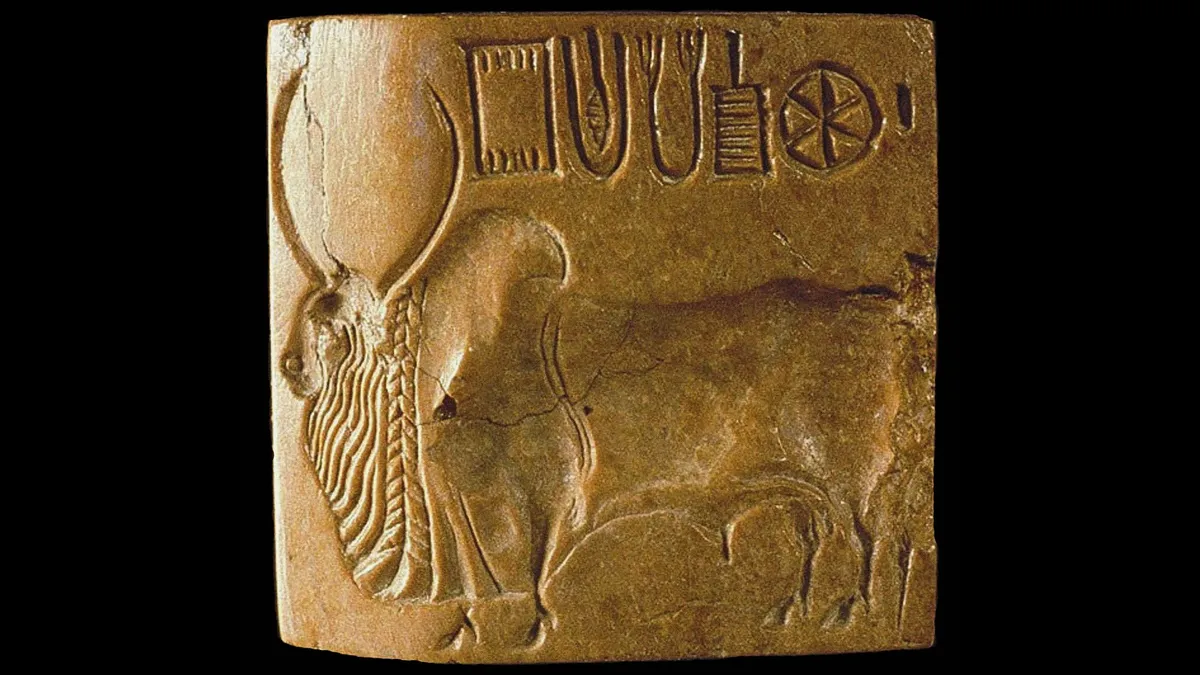
Around 4,000 years ago, one of the world’s oldest civilizations emerged: The Indus Valley Civilization, flourishing in what is now Pakistan, western India, eastern Iran and parts of Afghanistan. In addition to building sizable cities, its people created a written script that consists of hundreds of signs that remain undeciphered…Could recent advances in artificial intelligence (AI) help with decipherment?

“It is possible that we have discovered evidence of such a surgical procedure for the first time,” Dr. Andrey Letyagin, a radiologist at the Siberian Branch of the Russian Academy of Sciences, said in a translated statement, since “we had not previously encountered [it] in the scientific literature.”
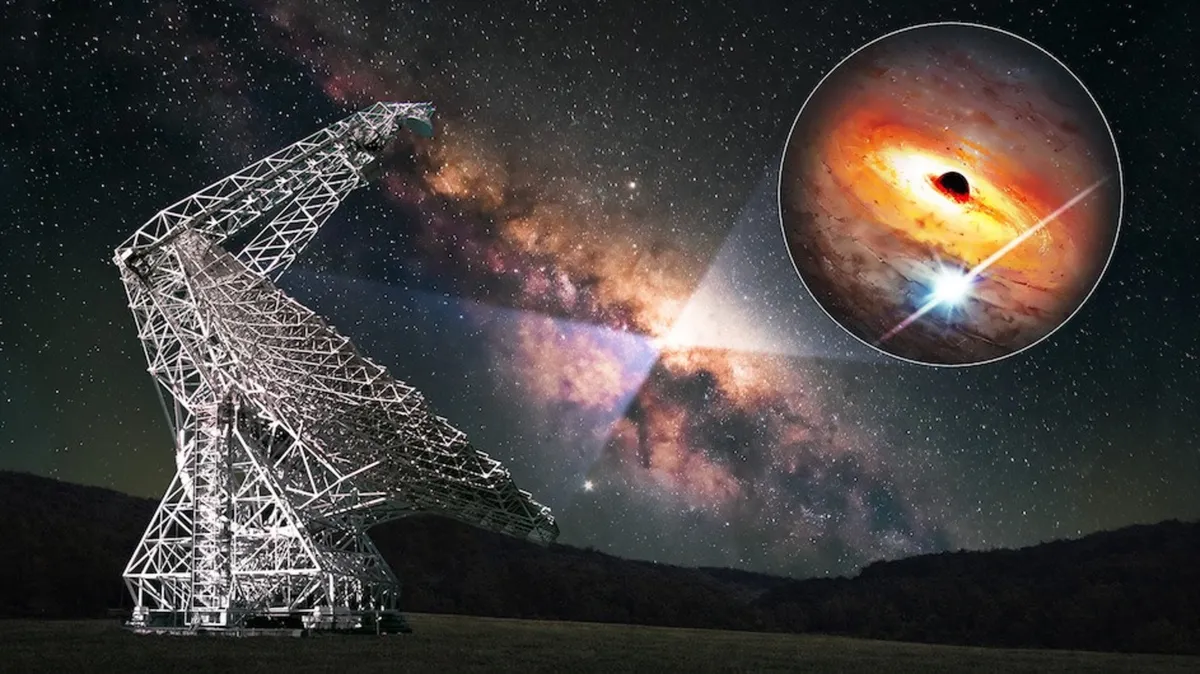
Is the ultradense core of a gigantic star lurking in the center of the Milky Way? Scientists think they may have found just that: the signal of a pulsar, a rapidly rotating ancient star core, in the heart of our galaxy. The rare discovery could be used to test the predictions of Einstein’s general relativity. The researchers published their findings Monday (Feb. 9) in The Astrophysical Journal.

A new study reveals that Egyptians were using a mechanically sophisticated drilling tool far earlier than previously suggested. The study is published in Egypt and the Levant.

In a new review published in Frontiers in Science, researchers warn that progress in AI and neurotechnology is moving faster than scientific understanding of consciousness. This gap, they argue, could lead to serious ethical problems if it is not addressed.

Recreating cosmic dust may help answer questions about how meteorites hitting Earth came to contain organic matter

A group of scientists are studying the Cyclades, an island group in Greece’s Aegean Sea, looking for signs of early human activity. They are using technology such as laser scanning and magnetometry, which may be more effective and non-invasive than traditional archaeological methods. One of these methods is magnetometry—the subject of a recent publication in the Journal of Archaeological Science: Reports.
War God: Night of Sorrows
Get your copy of War God: Vol III


Magicians of the Gods
Get your copy of Magicians of the Gods: