
Ancient news stories
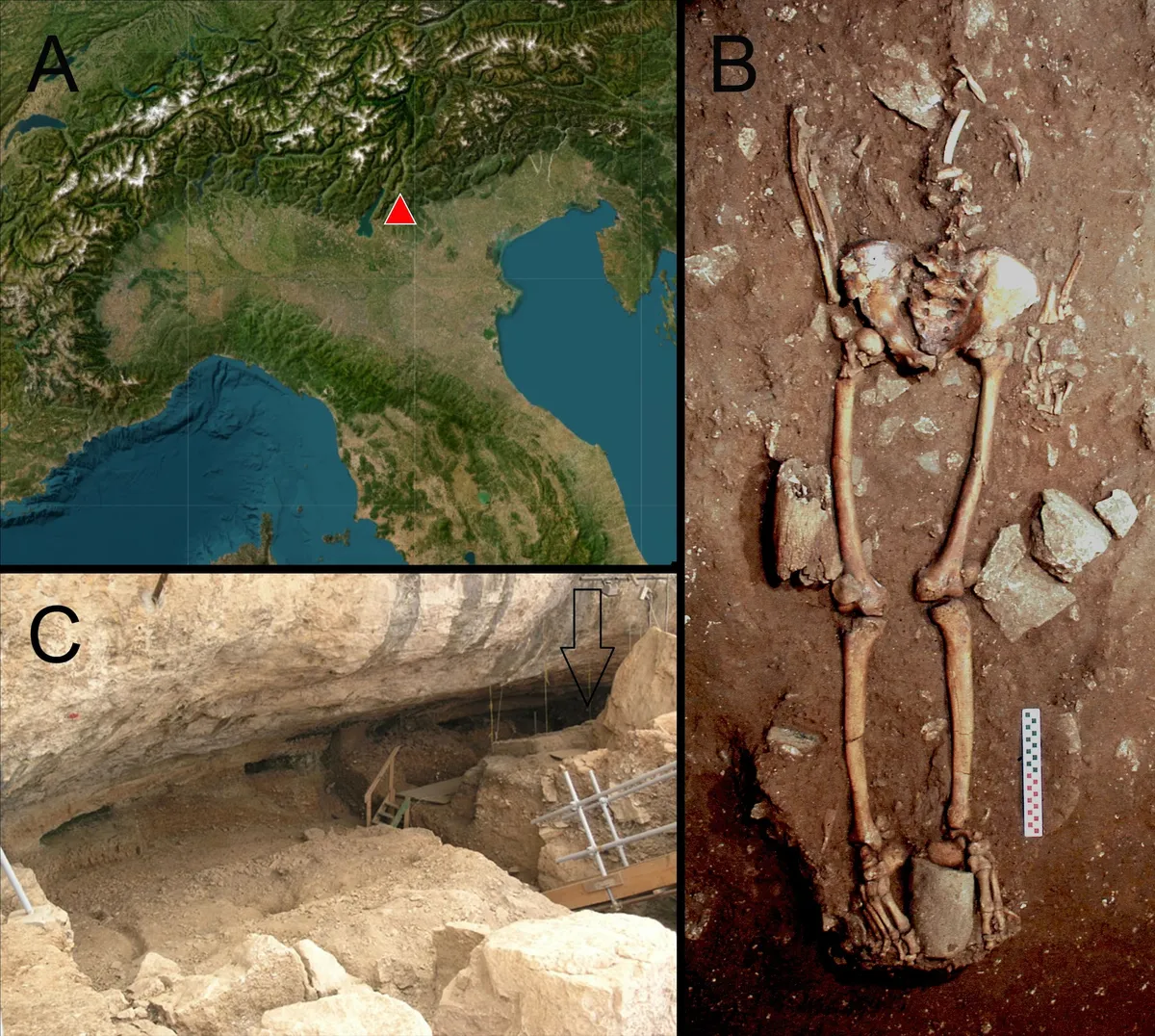
Around 17,000 years ago, a man fell victim to a bloody ambush in what is now Italy, with an enemy launching sharp, flint-tipped projectiles that left gashes on his thigh and shin bones, a new study finds.

The Vikings did not navigate by map, compass or sextant. Instead, they used “mental maps” where memories and experiences played a crucial role. They also used myths linked to various coastal landmarks. The findings are published in the Journal of Archaeological Method and Theory.
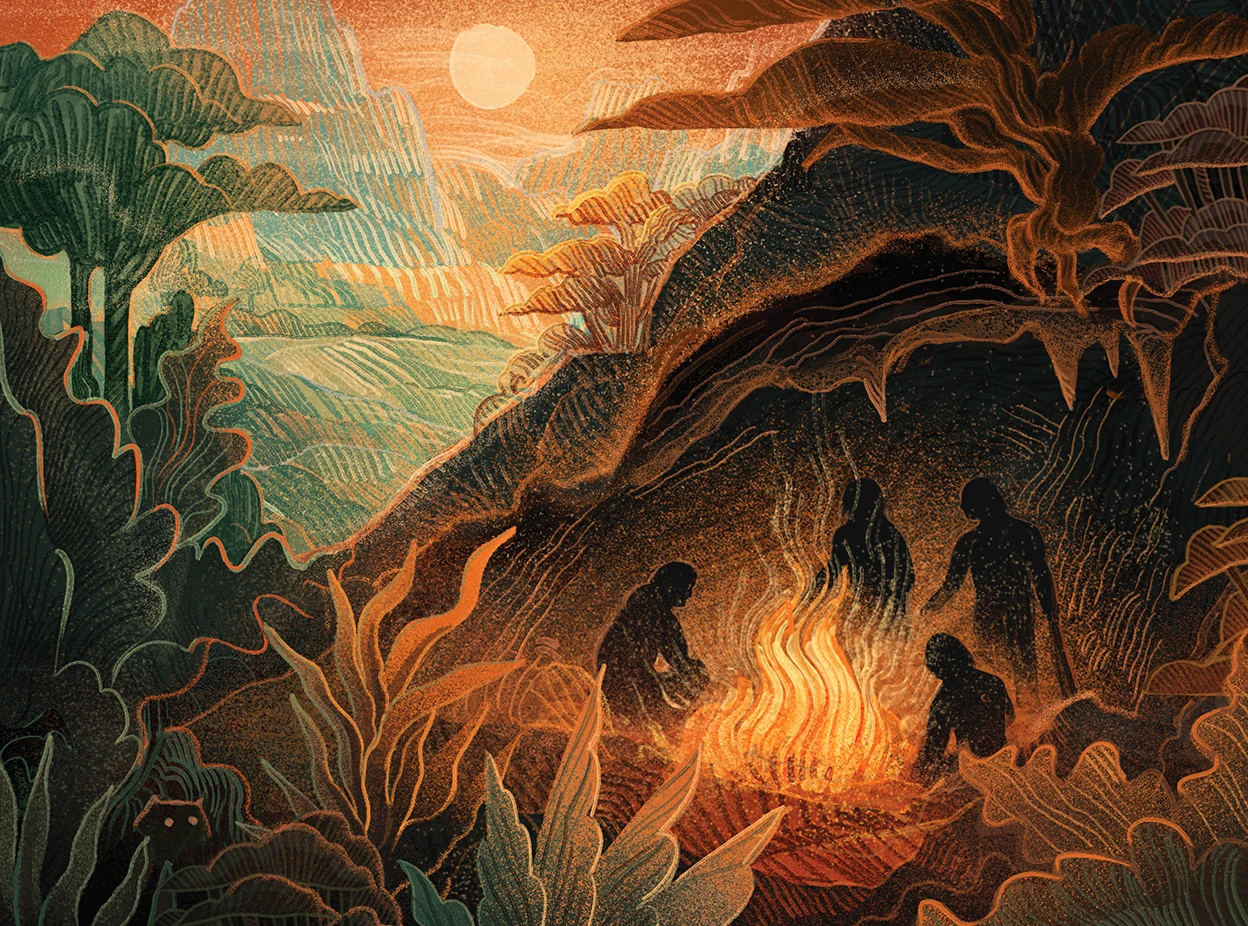
Clues are emerging about the ghostly clan that settled eastern Asia and left a genetic legacy in people today.

New research uncovers the strongest solar event ever detected — rewriting our understanding of space weather and radiocarbon dating.

Archaeological finds off the coast of Java, Indonesia, provide insight into the world of Homo erectus, 140,000 years ago. Skull fragments and other fossil remains provide a unique picture of how and where these early humans lived, says Leiden archaeologist Harold Berghuis. The first of the articles was published this week in the journal Quaternary Environments and Humans.

An international genomics study… has shown that early Asians made humanity’s longest prehistoric migration. The study was published in Science.
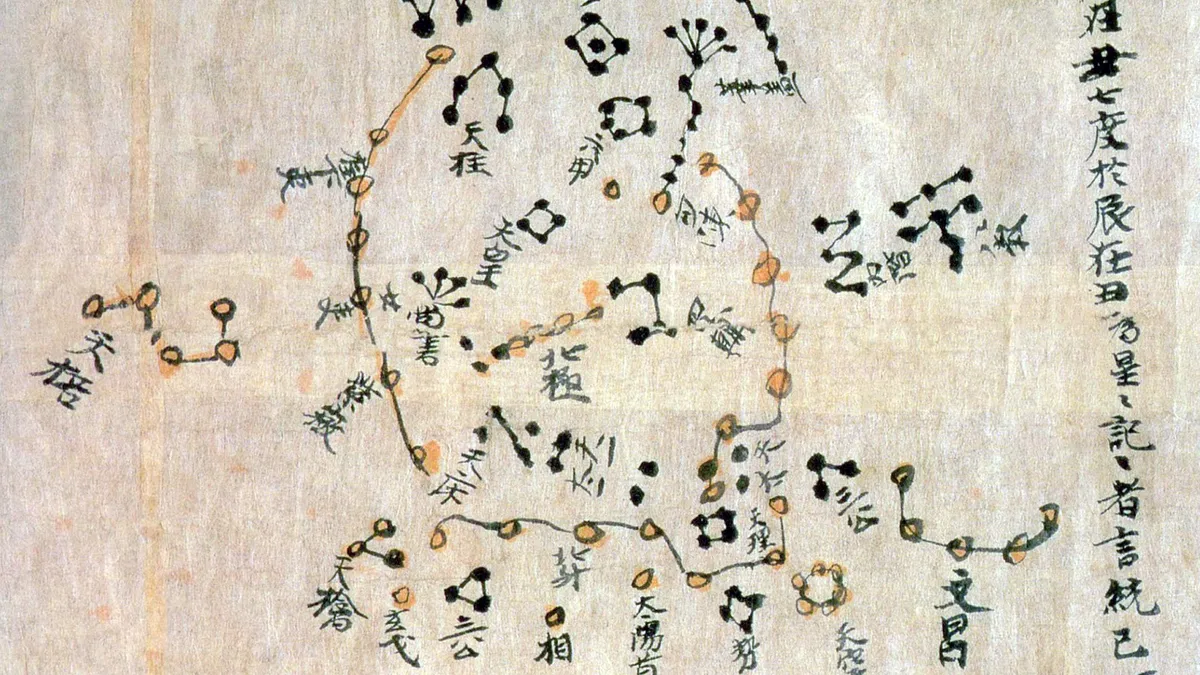
The oldest star chart in the world was made in China more than 2,300 years ago, a hotly debated preprint study finds.

Fossilised claw prints found in Australia suggest amniotes – the ancestors of reptiles, birds and mammals – evolved about 40m years earlier than thought.

Researchers led by the University of Glasgow in Scotland have identified a Late Upper Paleolithic site in the far north of the Isle of Skye, marking the most northerly evidence of Ahrensburgian culture in Britain.

Research found chimpanzees drum with non-random rhythms that suggest building blocks of music may predate humans by millions of years

A set of ancient wooden spears may be younger than scientists thought and wielded by Neanderthals instead of their ancestors. The research was published Friday in the journal Science Advances.

These Homo sapiens—nomadic hunter-gatherers who populated Western Europe between 11,000 and 35,000 years ago—carry with them a leather rucksack containing objects of value: mostly flint cores and flakes that they will use on the journey as hunting tools, or as ornaments. These are pieces of their homeland. See the research here.

Five millennia ago, wealth inequality—which had stayed roughly constant for thousands of years—exploded. It has stayed constant, albeit much higher, ever since…One factor, Bowles and Bocconi University economic historian Mattia Fochesato write in a paper recently published in the Journal of Economic Literature, was the ox-drawn plow.
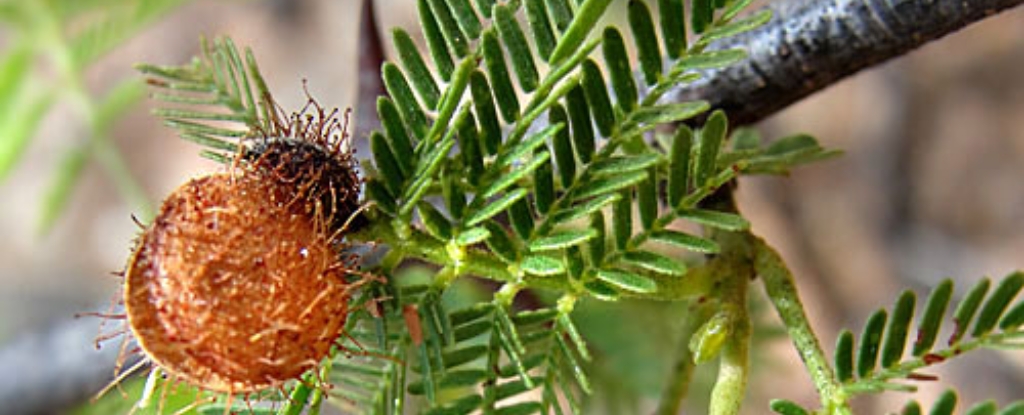
Long used in Indigenous Brazilian rituals, the jurema preta plant, which contains a potent psychedelic, is gaining ground as a potential treatment for depression. The findings were published in the scientific journal Nature in April.

Published in Archaeological and Anthropological Sciences, the findings contradict a widely cited fracture model that credited rock core geometry and stiffness with flaking patterns and predicted that hammer strike angle would have minimal effect on flake formation. Results suggest a greater degree of cognitive control by early human tool makers than previously recognized.

Two thousand years before the Inca empire dominated the Andes, a lesser-known society known as the Chavín Phenomenon shared common art, architecture, and materials throughout modern-day Peru…one of their most powerful tools wasn’t farming. It was access to altered states of consciousness. That’s according to a new study that uncovered the earliest-known direct evidence of the use of psychoactive plants in the Peruvian Andes
War God: Night of Sorrows
Get your copy of War God: Vol III
Magicians of the Gods
Get your copy of Magicians of the Gods: