




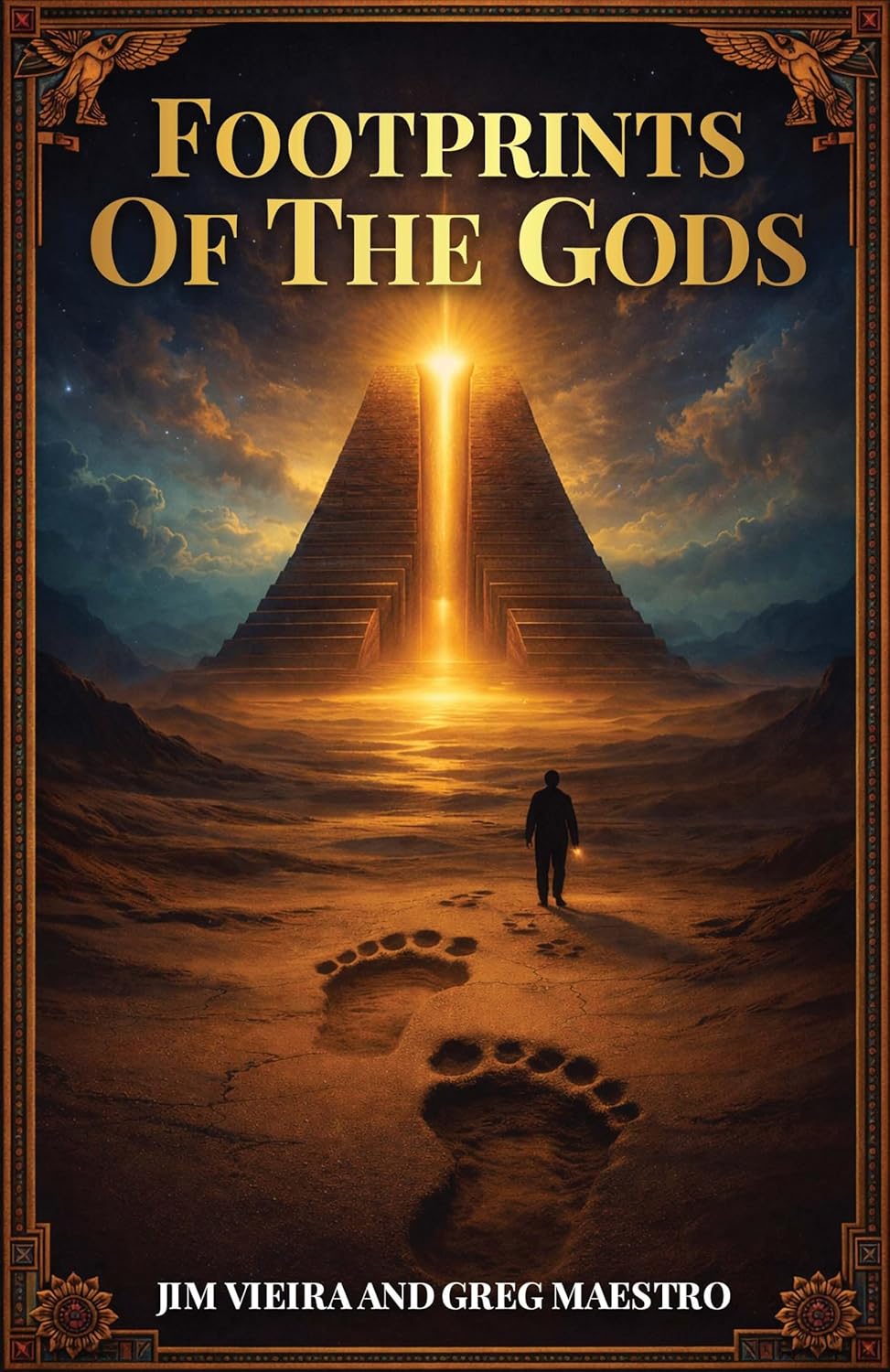
We warmly welcome Jim Vieira & Greg Maestro, authors of Footprints of the Gods: Extra Digits the Mark of the Giants, as our featured authors this month. Their book explores a strange and overlooked mystery: polydactylism, the presence of extra fingers or toes, and its curious connection to ancient civilisations, myths and human origins. Across cultures and centuries, references to extra digits appear in Sumerian texts, biblical accounts, folklore and indigenous traditions, repeatedly linked to giants, gods and the earliest humans. Drawing on ancient artefacts, rock art and historical narratives, and treating oral tradition with the seriousness it deserves, Jim and Greg reveal patterns hiding in plain sight, inviting readers to question long-held assumptions and reconsider humanity’s origins.
In this article, Jim takes readers on a journey through ancient Oceania, examining a range of enigmatic myths and rock art depicting the same biologically rare and oddly specific trait that keeps appearing across cultures separated by vast distances and millennia.
Interact with Jim on our AoM forum here.
“The Indian explanation is always cast aside as a superstition, precluding Indians from having an acceptable status as human beings, and reducing them in the eyes of educated people to a prehuman level of ignorance.”
“The possessor of the oral traditions had nothing that would encourage him or her to change the meaning or emphasis of the information … People had no vested interest in wealth or prestige by becoming knowledgeable.”– Vine Deloria Jr. (1933–2005), author, theologian, historian, and Lakota Sioux Elder
The above quotes from the legendary Vine Deloria Jr. highlight how easy it is to forget our past and how oral tradition is often marginalized in modern academic circles. To me, throwing out thousands of years of evidence by peoples closer to the events being studied is just bad science. In the late 1990s, Deloria organized a conference of Native American elders in Washington State where they shared their tribes’ traditions of giants. Virtually every indigenous group that you can name in North America has legends of giants and cataclysmic destruction, a pattern that continues to every corner of the globe.
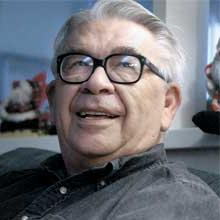
Image 1. Vine Deloria Jr. (1933-2005), author, theologian, historian and Lakota Sioux Elder. Source: Wikipedia.

Footprints of the Gods: Extra Digits, the Mark of the Giants is the culmination of years of investigation, global exploration, interviews, audiences with shamans, wisdom keepers, museum curators, and archaeologists. Its larger purpose is to highlight that there are many ancient mysteries worthy of investigation. It is heavily reliant on academic expertise but equally indebted to ancient texts and ancestral wisdom, an approach that can be a blueprint to unravel other enigmas.
This is mainly an investigation into polydactyly – that’s the ten-dollar word for extra fingers and toes – and this bizarre trait, oddly specific and biologically rare, turns up again and again in sacred temples, rock-art carvings, high-status tombs, and statues of gods and founders. Sometimes it’s on ancestral beings, sometimes on protector spirits, often on creator gods and giants. Always on someone, or something, set apart from the rest of humanity. So, what are we looking at here? A world before our world? A story older than myth?
How I Got Pulled In
About fifteen years ago, I stumbled across a little-known paper by British Museum archaeologist Dr. Richard Barnett. It was called “Six Fingers in Art and Archaeology,” a scholarly piece that most folks never heard of, tucked away in the Bulletin of the Anglo-Israel Archaeological Society. Barnett noticed something no one else seemed to be talking about: ancient depictions of people, gods, and giants with six digits weren’t isolated accidents; they were everywhere. That moment changed everything for me. I had already been researching giants, flood myths, and the strange stories the Smithsonian seemed eager to misplace. But this… this was different. This was a pattern so clear it was hiding in plain sight.
Dr. Richard Barnett was the Keeper of Western Asiatic Antiquities at the British Museum for nearly two decades, the founder of the Anglo-Israel Archaeological Society, and a Commander of the British Empire. This was not a fringe theorist but a highly regarded academic. Barnett’s scholarly output was phenomenal, as he was noted for making an immense contribution to studies of the ancient Near East. He also had remarkable linguistic talents and was put to work as a codebreaker at Bletchley Park from 1940–42. He worked with the classicist D. R. Shackleton Bailey and succeeded in breaking the codes used by Turkish diplomats in the Axis capitals.
This is very noteworthy because the understanding of the global polydactyl mystery is indeed an exercise in breaking an ancient code. Barnett was brilliant, phenomenally talented, and dared to say the obvious, plainly: “The phenomenon of six fingers and toes (polydactylism) in ancient art and archaeology is one that has received no attention from scholars.” He wasn’t being poetic. He was calling out a blind spot the size of a Mesopotamian ziggurat.
Barnett’s observations, and the silence surrounding them, sparked something in me. If polydactyly was symbolically tied to divinity, kingship, or monstrosity across cultures, why wasn’t anyone mapping the pattern? So, I decided to. I started traveling, researching, interviewing scholars and indigenous keepers of memory. Around this same time, I began collaborating more closely with Greg Maestro, whose fascination with humanity’s hidden origins naturally aligned with my own. Introduced through our longtime friend Hugh Newman, the Megalithomaniac explorer and author we’ve both had the privilege of working with for over a decade, our partnership grew from shared curiosity into a creative and research-driven alliance. The result is what you’re reading now: a global thesis stitched together from forgotten symbols and buried bones. And make no mistake, the fingerprints of the gods were sixfold.
“And there was yet a battle in Gath, where there was a man of great stature, that had on every hand six fingers, and on every foot six toes, four and twenty in number; and he also was born to the giant.” 2 Samuel 21:20
Although every chapter of this book and every corner of the globe contain the same theme and the same story, I have chosen the Oceania chapter as the one to highlight the mystery of extra digits. A quick observation first: while polydactylism is a rare genetic trait in humans, there is no genetic condition that associates it with gigantism. It is a complete mystery why it is a trait of the giants. The giant of Gath in the bible, the giant Cormoran in England, the giant Judaculla in the US, the giant Matseing in Botswana, Africa, the giants of Kaleva in Finland, the giants Naworo and Baime in Australia, and the giant Tubariki in the Pacific all have extra digits.
These giants have names; their exploits are known; they are thousands, sometimes tens of thousands, of years old, and they are described by cultures that most likely had no contact with each other. To those who wish to dismiss this phenomenon, please explain that. I say that genuinely; I have not been able to find a seemingly logical answer to this. Wildly, the sanest explanation appears to be that there is an actual reality to giants. In the traditions, they are a creation of the ancient genetic-engineering gods, not a byproduct of natural evolution. Now you can say that you don’t believe this, but that is precisely what worldwide written and oral traditions state. Now let’s travel to Oceania and the mysteries of a lost world.
The Footprints at Marra Wonga: When Rock Tells the Truth
In 2022, a headline-grabbing story brought attention to the Marra Wonga rock art site near Barcaldine, in Central Queensland. Researchers from Griffith University had pieced together an ancient story etched in stone. The narrative at the Marra Wonga rock shelter is a version of the Seven Sisters Dreaming story, depicting an ancestral being named Wattanuri pursuing seven sisters. The 160-meter-long site contains over 15,000 petroglyphs and paintings, including representations of the seven stars of the Pleiades, a snake that is Wattanuri, his boomerang, and the track of a dingo. (1)
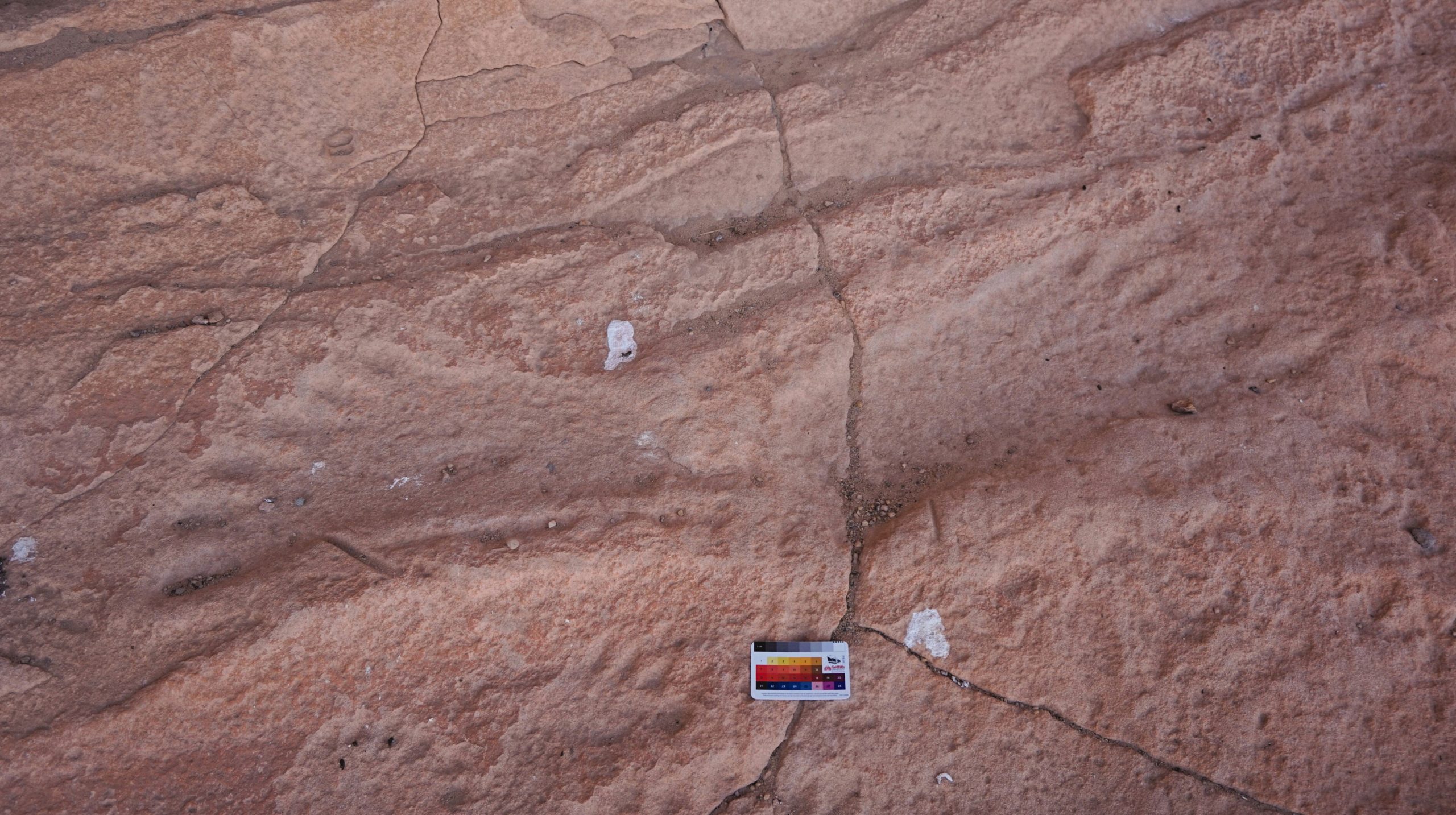
Image 2. Giant six-toed rock art prints from Marra Wonga, Australia. Courtesy of Griffith University.
Some of the engravings are thought to be more than 5,000 years old; also, it was noted that there are lots of feet carved as well. But here’s the kicker: 19 of these engraved feet have extra toes; six of them have six toes, and one has eleven. These are part of the oldest ongoing iconographic tradition on the planet. The Iningai Traditional Owners, who partnered with scholars like Professor Paul Tacon and Dr Andrea Jalandoni, confirmed what so many Indigenous communities already knew: these weren’t just decorative; they were descriptive.
To the Aboriginals, these were powerful symbols from real beings. This wasn’t lost on Professor Tacon, who wrote a paper on the occurrence of extra digits showing up at ancient sites around the world. He told me that it hasn’t been published yet, but here is a quote from one of his other works: “Footprint petroglyphs with six toes are often larger than an average human size (Kerkhove 2010), and the two largest at Marra Wonga have six toes.” Prof Paul Tacon 2022
This is reminiscent of the National Park Service quote from Alibates Quarry, Texas: “A large foot, often with six toes, is a common symbol depicted in petroglyphs and pictographs”. A respected scholar and an official organization saying the same specific and strange thing, thousands of miles apart, created by cultures thousands of years old, is certainly worth taking note of. So, what was the size of the feet that Professor Tacon recorded at Marra Wonga? The eleven-toed foot is 19 inches by 8 inches, and the two six-toed feet are 4 feet by 12 inches, a titanic size.
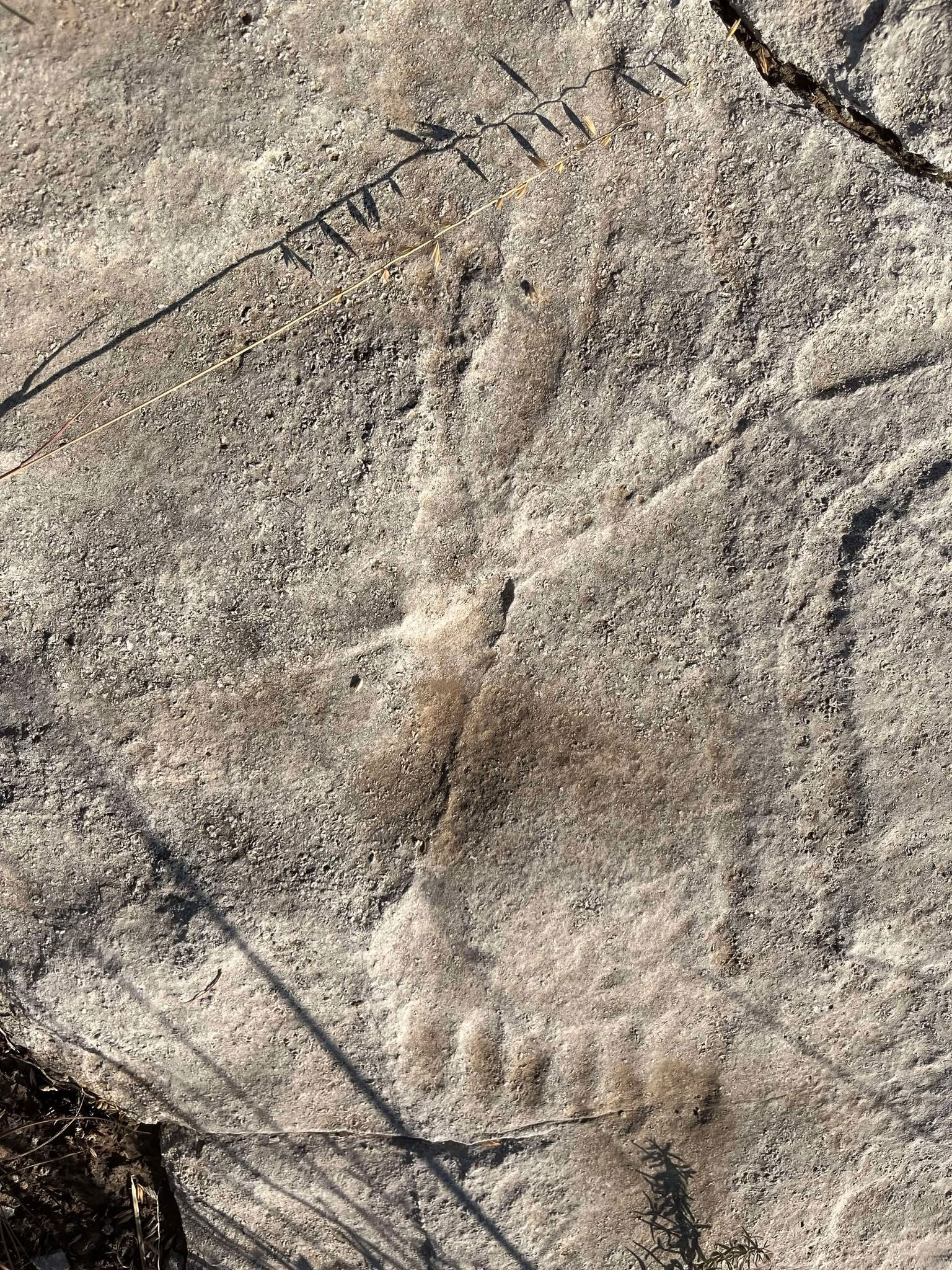
Image 3. Giant six-toed petroglyph, Alibates Flint Quarry, Texas. Courtesy of the National Park Service.
The Sky Father Baiame: And the Fingerprint of Creation
Next stop: Mount Ku-ring-gai, in the Sydney-Hawkesbury district. High on a sandstone cliff stands a rock art depiction of Baiame, the Sky-Father, creator of rivers, mountains, forests, and culture itself.
He’s flanked by his two wives, and he’s massive, 11 feet tall, with an 18-foot wingspan of arms, but it’s the details that change everything. Six fingers on each hand. Six toes on each foot. No argument here, no metaphor, it’s plain and unmistakable polydactyly. Baiame’s anatomy is displayed in full sacred form.
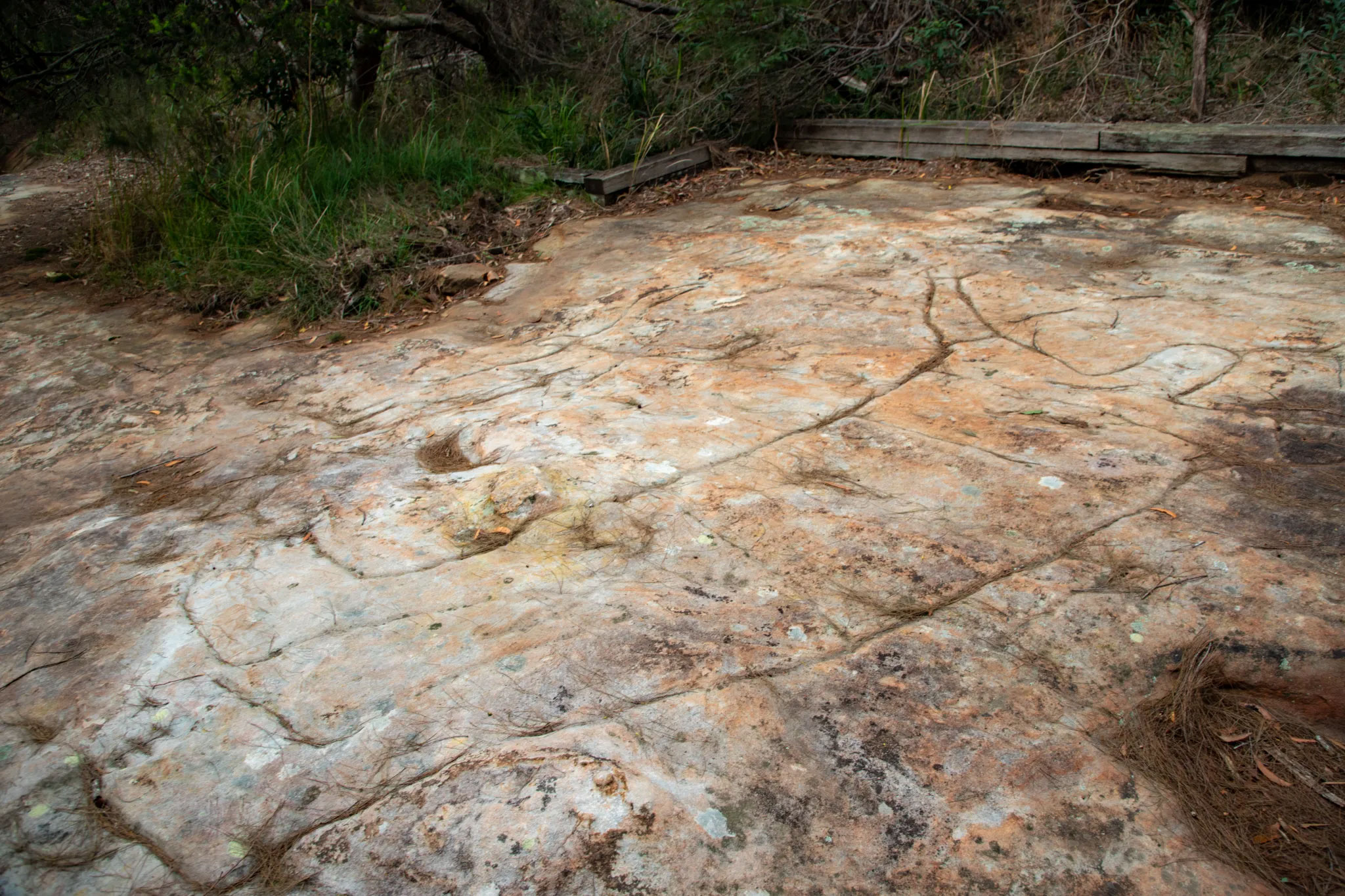
Image 4. The six-fingered, six-toed, 11-foot-tall giant Baiame at Mount Ku-ring-gai rock art site in the Sydney-Hawkesbury district, Australia. Author provided.
Warkany’s Report: The Double-Headed Polydactyl Giant
If you dig back into the archives, you’ll stumble upon a 1959 medical study titled “Congenital Malformations in the Past” by Dr. Josef Warkany. In it, Warkany describes a prehistoric rock drawing in New South Wales, a double-headed humanoid stretching nearly 10 feet long, bearing six fingers on his right hand. (2) The enormity of the figure is what is compelling, another giant with extra digits to add to the list.
Guardian Place Gallery and the Six-Fingered Sentinels
In North Queensland, researcher and rock art expert Don Hitchcock flagged a site known as the Guardian Place Gallery, home to a stunning example of divine polydactyly.
Here, we find a sacred guardian spirit being depicted with six fingers on each hand and six toes on each foot. These spirit beings are sometimes benevolent and sometimes malevolent, reminiscent of the biblical Rephaim and the soon-to-be-discussed Namarde.
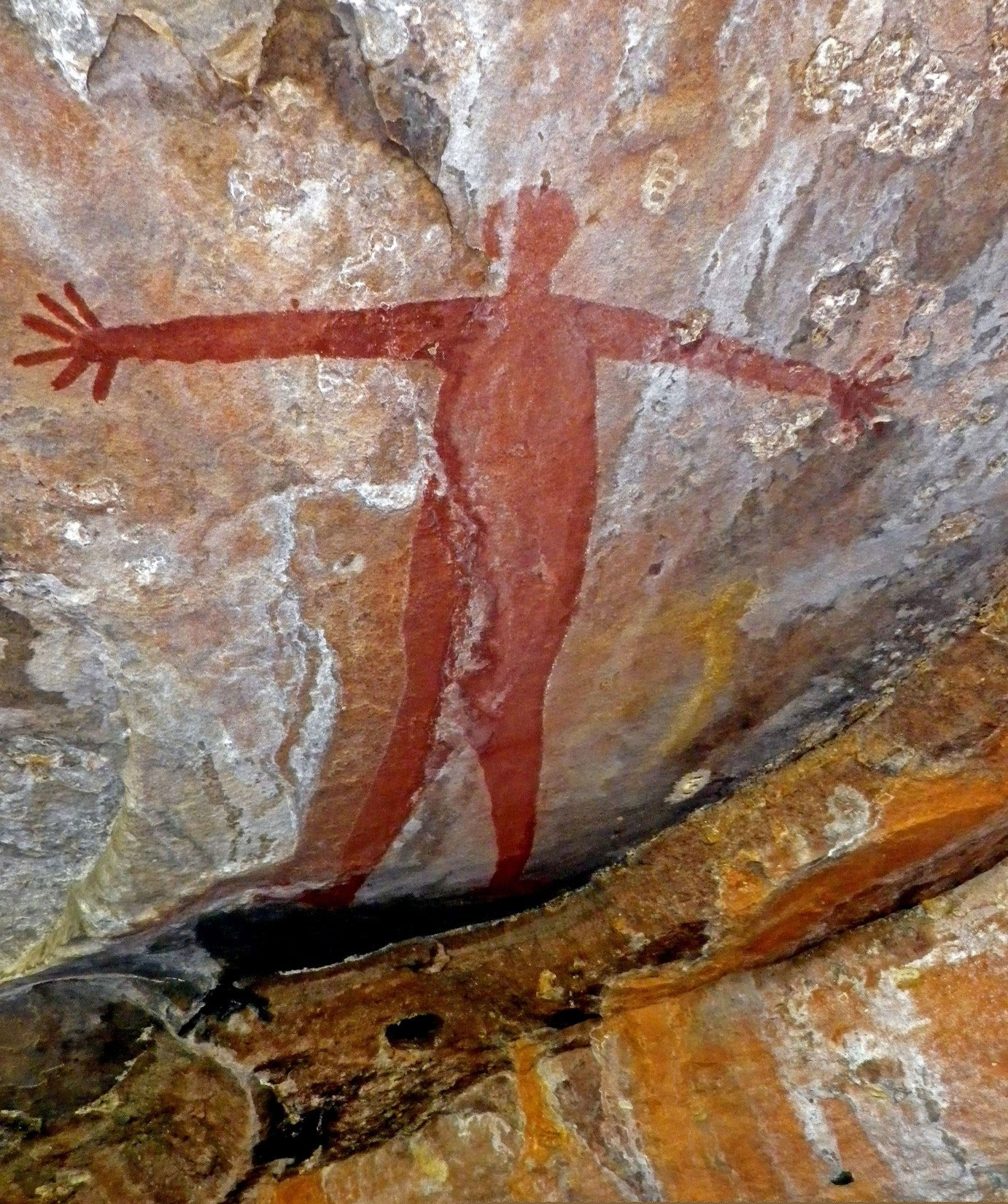
Image 5. Six-fingered, six-toed spirit guardian rock art image at the North Queensland Guardian Place Gallery. Courtesy of Leo Dubai.
Favenc’s Testimony: The Granite-Toed Giants of the Murchison
Explorer and historian Ernest Favenc, writing in the 1800s, recalled traveling through the Murchison District of Western Australia and stumbling upon massive human foot engravings, each one carved with six toes into granite.
Favenc was a journalist who chronicled his finds in a straightforward manner. Here is a quote from a colleague about his investigations: “Mr. Ernest Favenc, who has traveled a great deal in Western Australia, informs me that in the Murchison District of that colony, he found a gigantic representation of a human foot. All of the figures of feet seen by Mr. Favenc have six toes.” Ernest Favenc (1845-1908), explorer, journalist and historian. (3)
A Giant Gets Reanimated
About 200 miles east of Darwin, in the heart of Arnhem Land, is the ancient rock art shelter of Kudjekbinj. Something very interesting and unprecedented is taking place at the little-known ancient site. Conrad Maralngurra, his older brother Terry and other Traditional Owners of the Ngalngbali (nglun-bali) clan estate in Western Arnhem Land are restoring an ancient rock art piece that was being lost to time. (4) They have been worried about the fate of the ancient painting because the white clay, or delek, was fading due to time and weathering.
So, what is it that is being restored here that is so revered? We are told here in a quote from a recent Cosmos article describing the work.
“After consulting with the clan, Conrad and Terry Maralngurra decided to revive Naworo, one of several nayuhyungki (na-yu-yungi) – ancestors – a giant, who arrived from the north to travel to Arnhem Land thousands of years ago. They would repaint the image of the one-armed being with six fingers and six toes on the ceiling at Kudjekbinj.” (images 6,7)
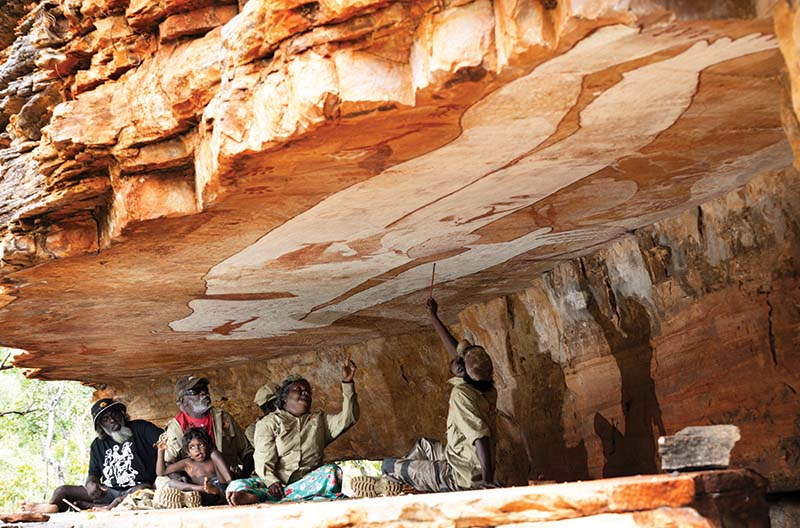
Image 6. Josephine Maralngurra discusses the painting with son Robbie while Conrad and Terry look on. Traditional Owners are repainting the 30-foot-tall six-fingered, six-toed ancestral giant Naworo. Courtesy of Cosmos Magazine.
The rock art image stretches more than 30 feet long, and amazingly, this is a rare time where oral tradition meets ancient evidence; thankfully, Naworo will be around for a long time now.
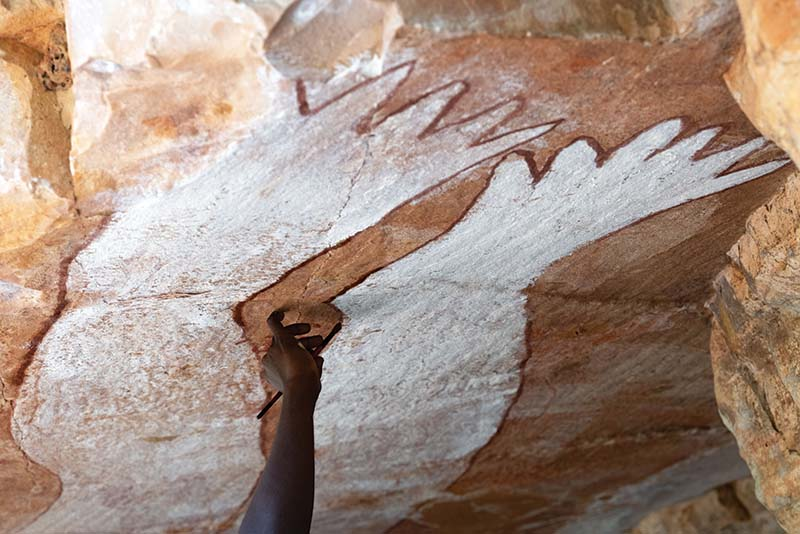
Image 7. Close-up of the six-toed feet of the giant Naworo. Courtesy of Cosmos Magazine.
The First Men, Bark-Scroll Gods, and the Twelve-Toed Titans of the Pacific
The Nganalam rock art site in Keep River National Park, right near the border of Western Australia and the Northern Territory, is well known for its depictions of Gangi Nganan, or the first Mirriwung man. The site is sacred; a kangaroo drawing here is 17,300 years old, the oldest in Australia, but the Mirriwung men steal the show. In the rock art image, two humanoid figures stand side by side; one has six fingers on each hand. The other has five on each hand.
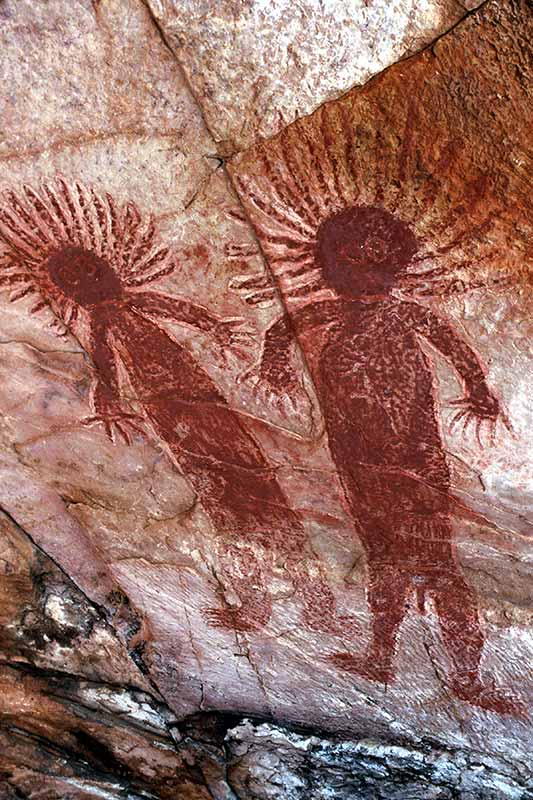
Image 8. Depiction of Gangi Nganan, or First Mirriwung Men, at the Nganalam rock art site in Keep River National Park, Australia. One figure has five fingers, the other six fingers. Author provided.
There appears to be a message being transmitted here, but what is it? The six-fingered figure may represent the original design, the god-form, the polydactyl template we’ve traced around the globe. The five-fingered companion? Perhaps the modified human, the downgrade or the human that we see today on the planet. The term “Mirriwung” refers to the Indigenous people of the region. The concept of the “Gangi Nganan” refers to the mythological “First Mirriwung Men,” and symbolizes the creation of the people. This makes the rendering all the more impactful, for the point of creation of these people, possibly the most important recorded event for them, has a six-fingered being present for it.
Essington Island’s Bark Scroll Enigma
We now move to Essington Island, off the coast of the Northern Territory. It’s not a place many people know of, and that’s probably why its secrets have survived.
In 1879, the Linnean Society of New South Wales received an extraordinary gift: bark paper drawings created by the native peoples of Essington Island. (5) These weren’t tourist souvenirs or missionary illustrations; they were sacred documents.
Among them was a figure that grabbed my attention: a bizarre humanoid with six fingers and six toes, drawn with explicit clarity.
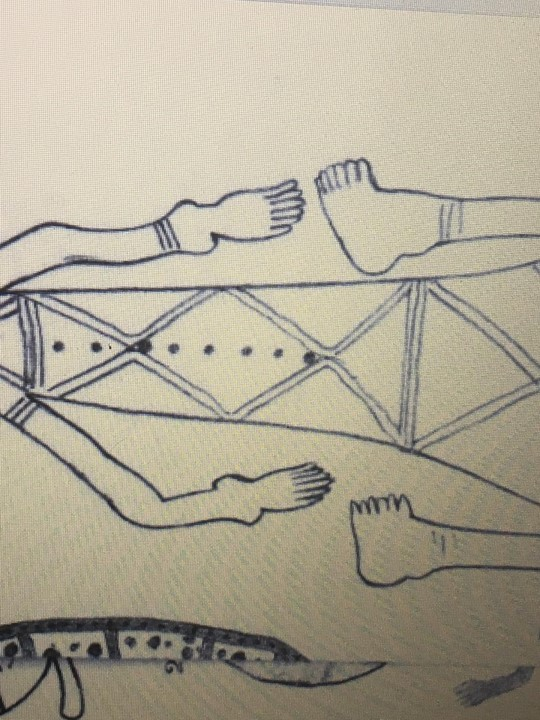
Image 9. Bark scroll image drawn by Essington Island, Australia natives, found in the Linnean Society of New South Wales, 1879.
This figure, preserved by the Linnean Society and featured in its journal, wasn’t labeled with a name, but its presentation suggests importance. It wasn’t surrounded by narrative imagery; it stood alone like an icon.
So, who or what was it? A first ancestor? A sky-being? A protector? A genetic prototype? We may never know.
The Nightmarish Namarnde
The Pre-Historic Ubirr site hosts some of the oldest rock art in the world, going back an astonishing 20,000 years. Located in the Kakadu National Park in Australia lies an image and story straight out of a nightmare. For here we have Australian Aboriginal oral tradition to help us make sense of the very large and ghoulish figure etched into stone.
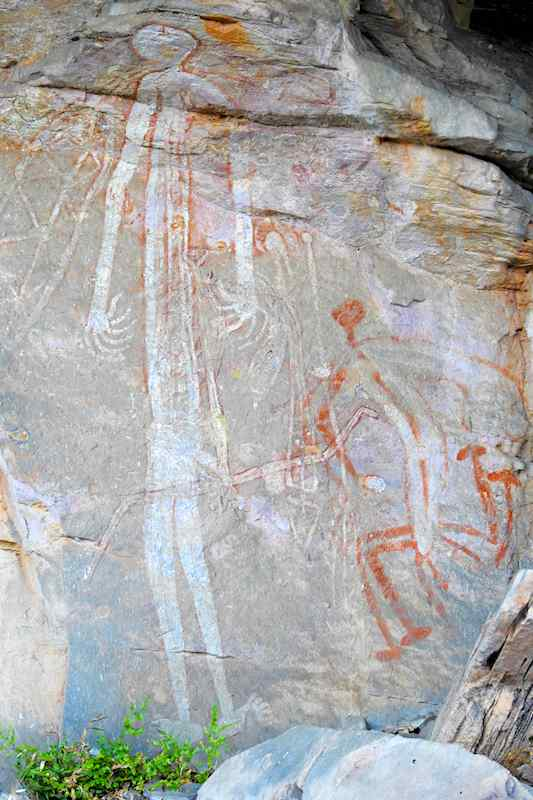
Image 10. Six-fingered, six-toed Namarnde rock art image at the Ubirr site in Kakadu National Park, Australia. Author provided.
We are told that the figure is one of the Namarnde, malevolent beings who eat human flesh. The Namarnde are known to have six fingers on each hand and six toes on each foot and carry dilly bags for their victim’s liver, lungs, heart and kidneys. They live in caves and can entice people inside by calling them to come closer. This is a truly disturbing tale from the most ancient of times, as another being with extra digits is associated with supernatural strangeness.
This is not the only example of extra digits at the site, as rock art experts and authors Heyward, May, Goldhand and Jalandoni tell us, “The Moravian Museum, under the directorship of Jan Jelinek, embarked on two Czechoslovakian anthropological expeditions to Arnhem Land, one in 1969 and another in 1973. In 1977 Jelinek published a report on the paintings at Nangalore (Nanguluwurr).” Jelinek noted the extra digit Namarnde in his work but also reported on an “X-ray style evil female spirit” as well. This haunting creature has six fingers on each hand but also possesses some other strange protrusion that has six digits at its end. Experts have catalogued more extra-digit works at the site. Aboriginal people viewed these spirits as real and disturbing, a mystery in itself, but when you add extra digits, it becomes eye-opening.
Sailing Into Legend: Terje Dahl and the Island Elders
Norwegian sailor Terje Dahl didn’t set out to find giants. He was just a guy chasing Pacific trade winds and old-world simplicity, but the giants found him anyway.
Considered a modern-day Thor Heyerdahl, Terje is a friend who appeared on our History Channel show Search for the Lost Giants. Sailing from island to island in his 22-foot yacht, Coco Loco, Terje was often invited into village homes, and once inside, the old men would lean in and speak, not of weather or fishing but of giants. Not mythical but real and remembered.
“So many times, the conversations ended up with legends,” Dahl wrote. “And their legends almost always involved giants.”
These weren’t tales told for entertainment; they were oral history, passed down with the same gravity as battle records or birth certificates.
And nearly every one of these island giants had a physical quirk: extra digits. Dahl started noticing something strange about the local tiki statues, the stone or wooden guardians placed near temples or homes; many had six fingers.
It kept happening, Raivavae, Hiva Oa, Tikopia. Everywhere Dahl went, six-fingered statues stood sentinel, and he wasn’t the only one who saw them.
The Giants of Tarawa: The Giant Taburiki with Twelve Toes
Perhaps the most mind-bending case of all comes from the isolated atoll of Tarawa in Kiribati, a cluster of coral islands deep in the Pacific and site of a brutal battle between the Japanese and Americans in World War Two.
In 1949, a British naturalist named I.G. Turbott published a report in The Journal of the Polynesian Society titled “The Footprints of Tarawa.” (6) It sounds quaint, but it’s not.
The report described giant footprints embedded in coral limestone, shown to him by tribal elders. The largest, reputed to belong to a giant named Tabuariki, was 4 feet 6 inches long, 3 feet 9 inches across, and featured 12 toes. (images 11,12)
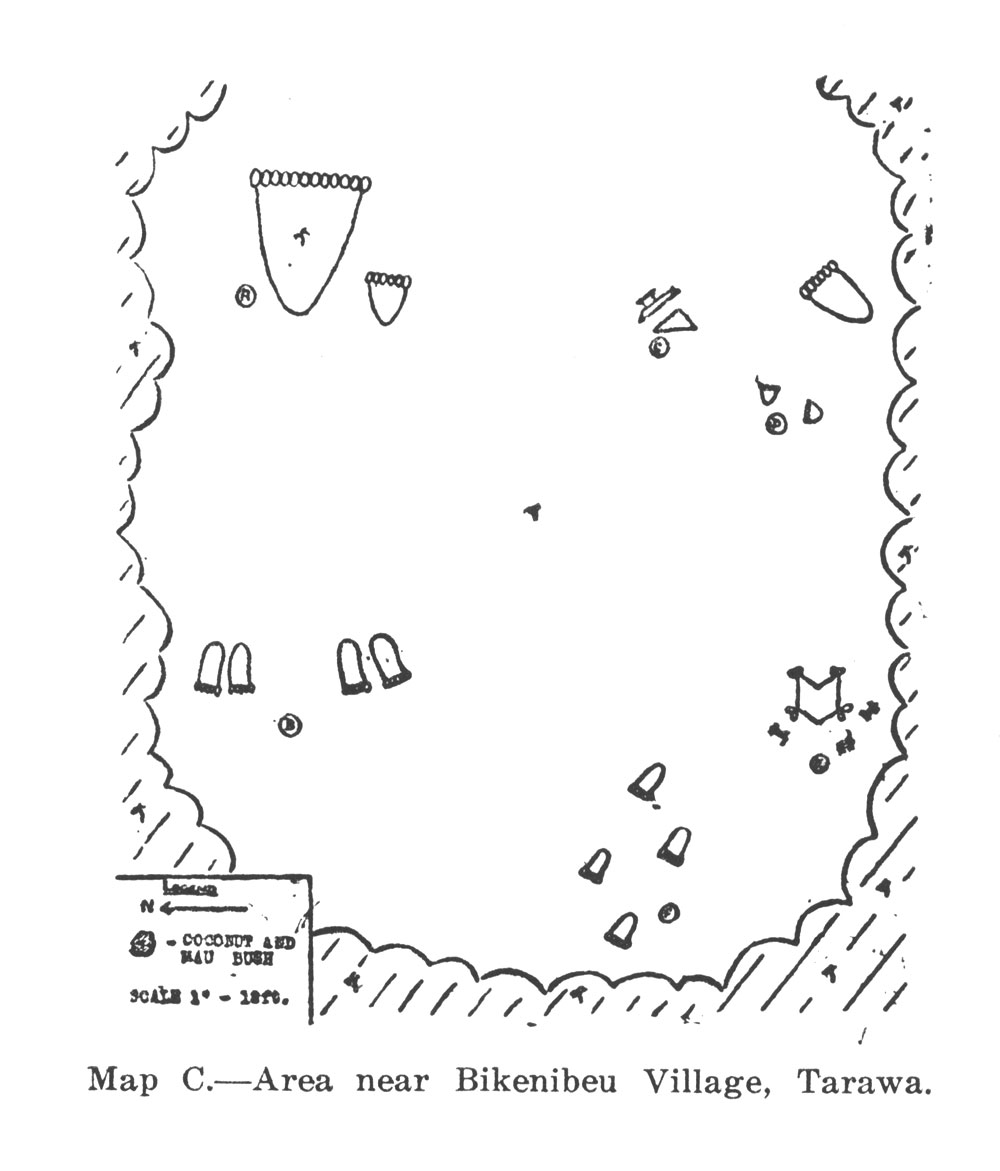
Image 11. Tarawa’s colossal 12-toed footprint of Taburiki and the six-toed giant footprint of his wife, from I. G. Turbott’s Footprints of Tarawa, 1949.
It gets stranger. Another footprint, said to be the right foot of the same giant, was located 20 miles away, on the neighboring island of Maiana. According to the local unimane (elders), Tabuariki stepped from one island to the next.
Turbott also documented a second set of prints belonging to Nei Teiti, the wife of Tabuariki. Hers measured 1 foot 6 inches long, smaller, but still outsized, and she had six toes. Nearby were other prints, some enormous, some merely large, all bearing six toes.
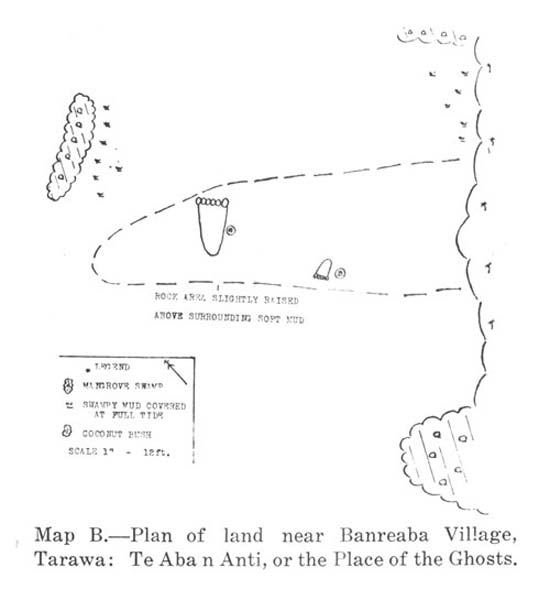
Image 12. Giant six-toed footprint on Tarawa, from I. G. Turbott’s Footprints of Tarawa, 1949.
Here is some commentary from Turbott’s report, “With the passing of the present generation of “old men” of the Gilberts, many of the legends and customs of these people are also dying out; and there is a growing generation of young men who are ignorant of all the wisdom and stories of their ancestors.
This short account is a factual report, without any personal comments or interpretations of the position, of two series of footprints appearing in Tarawa Atoll in the Gilbert Islands, as shown to me and explained by some of the uniamne (old men) of Tarawa…The largest footprint is said to be that of Tabuariki, a giant who, according to the old men of Tarawa, was born and raised there. He was one of the original inhabitants and stories of his exploits are well known and often told in local circles.”
Turbott was a well-respected administrator with the British Colonial Service and, as he stated, reported his findings without embellishment. The mixture of oral traditions and evidence in stone makes this a special case.
Raivavae: The Statue They Were Afraid to Touch
Let’s travel to Raivavae, part of the Austral Islands. Here, we find one of the tallest tiki statues ever carved in Polynesia, standing over 8 feet tall, with clearly defined six-fingered hands.
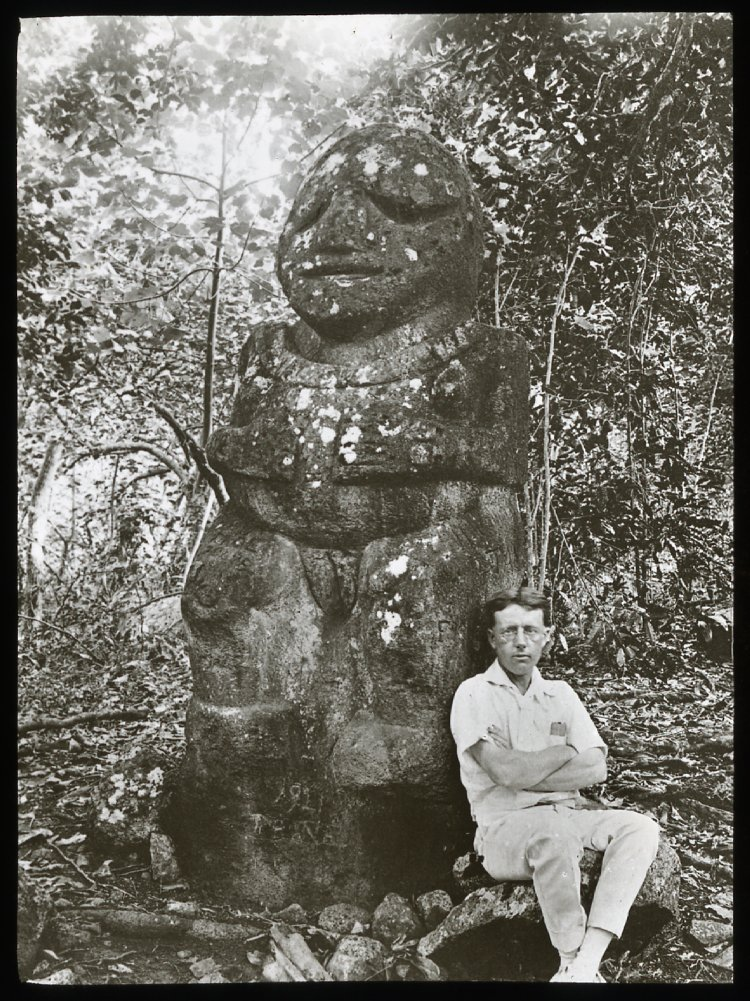
Image 13. Tiki Takai, a large six-fingered Hiva Oa Island statue found in the Marquesas. Public Domain.

This statue, now housed in the Paul Gauguin Museum in Tahiti, was once so feared by locals that they refused to touch it, even when asked by colonial officials when they were moving it off the island.
Why? Because it wasn’t just a statue. It was considered sacred, dangerous, and alive in some spiritual sense.
Hiva Oa and the Headless Hybrid
Sail northeast to Hiva Oa, in the Marquesas Islands, and you’ll find another polydactyl tiki: the headless Tiki Te Tovae E Noho, a semi-divine being with six fingers on each hand. Tiki Takai is also another large six-fingered Hiva Oa statue gracing the island.
Thor Heyerdahl, of Kon-Tiki fame, and Swedish anthropologist Bengt Danielsson both documented these statues as being polydactyl and recorded other six-fingered statues in the region as well. Tiki statues represent ancient Polynesian gods, ancestors, and mythical beings, embodying spiritual power, strength, and wisdom. They serve as protective talismans, acting as guardians against evil spirits, and symbolize a connection between humans and the divine. A continuation of the theme that polydactyly = divinity.
A quick stop in the Middle East is certainly in order to fill out this story a little more. Some of the oldest settlements on earth, such as Ain Ghazal, Jordan, and Jericho, Israel, have statues with extra digits written about and investigated by academics. They are considered gods or divinized ancestors.
If that is the case, I assumed we would find the same specific anatomical trait displayed in the even older Tas Tepeler region of Turkey, and this is exactly what happened in real time as I was writing this book. Many are familiar with the excavation at Karahan Tepe, which began in 2019. The nearly 12,000-year-old site contains over 250 obelisks and a haunting serpent-like figure emerging from the cliff. What is less known is that a sixteen-fingered, pillar-like being was unearthed that possessed 16 fingers, 8 on each hand.
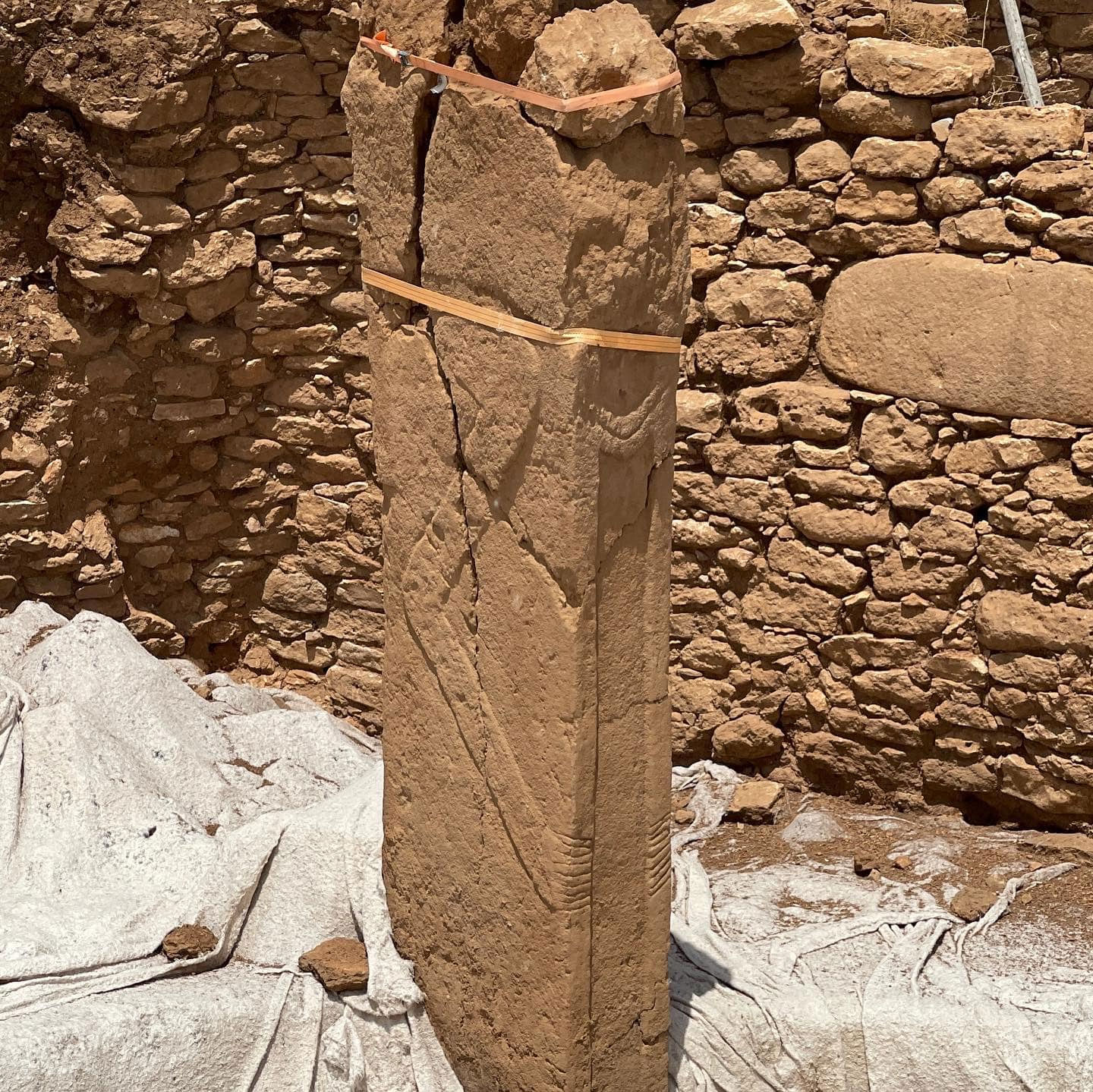
Image 14. A sixteen-fingered figure carved into a stone pillar at Karahan Tepe, Turkey. Author provided.
Professor Necmi Karul of Istanbul University led the excavation and appeared on season one of Graham Hancock’s Ancient Apocalypse. He also had this remarkable quote: “The humanoids have strange numbers of fingers, never five.” This isn’t fringe speculation; that’s a direct quote from the Director of Prehistory at Istanbul University.
Soon after this discovery in 2021, Sayburç, a significant Pre-Pottery Neolithic A archaeological site (circa 9th millennium BCE) located in Şanlıurfa, Turkey, was uncovered. Known for featuring what may be the oldest known narrative carvings in the world, it certainly grabbed my attention because of the figure holding up a six-fingered hand that was found. Hancock recently penned an article titled “Could the Epic of Gilgamesh, previously attributed to the Sumerians around 4,000 years ago, date back more than 10,000 years?” In it, he speculates that this ancient narrative panel may indeed be a much earlier version of the Epic of Gilgamesh and highlights that the figure with the raised six-fingered hand may be Gilgamesh. In the apocryphal Book of Enoch, Gilgamesh is listed as a pre-flood giant; that he possessed extra digits fits right in with descriptions of giants in the region, including the Giant of Gath, who possessed 24 digits.
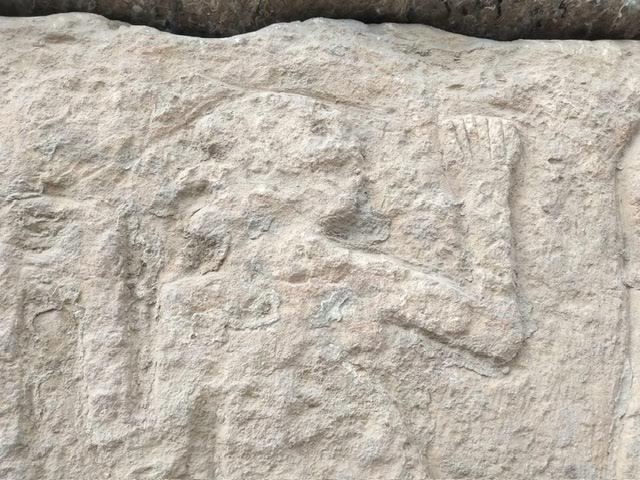
Image 15. Carved six-fingered figure on the world’s most ancient narrative at Sayburc, Turkey, 11,000 years old. Author provided.
As previously stated, as the oldest sites on earth were being unearthed in real time, they were displaying a biologically rare and very specific trait associated with Gods, Giants, the divine and the supernatural. The ancient world was clearly pointing loudly to the importance of this poorly understood phenomenon, a reality hidden in plain sight. We are talking about an over 10,000-year-old cold case that Dr. Richard Barnett was the first to try and crack. His untimely death slowed down the detective work, but academics at far-flung places such as Palenque, Chaco Canyon, Marra Wonga, Ain Ghazal, Jericho, and Nasca have begun investigating this phenomenon and piecing the story together.
Thank you for reading, and please share any thoughts you have about this mystery.
References
- https://news.griffith.edu.au/2022/09/28/marra-wongas-seven-sisters-story/
- “Congenital Malformations in the Past” by Dr. Josef Warkany 1959
- R. H. Mathews, Aboriginal Rock Paintings and Carvings in New South Wales. Journal: Proceedings of the Royal Society of Victoria 1894
- Proceedings of the Linnean Society of New South Wales, Volume 3, 1879
- THE FOOTPRINTS OF TARAWA, I. G. Turbott, The Journal of the Polynesian Society Vol. 58, No. 4 (December, 1949)
About the authors
Jim Vieira is an author, stonemason, world explorer, historical detective, and host of the History Channel shows Search for the Lost Giants (2014), Roanoke: Search for the Lost Colony (2015), and Return to Roanoke: Search the Seven (2016). He has also appeared on Expedition Unknown with Josh Gates (2017), Legends of the Lost with Megan Fox (2018), Travel Channel’s Code of the Wild (2019), Science Channel’s Uncharted (2019), Ancient Aliens (2019–2026), Expedition Bigfoot (2021), William Shatner’s Unexplained (2022), Laurence Fishburne’s History’s Greatest Mysteries (2023), and Danny Trejo’s Mysteries Unearthed (2025). He is co-author of Giants on Record (2014) and The Giants of Stonehenge and Ancient Britain with Hugh Newman (2021). jimvieira.com
Greg Maestro is a technologist, filmmaker, and world traveler with over a decade of independent research and field collaborations with well-known explorers and authors. He brings firsthand experience from expeditions spanning South Africa, Peru, and Bolivia. Drawing on years of study in biblical texts, ancient esoteric teachings, and occult literature, he examines the mysteries of the past through both symbolic insight and scientific analysis. Greg has employed ground-penetrating radar (GPR) and advanced imaging technologies to investigate ancient sites and their possible links to early civilizations. His research has contributed to the integration of newly referenced cases of polydactylism and to a broader understanding of how ancient knowledge can be re-examined through modern technology. gregmaestro.com
Fascinating, just bought the book and look forward to reading it!
Thank you Keenan, please reach out if you have any questions or insights about the book, I hope you enjoy it. Jim
See The Encyclopedia of Ancient Giants in North America by Fritz Zimmerman. Researchers painstakingly searched out every newspaper article ever published in North America regarding the discovery of giant skeletons along with many photographs. There are over a thousand, many report giants with six fingers and toes, oversized skulls, extra teeth, etc. Many many articles record representatives from the Smithsonian Institution collecting the skeletons for further “study”, after which they are never seen or heard about again.
Scientists will scour the ends of the earth for one tooth or bone fragment belonging to some human “ancestor”. Anybody… anybody at all do a single DNA test on one of these giant skeletons?
The big question is why is it so important to hide this? What’s the payoff? It has to be big.
Honestly, I’ve tried to come up with something. I have a hard time believing all this effort is only to convince people that our current civilization is the greatest ever and there has never been another. That just doesn’t seem to me to be worth the effort to hide all of history.
Thanks to Graham for continuing to question.
Hello Plebney, yes me and Hugh Newman wrote the book Giants on Record that presents a mass of historical data about giant skeletons reported being unearthed accross the US, we also did a show for the History Channel-Search for the Lost Giants. Thanks for the input, Jim
Plepney adds to the content here in pointing up the mysterious role of the Smithsonian and pondering the big question of why the cover up.
Great article, more than a taster for the book, it lays out a succinct part of the global giant puzzle. I always wish we could access more information from China and Russia.
Thanks for the info. Angela
Excellent article, will follow up.
I appreciate it, any objective evaluation of the topic is always welcome
Hello Jim and Greg, fascinating article and I really think you are on to something. On viewing the images above, one thing comes to mind which may have already been addressed in your book, and that is the fact that in almost all the depictions above, the 6 fingers and 6 toes are almost entirely uniform in length and there is a notable absence of thumbs and/or big toes. The images at Nganalam, Ubirr and Essington demonstrate what might have looked to a human as very flexible long fingers, while other depictions show uniformly long fingers with no demarcation of either length or thickness. We know that ancient people would have been aware of the morphology of their own bodies, and that ancient artists were more than capable of depicting the world around them with reasonable accurateness, so this strange uniformity of fingers probably means something else. And while these weird morphologies might suggest nothing more than laziness or inability on the part of the artist, that would likely account only for some of these types of images. I guess I am suggesting that not only were there more fingers and toes on these beings than humans currently possess, but that they were markedly and functionally different to human fingers. (Also, have you ever noted the weird thumbs on some Polynesian and South American statues?) If it were ever to be possible to locate the missing giant skeletons and if some or all of them should possess 6 fingers, a close examination of their bones would at least give us an answer to the question of artistic laziness or the reality of beings with wavy octopus fingers… Thanks for the great article!