



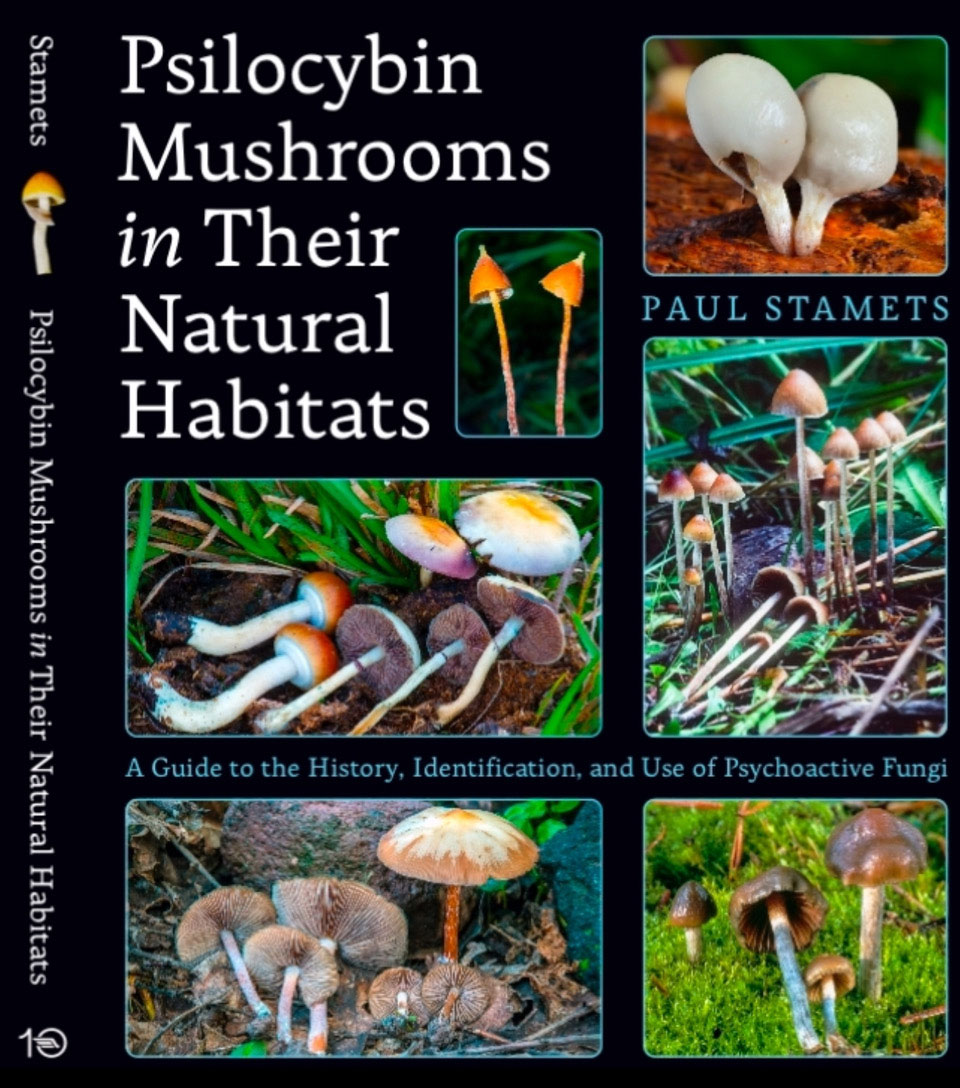
It is our pleasure to welcome world-renowned mycologist Paul Stamets, author of Psilocybin Mushrooms in Their Natural Habitats, as our featured author this month. In his latest book, Paul offers readers a full-colour, comprehensive, photographic guide to psilocybin mushrooms that covers how to forage, identify, grow, and use them safely. Paul’s book is packed with a lifetime of scientific and real-world research, providing detailed descriptions and 300 photographs of more than 60 psilocybin varieties and their lookalikes, common to North America, Europe, and Australasia. Paul reliably distinguishes between a non-poisonous, psychoactive mushroom and one of its highly toxic, even deadly, lookalikes. He also outlines the history and cultural use of magic mushrooms in traditional rituals and ceremonies, bringing depth and understanding to this often misunderstood topic and revealing the potential of these powerful, mind-awakening fungi to help us live better, happier lives. In his article, Paul has provided excerpts from Psilocybin Mushrooms in Their Natural Habitats, sharing his insights into the curious world of mushrooms.
Interact with Paul on our AoM forum here.
Mushrooms are mysterious: Some can feed you, some can heal you, some can kill you, and some can send you on a life-changing spiritual journey. Psilocybin mushrooms are unique—they could help you live a happier, more fulfilling, more peaceful life and encourage you to be a more responsible Earth citizen. Many people have a hard time describing their psilocybin experiences, which can transcend our everyday vocabulary and spiritual grounding. The ineffable effects can be profound. I propose that psilocybin mushrooms can aid us and, ultimately, our planet—or at least redirect us from our path of self-destruction. Psilocybin mushrooms could help save the world and us as a species!
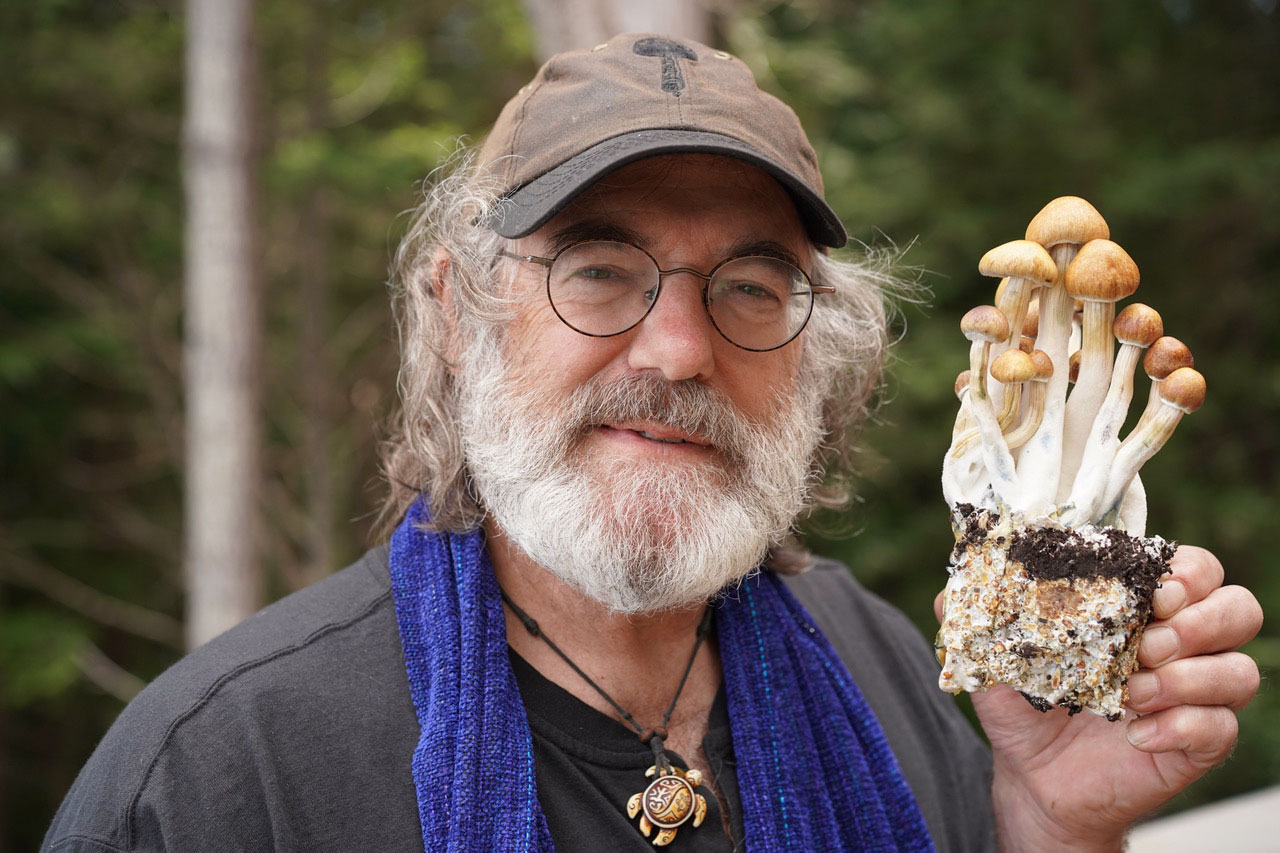
Photo by Pam Kryskow
With Psilocybin Mushroom in their Natural Habitat, you are embarking on an adventure of self-discovery and immersion into nature. I chose this title to honor Alexander H. Smith and his book, Mushrooms in Their Natural Habitats.1 My professor at The Evergreen State College, Dr. Michael Beug, introduced me to Smith in the mid 1970s. Both have contributed substantially to the field of mycology, particularly as it relates to the psilocybin species. These two scientists accepted the sincerity of my interest in psilocybin mushrooms when I was in my early twenties, encouraging me to pursue my studies despite how controversial they were at the time. I remain forever grateful to these two and to all of my mentors.
Psilocybin mushrooms can inspire cosmic visions as well as insight into oneself, the world, and the universe around us. Like recognizing an old friend, once you come to know these beings, they will forever be your fungal allies. And once befriended, they will entice you to photograph, pick, and partner with them to spread their spores and mycelium. This book will show you how to embark on an intellectual journey with psilocybin mushrooms and their allies. For many of you, your encounters with psilocybin mushrooms will be sacred experiences. Be careful and respectful of these powerful organisms. They are ancient, having their forms long before we evolved ours.
I have been studying psilocybin mushrooms in their natural habitat since 1974, publishing my first book, Psilocybe Mushrooms and Their Allies, in 1979, and my second book, Psilocybin Mushrooms of the World, in 1999. This book is my third identification guide, and it reflects my continuing, lifelong dedication to expanding the horizons of knowledge about psilocybin mushrooms, describing many species and growing techniques never before presented.
Psilocybin in Ancient Egypt
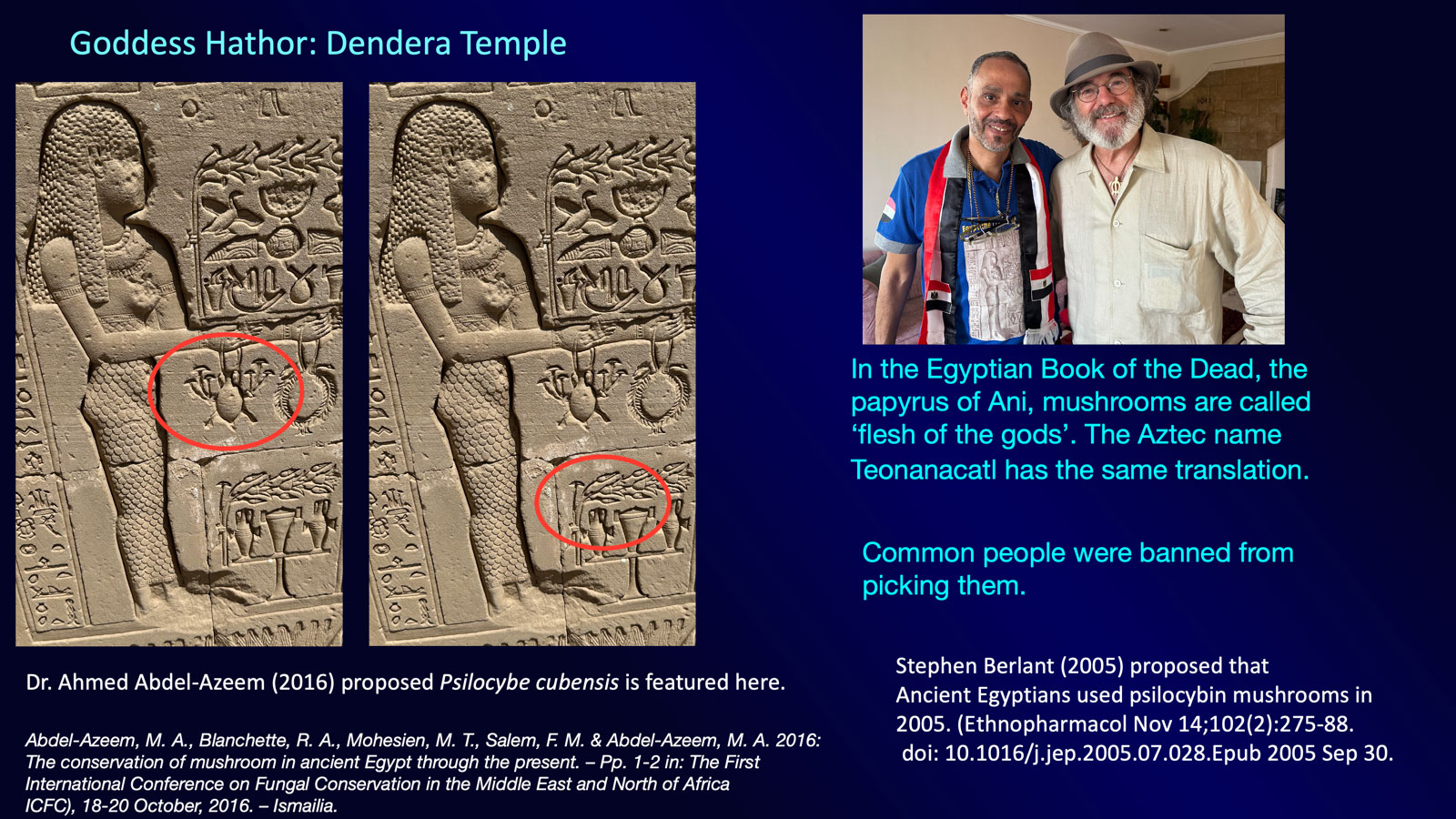
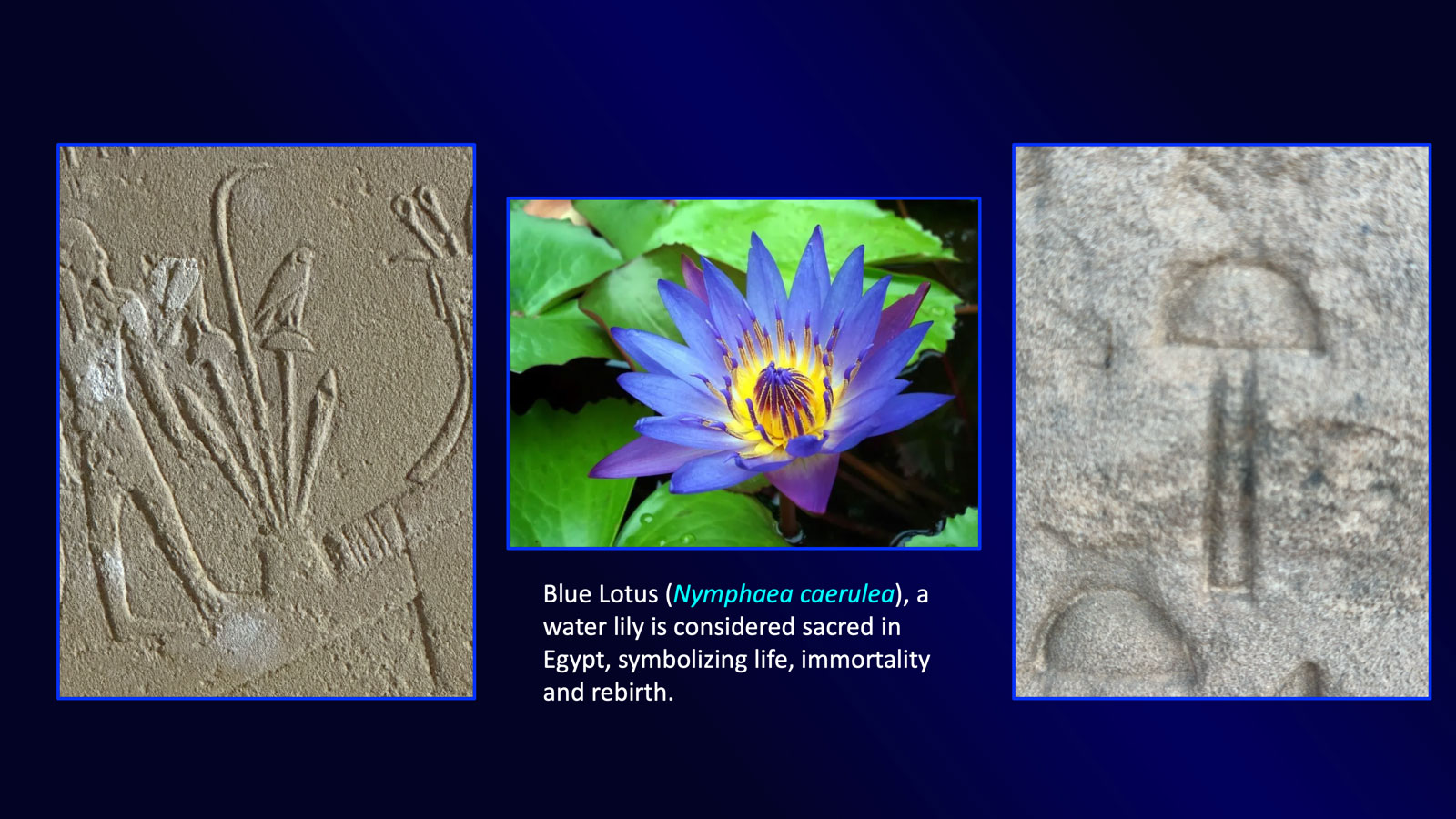
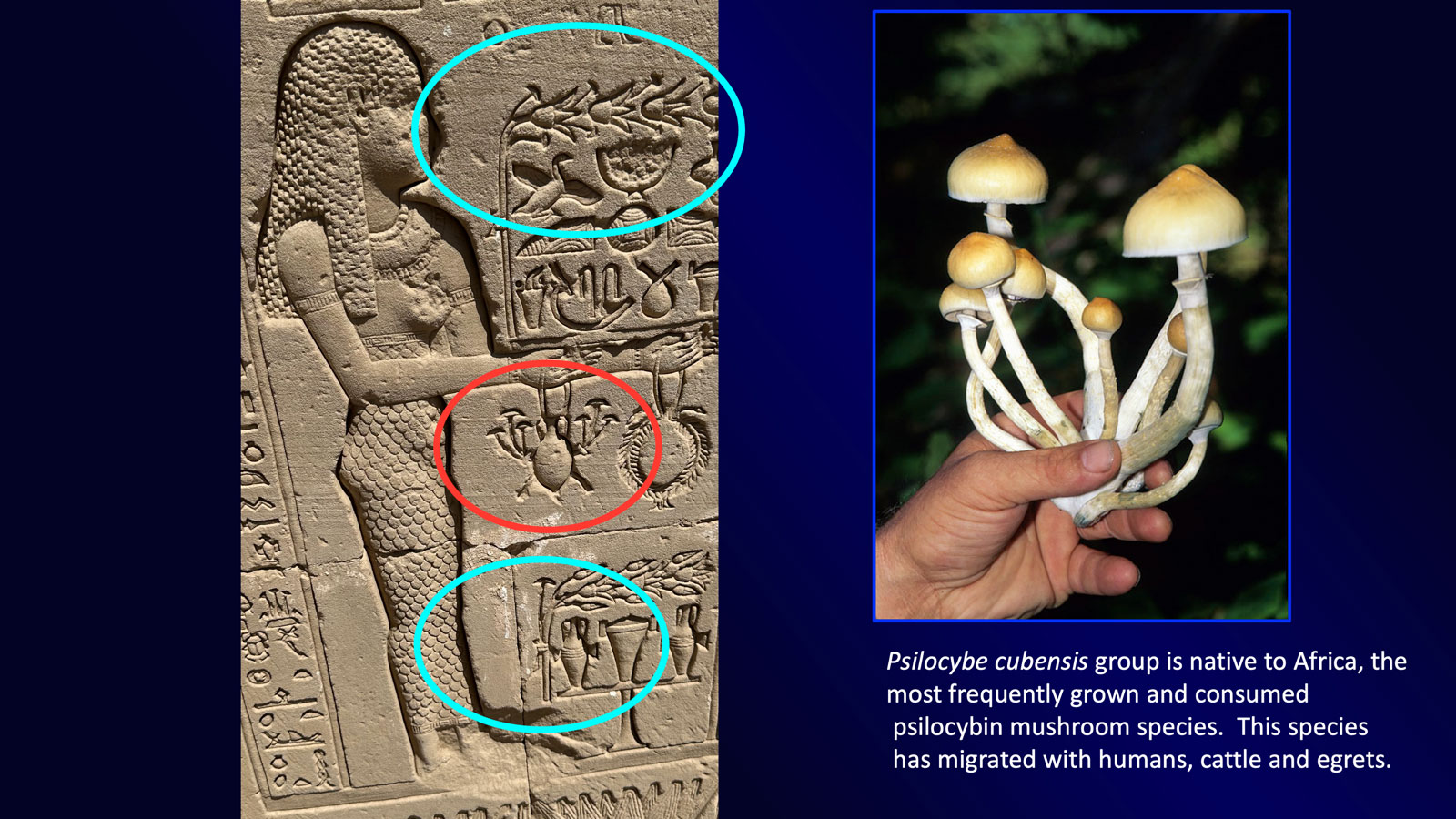
Did the ancient Egyptians use psilocybin mushrooms? It seems likely, as Egyptian culture is rich in symbology with deep spirituality and ties to nature. Yet the ethnomycological traditions of the past depend on our understanding of ancient practices—a challenge since these practices were protected and cloaked by veils of secrecy. Considering the lack of written evidence, we must take into consideration the role of ancient art within the context of the ecosystems that prevailed during those times. If archeological evidence is unclear, then paleoecological analyses may provide some potential explanations.
As dominant religions swept in—like Christianity into Europe or Islam into Egypt—traditional local religions and beliefs were often discouraged or forbidden. The same forces of desertification that drastically altered the region of the Bee-Mushroom Man’s Tassili n’Ajjer plateau affected much of North Africa and the Mediterranean region, including the Nile Basin of present-day Egypt. As aquifers dried up, the Nile drew more people for navigation and agriculture. Although mushrooms are scarce in this desert region today, they were clearly part of Egyptian history and culture.
Prized by ancient Egyptians, mushrooms were described as “without leaves, without buds, without flowers: yet they from fruit; as a food, as a tonic, as a medicine: the entire creation is precious.”[1],[2] The ancient Egyptians considered mushrooms to be a gift from the god Osiris, the god of the afterlife and the underworld. In the papyrus of Ani, also known as the Egyptian Book of the Dead and dated to 375–275 BCE, mushrooms were called the “flesh of the gods.” Interestingly, the Aztecs called some psilocybin mushrooms teonanácatl, which translates identically as “the flesh of the gods” (see page 000).[3],[4] Across cultures, across continents, and across millennia, mushrooms evoke the divine from those who experience them.
Mycologically naive archaeologists are understandably unlikely to see mushrooms in ancient records and imagery. Finding the DNA of Psilocybe cubensis or Psilocybe natalensis in the vases or soils around the Egyptian temples that depicted mushrooms would advance this theory. As technology becomes more sophisticated, many secrets of the past are being revealed—this could yet be one of them.
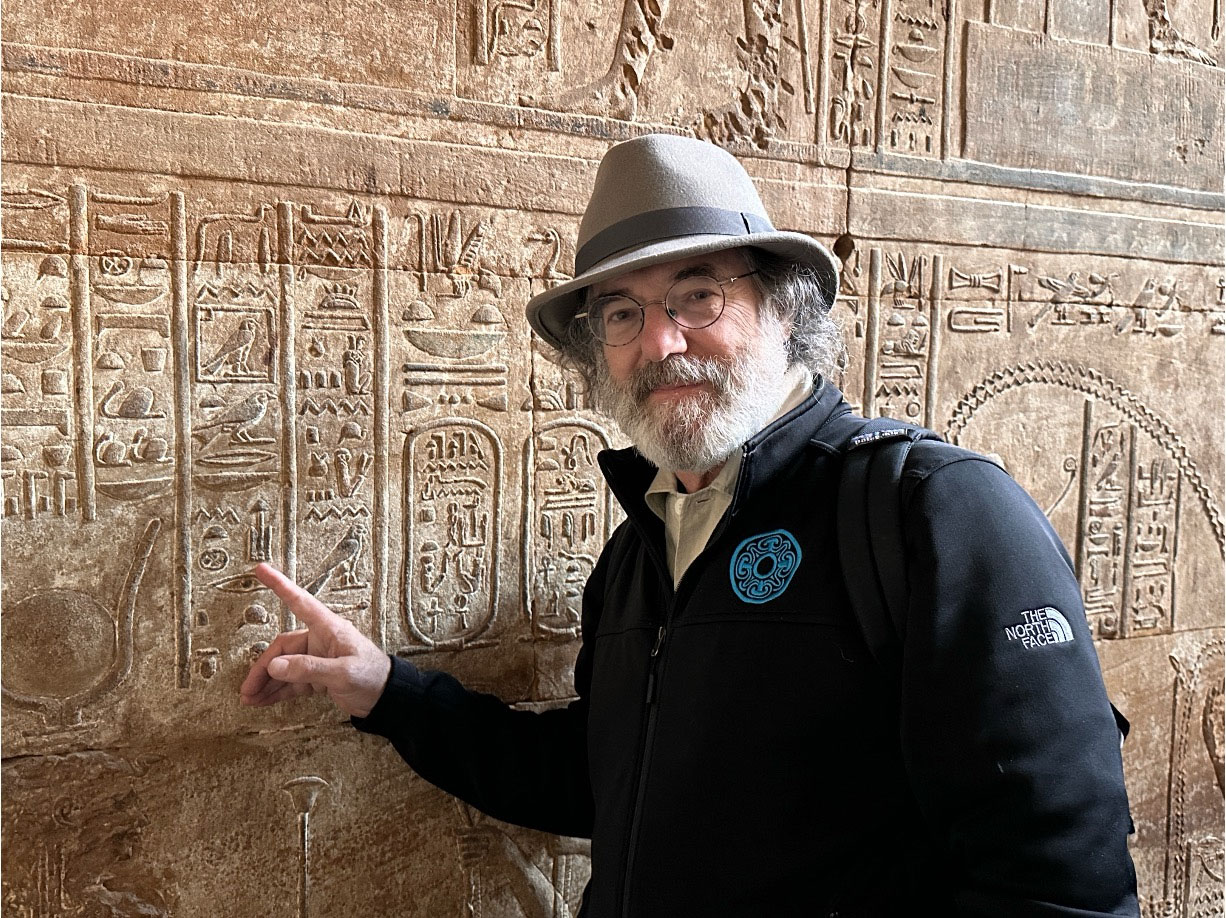
Photo by Pam Kryskow
Evolution and Historical Use of Psilocybin Mushrooms
At this point, mycologists have documented more than 200 species of psilocybin mushrooms across a wide range of genera. Psilocybin likely evolved around 65 to 67 million years ago. The evolution of the psilocybin-active mushroom species resulted from at least four periodic transfers of genes coding for psilocybin (converting tryptophan into psilocybin), which illustrates a recurring dynamic flow of psilocybin-encoding genes that has led to the many psilocybin-active species, spread over at least eight genera, currently recognized today: Psilocybe, Panaeolus, Gymnopilus, Inocybe, Pholiotina, Pluteus, Galerina, and Massospora.
We do not yet know what the first psilocybin species was. We do know, however, that psilocybin genes have transferred from one mushroom species to others. Psilocybin was likely first expressed in wood-rotting species and later appeared in dung dwellers. There are many possible ways for psilocybin genes to have spread. Bradshaw et al. noted that an ecological shift to dung species occurred independently on at least two occasions, citing four or five possible horizontal gene transfers flowing to other mushrooms from 40 to 9 million years ago.
Interestingly, the arrival of the gene cluster that codes for psilocybin is coincident with the Cretaceous-Paleogene extinction event, at the same time that megafauna herbivores, such as the early ancestors of elephants and mastodons, began rapidly differentiating. Multiple lineages led to the dung-producing, grass-grazing megafauna.[5],[6] The lineage of these animals can be traced to 25 to 50 million years ago. Our modern-day cattle trace their origin to 12 million years ago. I suspect that psilocybin mushrooms made the jump from megafauna like elephants to hippopotamuses and then to bovines around that same time .
Two of many possible vectors of gene transference are rotting bacteria and anastomoses (mycelial fusion or proximate contact), aided by insects and birds, especially egrets, that likely spread psilocybin mushrooms to new habitats. Several pastoral mushroom species may have benefitted, including the majestic Psilocybe cubensis and Psilocybe natalensis, the former being the most popularly grown and consumed of all psilocybin mushroom species. These two species can co-occur on the same pile of dung with a likewise potent species in the Panaeolus cyanescens taxonomic cluster. A working hypothesis is that psilocybin genes first appeared indung-dwelling species of the Panaeolus cyanescens group and jumped to dung-dwelling Psilocybe species, like Psilocybe cubensis or Psilocybe natalensis. Many avenues have led psilocybin to move from one species to another. And these genes are likely continuing to spread, with more psilocybin-active species yet to be discovered.
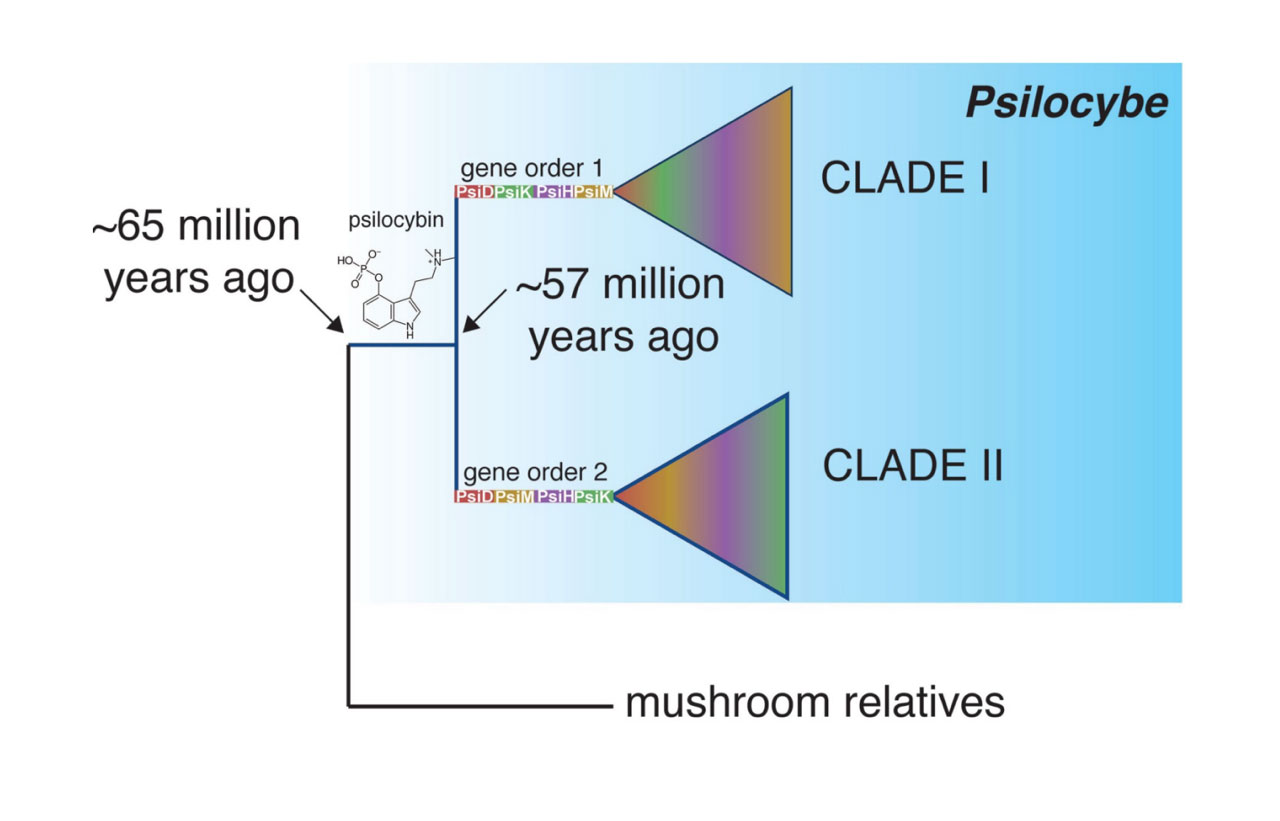
A simplified evolutionary tree for the genus Psilocybe. Clade I and Clade II represent the Psilocybe species with the same gene order patterns within their psilocybin-producing gene clusters. Image credit: Bryn Dentinger.
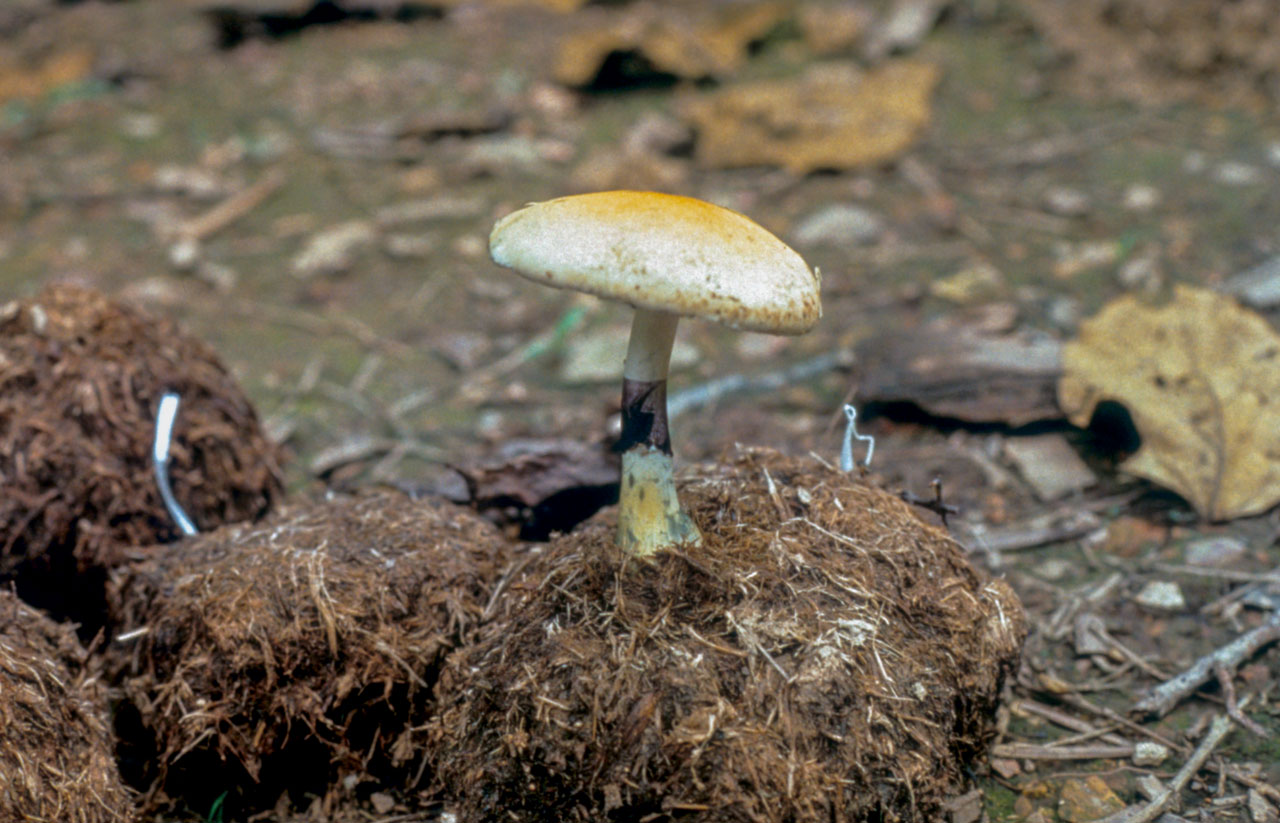
Psilocybe cubensis growing on elephant dung. Photo by Gary Lincoff
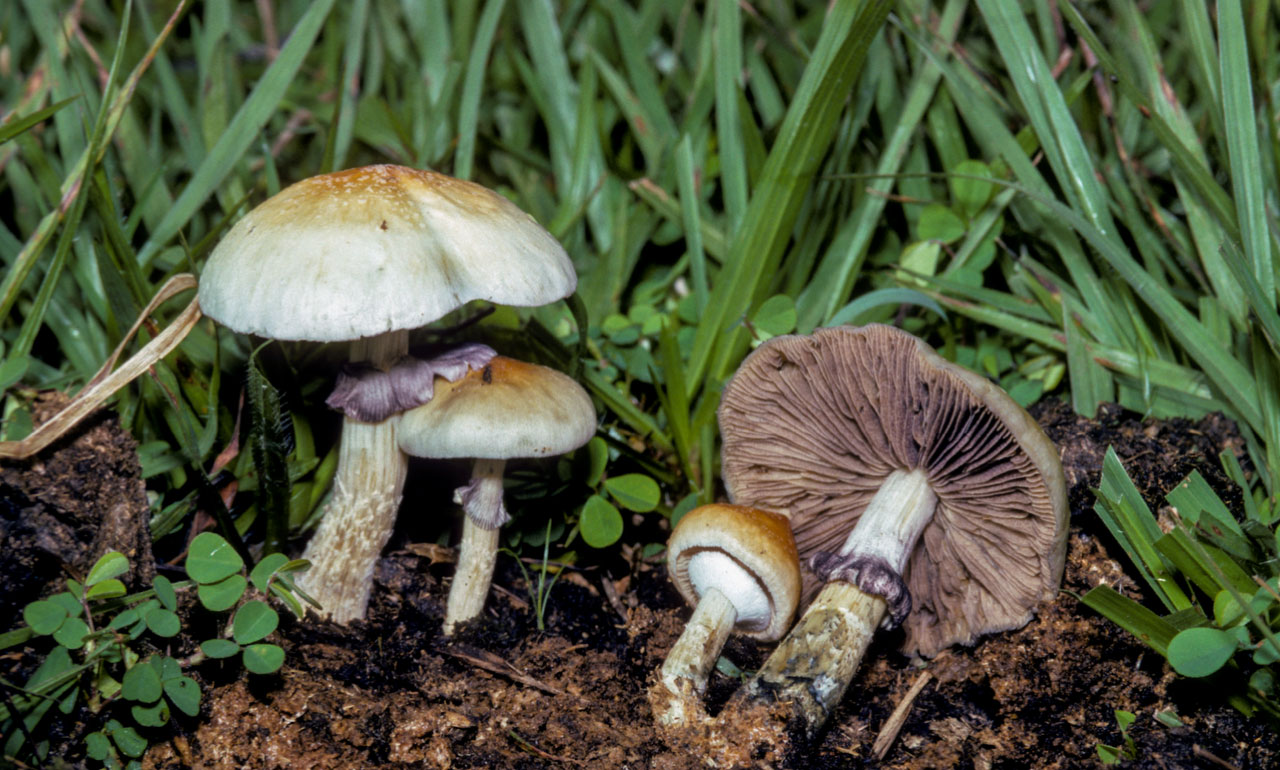
Psilocybe cubensis growing on cow dung. Photo by Paul Stamets
The pastoral preference of Psilocybe cubensis allowed it to spread among species of megafaunal herbivores as forests were cleared and replaced with grasslands for cows, sheep, and horses. Since the pantropical Psilocybe cubensis continues to be found on elephant dung, its jump to the dung of wild ox and the descendent cows are likely a broadening of habitat and a more recent occurrence. An interesting and plausible theory is that egrets helped spread spores of Psilocybe cubensis after forming a mutualistic relationship with cattle.[7] Egrets feast on swarming insects, consuming the insects that take flight as cattle walk and disturb the habitat underfoot. The egret hypothesis is especially interesting to me, as egrets sit upon many megafaunal herbivores. Many insects thrive in not only the dung, but also inside most of the mushrooms growing on the dung. For many mushrooms, insects are a primary vector of spore and mycelium distribution. Since egrets and dung-dwelling mushrooms both prefer ponds, marshes, shores, and swamplands, they have frequent encounters. As migratory birds, egrets can then extend the mushrooms’ distributions still further.
Why would a mushroom species produce psilocybin? What evolutionary advantage would psilocybin confer? Since psilocybin mushrooms predate hominins—many had their forms long before our primate ancestors evolved—a biological explanation independent of human development seems likely. Some scientists have proposed that psilocybin is a potential insecticide, preventing insect predation through disorientation or loss of appetite—abating insects’ mycovorous tendencies to eat the fruitbodies.[8] However, I find fly larvae inside many maturing psilocybin mushrooms, especially pastoral species. What I have noticed repeatedly is that another group of invertebrates—slugs and snails (terrestrial members of the phylum Mollusca)—avoid psilocybin-active mushrooms in favor of psilocybin-inactive species. I did a simple choice test with invasive European black slugs (Arion sp.) placed into a cardboard box with the wavy-capped Psilocybe cyanescens and the Garden Giant, Stropharia rugoso-annulata, at opposite ends. The slugs swarmed over and ate the gills and flesh of the Garden Giants but did not consume the Wavy Caps. When given only Psilocybe cyanescens mushrooms, the slugs seemed disinterested and left them unharmed.
Like other mushroom species, psilocybin mushrooms attract sciarid, phorid (Pleurotus spp.), Drosophila (Laetiporus sulphureus), and other flies that spread spores to new habitats.[9] Slugs and snails, on the other hand, devour the flesh of the emerging fruitbodies and consume down to the spore-producing gill layers, abating spore release. This observation supports the theory that psilocybin could prevent gastropod (slug and snail) predation. But, if this is the case, why don’t all mushrooms produce psilocybin? That psilocybin mushrooms also use humans to spread their spores may be a later development that helped ensure their survival, as has been the case with many plants that humans have cultivated—from apples to marijuana.[10] Psilocybin mushrooms inspire us to consider them as sacred allies to be protected and cultivated. By accident or design, they have achieved a new vector for panspermia—hitchhiking with us as we migrate and colonize new habitats—even, plausibly, as we explore space. I propose that astronauts will need psilocybin mushrooms for psychological (and ecological) benefit to overcome the loneliness during our extraterrestrial explorations to other planets—and to stay on mission.[11] We are now bonded with psilocybin species forever.
References
[1] Berlant, S. R. 2005. The entheomycological origin of Egyptian crowns and the esoteric underpinnings of Egyptian religion. Journal of Ethnopharmacology 102:275–288. doi.org/10.1016/j.jep.2005.07.028
[2] El Enshasy, H., Elsayed, E. A., Aziz, R., Wadaan, M. A. 2013. Mushrooms and truffles: historical biofactories for complementary medicine in Africa and in the Middle East. Evidence-Based Complementary and Alternative Medicine, 2013:620451. doi.org/10.1155/2013/620451.
[3] Budge E. A. W. 1967. The Egyptian Book of the Dead: The papyrus of Ani. Dover, Mineola, New York.
[4] Abdel-Azeem, A. 2017. Egypt’s national fungus day. Microbial Biosystems 2:21–25.
[5] Meyer, M., Slot, J. 2023. The evolution and ecology of psilocybin in nature. Fungal Genetics and Biology
167:103812. doi.org/10.1016/j.fgb.2023.103812.
[6] Bradshaw, A. J., Ramírez-Cruz, V., Awan, A. R., Dentinger, B. T. M. 2024. Phylogenomics of the psychoactive mushroom genus Psilocybeand evolution of the psilocybin biosynthetic gene cluster. Proceedings of the National Academy of Sciences USA 121(3):1–9. doi.org/10.1073/pnas.2311245121.
[7] Smith, D. 1996. The Cattle Egret (Bubulcus ibis): Colonizer of Old-World Origin and a Vector of Psilocybe cubensis Spores. Stain Blue Press, Spring, Texas.
[8] Reynolds, H. T., Vijayakumar, V., Gluck-Thaler, E., Korotkin, H. B., Matheny, P. B., Slot, J. C. 2018. Horizontal gene cluster transfer increased hallucinogenic mushroom diversity. Evolution Letters 2:88–101. doi.org/10.1002/evl3.42.
[9] https://bugguide.net/node/view/851840/bgpage
[10] Pollan, M. 2002. The Botany of Desire: A Plant’s-Eye View of the World. Random House, New York.
[11] Hilden, N. 2021. Future space travel might require mushrooms. Scientific American Space & Physics 4(5). Available via www.scientificamerican.com/article/space-travels-most-surprising-future-ingredient-mushrooms/
Endorsements:
“Visually stunning and nourishing to your mind, Psilocybin Mushrooms in Their Natural Habitats is essential for all those interested in psilocybin mushrooms, from mycologists to therapists to physicians. I highly recommend this epic book!” –Andrew Weil, MD
“Stamets is a world expert on the identification and cultivation of psilocybin mushrooms, and here provides a guide to almost every aspect of their lives, from ecology, to evolution, to the histories and mysteries of their relationships with humans. A rich hybrid of memoir, field guide, and cultivation manual, Stamets offers a wide-ranging and unique perspective on these remarkable organisms.” –Merlin Sheldrake, author of Entangled Life
“In a unique combination of deep ethnomycological research, psychedelic science, field guide, and much more, Paul Stamets has once again produced a seminal book that will guide the path of many generations to come.” —Giuliana Furci, foundress of the Fungi Foundation; fellow, International Mycological Association; National Geographic Explorer; and fungal activist
“Psilocybin Mushrooms in their Natural Habitats is a feast for the heart, mind, intellect, and soul–and a deft and dazzling combination of ecology, chemistry, history, healing, and more. Highest recommendation!” –Mark Plotkin, PhD; ethnobotanist, Amazon Conservation Team; and former research associate, Harvard Botanical Museum
“In the first half of Psilocybin Mushrooms in Their Natural Habitats, Paul explores the evolution of these species and the origins of human use; he also cautions us on who should not use these mushrooms. The second half is a field guide to psilocybin species–and the ‘tricksters’ one does not want to mistakenly consume. Paul’s lifelong fascination with psilocybin- and psilocin-containing fungi shows clearly in this must-have book.”” –Michael Beug, PhD, author of Mushrooms of Cascadia, Second Edition