




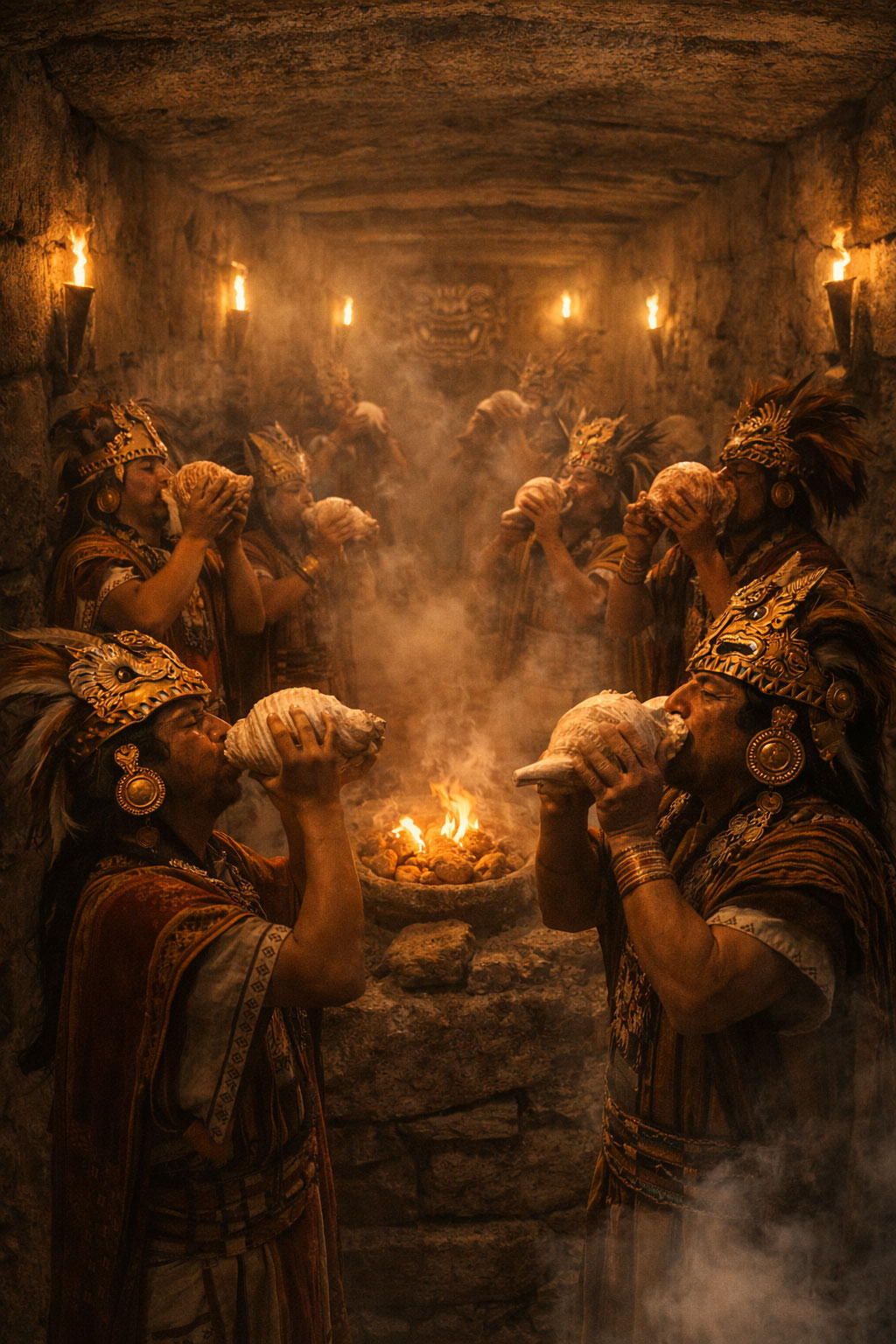
In the mist-laced highlands of northern Peru, nestled between two rivers that meet like serpents in embrace, lies one of the most enigmatic sites in the ancient world: Chavín de Huántar. Built over 3,000 years ago, this ceremonial center served as the spiritual and cultural heart of a powerful pre-Inca civilization known for its visionary artistry, monumental architecture, and mysterious religious practices. To modern archaeologists, Chavín is a puzzle of stone and shadow, but to those willing to see it through the lens of altered states, it reveals itself as something more: a temple designed not just to glorify gods, but to catalyze the human soul.
Far from being a static ruin, Chavín is a psychoactive machine – a meticulously engineered portal for consciousness transformation. Its underground galleries, echoing chambers, hydraulic canals, and precisely tuned instruments such as pututu conch-shell horns form an intricate web of sensory manipulation. Here, architecture was not inert – it pulsed, reverberated, and breathed alongside the participant. Combined with sacred plant medicines like Willka (Anadenanthera colubrina), rich in bufotenine and DMT-related tryptamines, and San Pedro (Echinopsis pachanoi), a mescaline-containing cactus still revered by Andean healers today, Chavín offered an immersive multisensory journey into the depths of the psyche.
Recent discoveries, including elaborately carved snuff tubes found in a sealed chamber in 2025 by an archaeological team from Stanford and the University of Florida, confirm that the use of psychoactive substances was central to ritual practice at Chavín. These snuff tubes, coated with chemical traces of Anadenanthera, offer direct evidence of DMT-related entheogenic use over three millennia ago. Yet long before this discovery, the art and architecture of Chavín whispered of inner worlds: fanged deities with shifting faces, vortex portals, serpents, birds, and feline hybrids – imagery that mirrors reports from modern DMT experiences with uncanny precision.
Bone applicators of the Willka snuff found in Gallery 3 at Chavin de Huantar.
See here for image.
This was not a civilization of warlords or empire builders. Chavín thrived for centuries without evidence of warfare or militarism. Instead, its influence spread across the Andes through pilgrimage, initiation, and mystique. It was a culture devoted to inner conquest, not territorial domination. And at its core was a ritual science, a kind of Andean neurotheology that fused psychedelics, sound, darkness, and architecture into a powerful system of transformation.
A Temple Designed to Reshape Perception
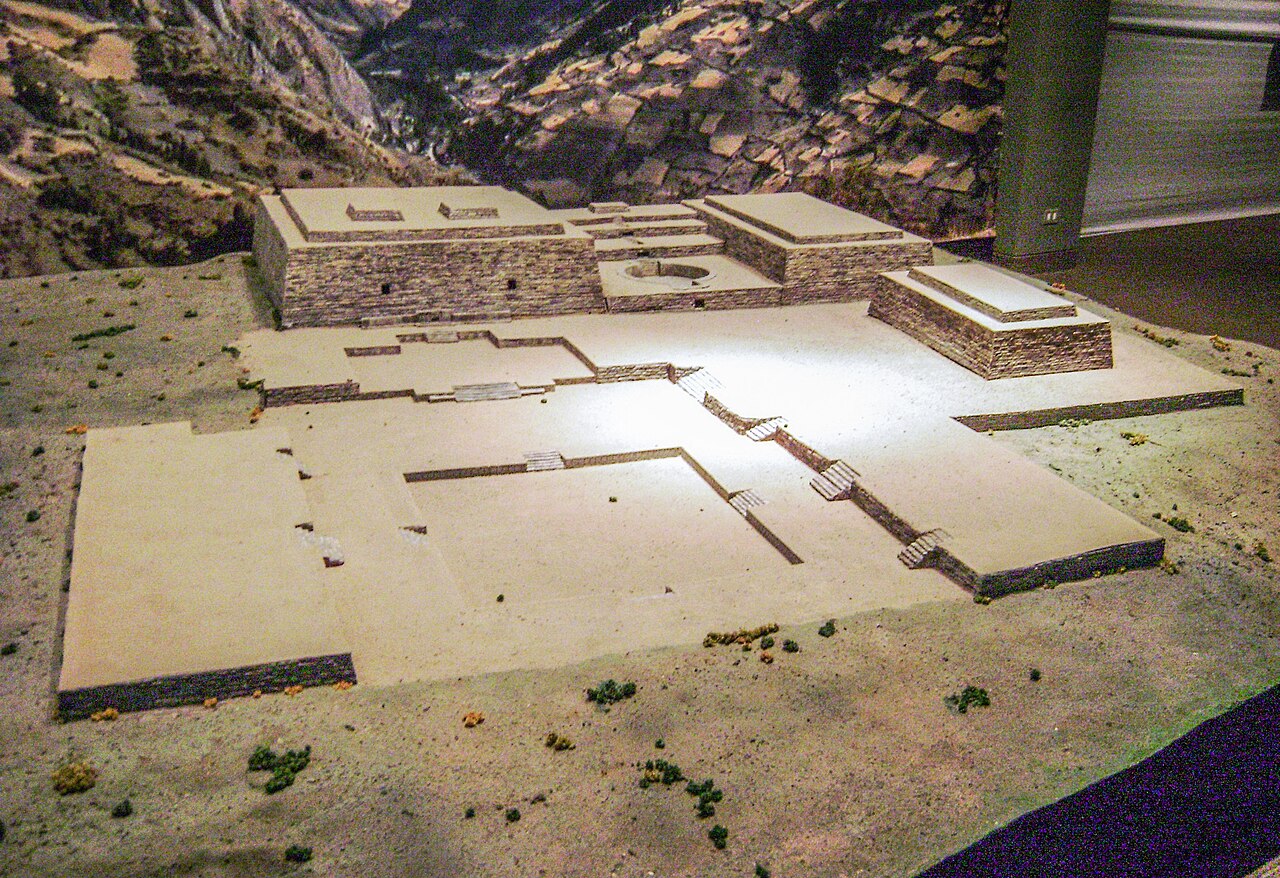
Recreation of the Chavin de Huantar temple. Photo Dtarazona (wCCBYSA3.0)

The architectural genius of Chavín reveals itself not in towering pyramids or open plazas, but in its interiors, the inner sanctums that twist and fold like neural pathways. These are not halls of grandeur; they are ritual labyrinths, narrow and silent, where natural light vanishes and the body is forced to crawl, bow, or squeeze through stone. The design is intimate, disorienting, and acoustically alive. As one moves through, every footstep, whisper, or pututu blast bounces and bends in unexpected ways, producing shifting echoes that blur the boundary between inner and outer space.
Many archaeologists, including Professor John Rick, interpret this as a tactic of ritual overwhelm. “You were supposed to be confused. You were supposed to be overwhelmed. It was designed to do this,” Rick has said, emphasizing the element of psychological disorientation. But drawing on psychedelic phenomenology, shamanic traditions, and sound science, I offer a different view.
Rather than confusion, these spaces may have been engineered for resonance and trance states. In this interpretation, the initiate was not meant to feel lost, but to tune in – to harmonize body and mind with the frequencies of the temple, the vibration of the pututus, the pulse of flowing water, and the chemical wisdom of sacred plants. Under the effects of Willka or San Pedro, with the ego loosened and the senses heightened, initiates may have experienced a symphony of consciousness calibration – guided not by fear, but by frequency.
The Three Worlds of Transformation: From Wachuma to Willka
Proof of Willka and Wachuma/San Pedro in artwork found at Chavin de Huantar.
See here for image.
The ceremonial journey through Chavín appears to have mirrored the tripartite Andean cosmos, unfolding as a ritual movement through Kay Pacha, Uku Pacha, and Hanan Pacha – the three levels of existence representing life, death, and transcendence. It likely began in the Circular Plaza, the open-air heart of the temple, which symbolized Kay Pacha, the world of living beings between earth and sky. Here, initiates may have consumed Wachuma (San Pedro cactus) – a mescaline-based entheogen long revered in the Andes for its ability to dissolve boundaries and open perception to the living intelligence of nature. Within this vast circular arena, surrounded by perfectly fitted stone, the deep tones of pututus (conch-shell trumpets) echoed through the air, merging with the heartbeat of the earth. The plaza acted as a vibrational field of preparation, where sound, rhythm, and plant medicine attuned the initiate’s consciousness to begin the sacred descent.
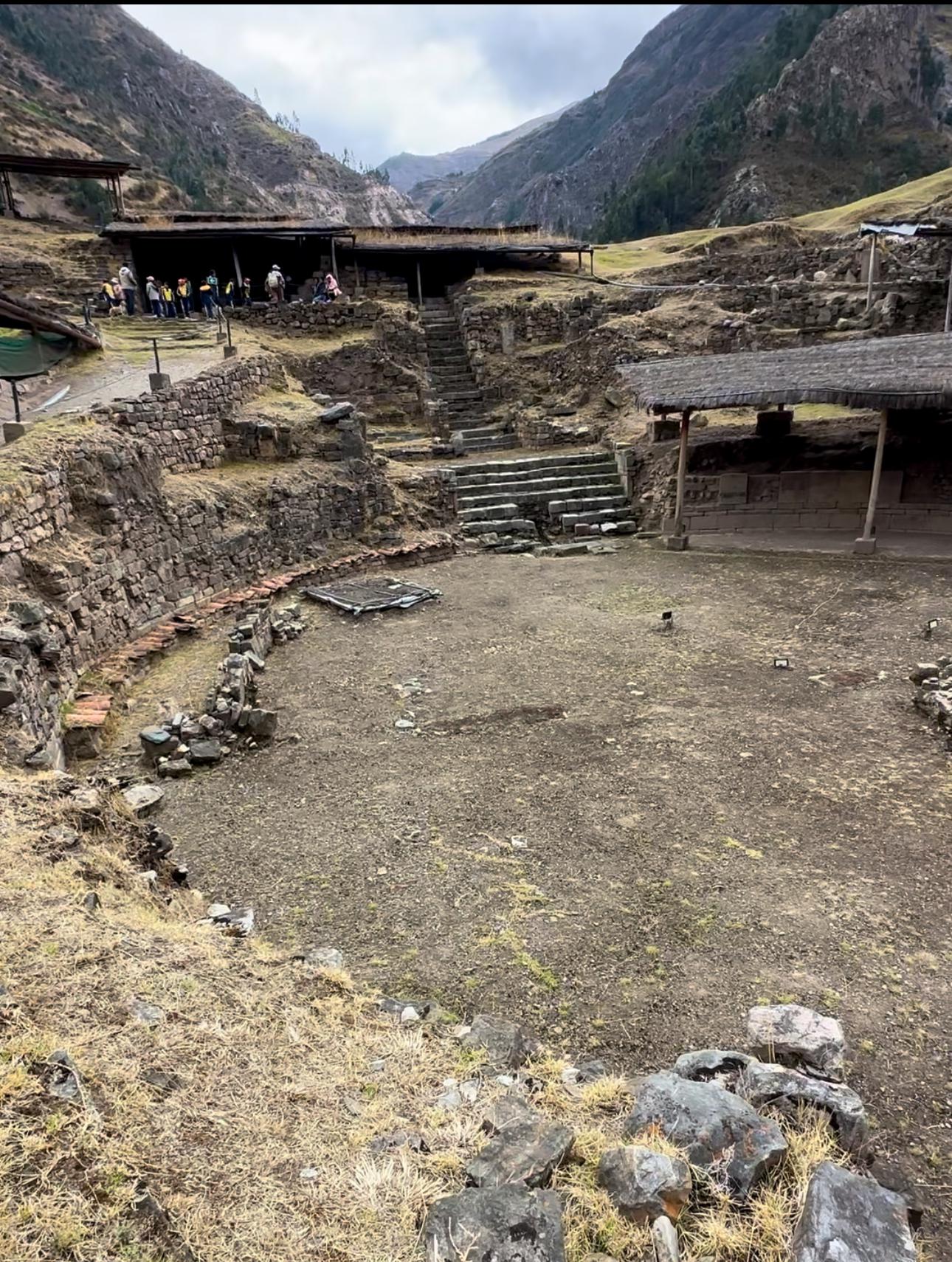
Circular Ceremonial Plaza. Photo by Dawid Rakowski
From this central space, participants entered through the dark rock side of the main door portal of the temple into the subterranean labyrinths, passing from the light of day into the sound-filled darkness of the Uku Pacha, the underworld of ancestors and shadow. The transition was more than physical – it was symbolic of death and dissolution. Within these narrow, echoing corridors, sound and architecture merged into a single instrument: dripping water, the roar of hidden channels, and the pulse of the pututu created an enveloping acoustic cocoon. Here, initiates likely faced their inner chaos, stripped of identity and orientation, much like the neophytes of the Eleusinian Mysteries who journeyed into darkness to confront mortality and be reborn in light. Under the lingering influence of Wachuma, the mind became a resonant chamber, and the underworld a mirror of the unconscious.
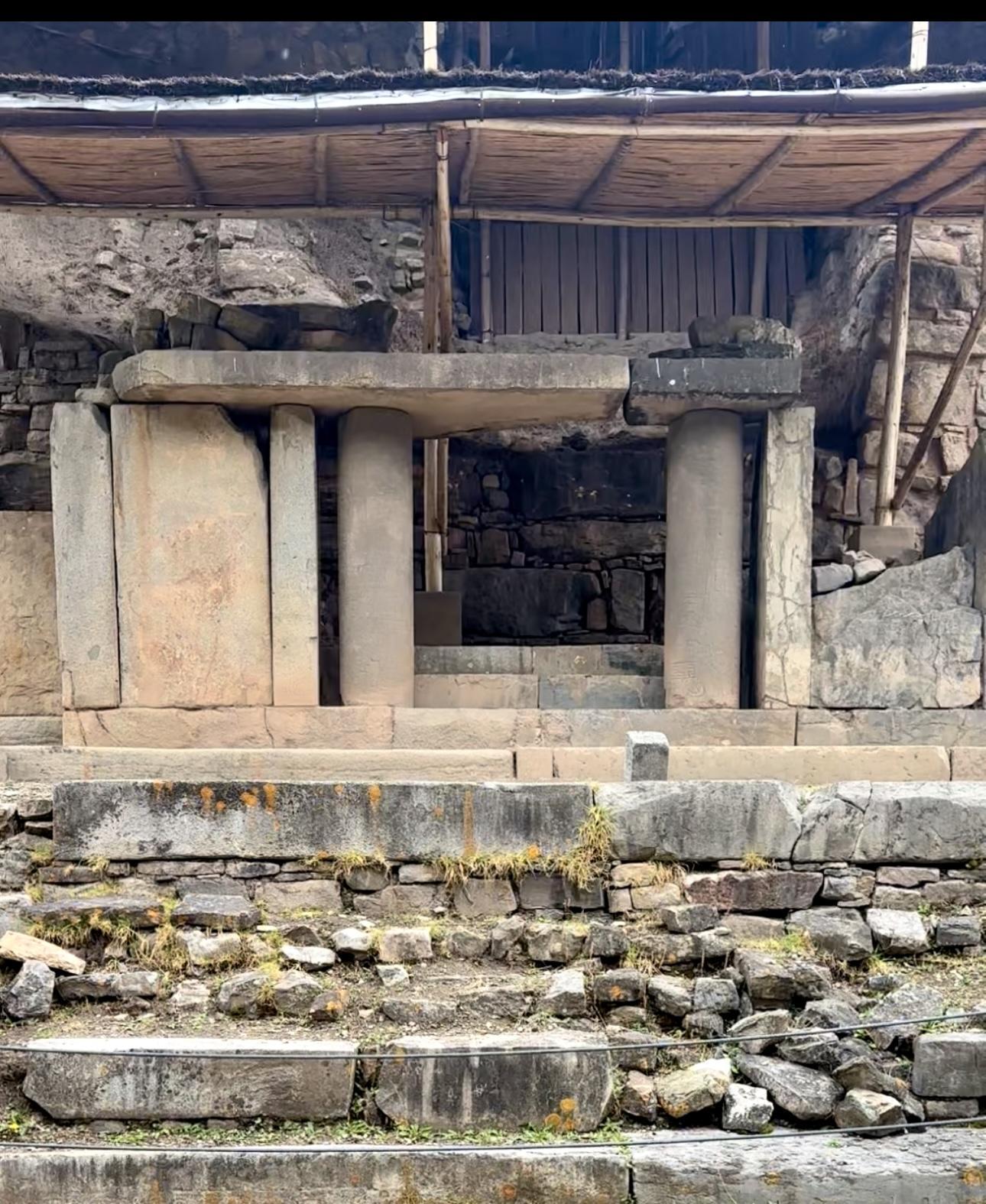
The black & white gate to the temple. Photo by Dawid Rakowski
The contrast between black and white stone in the main door embodied a cosmic code: the black stones corresponded to the Uku Pacha, the subterranean realm of transformation and shadow, while the white stones, bathed in daylight above, symbolized the ascent toward Hanan Pacha, the luminous world of spirit. The initiate’s literal movement through the temple – downward through black stone and upward through white – was a walk through the process of inner alchemy itself, a psychophysical enactment of the soul’s metamorphosis.
Emerging from the underworld tunnels, the initiates ascended the temple’s upper terraces and solar-facing facades – the realm of Hanan Pacha, the sky-world of illumination. It is here, under the open sun and above the black stones of death, that the next stage of transformation may have occurred. Having been purified by darkness, the initiate now faced the radiance of the upper world. At this level, the sacrament was no longer Wachuma but Willka, the visionary snuff made from Anadenanthera colubrina. Containing potent DMT and bufotenine alkaloids, Willka opened gateways of communication with what ancient peoples perceived as divine intelligences.
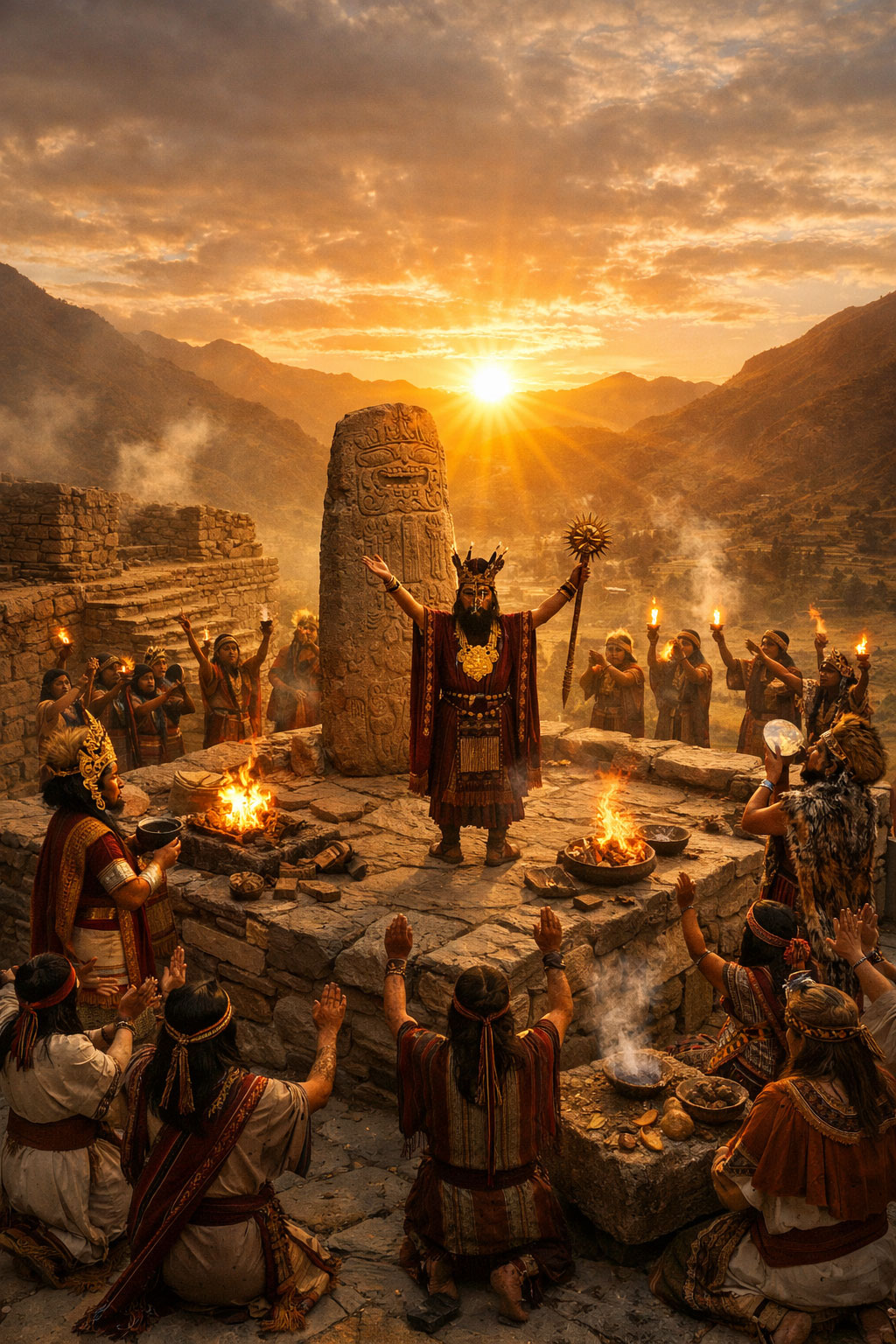
Image by Dawid Rakowski
The very name Willka in Quechua and Aymara means sacred, holy, and was connected to the Sun. Colonial dictionaries record it as son of the sun “hijo del Inti”, the solar deity. To inhale Willka was therefore not simply to take a psychedelic, but to embody a cosmic rebirth- to become once more a child of the Sun. Having descended into shadow and emerged through the architecture of duality, the initiate reached the realm of illumination: the solar communion of consciousness and cosmos. When I worked with Willka at the sacred sites, the medicine would always guide me towards the sun, something most archeologists don’t know as they have never used it in a ceremonial setting. The energy of Willka is very powerful and together with the sun it can greatly raise our inner vibration that transforms into voice activation. In that state the telepathic communication with the divine beings activates.
Thus, the journey through Chavín – from the plaza of Wachuma (Kay Pacha), through the underworld of black stone (Uku Pacha), and finally to the sunlit terraces of white granite (Hanan Pacha and Willka) – was a ritual technology of death and rebirth. It was an initiatory science encoded in architecture, vibration, and plant medicine, guiding consciousness from matter into light.
Sacred Acoustics: Sound, Water, and the Sonic Architecture of Consciousness
Among the most astonishing features of Chavín de Huántar is its highly sophisticated use of sound as a transformative technology. Central to this were the pututu horns – large conch shells found deep within the temple’s interior chambers. When blown, these instruments emit a low, resonant drone that carries for great distances and vibrates through the massive stone corridors. Acoustic research led by John Rick and his team has demonstrated that the frequencies produced by these shells were not arbitrary. Rather, they were deliberately tuned to interact with the temple’s architectural cavities, producing standing waves and reverberations that would have saturated the space in rich, pulsating sound.
But these tones were far more than ceremonial fanfare. Modern neuroscience now confirms that sustained, low-frequency sounds like those of the pututus can entrain the brain, modulating neural oscillations into altered states of consciousness. In particular, frequencies within the theta (4–7 Hz) and gamma (30–100 Hz) ranges are associated with trance, visionary states, deep meditation, and heightened neuroplasticity – brain states that mirror the effects of psychedelics like DMT and mescaline. When these frequencies interact through harmonic overtone blending or close interval spacing, they can generate beating phenomena – rhythmic pulses similar to modern binaural beats, which have been scientifically shown to affect brain coherence and emotional regulation.
At Chavín, the layering of pututus with voice toning, and possibly chanting would have created a complex psychoacoustic environment, intentionally designed to activate specific neural and emotional responses. In a darkened space, under the influence of plant medicines like Willka or San Pedro, this auditory field could guide participants into deep visionary realms. The sound was not simply an accessory – it was a surgical instrument for the mind, used to dissolve boundaries, unlock emotion, and awaken archetypal visions.
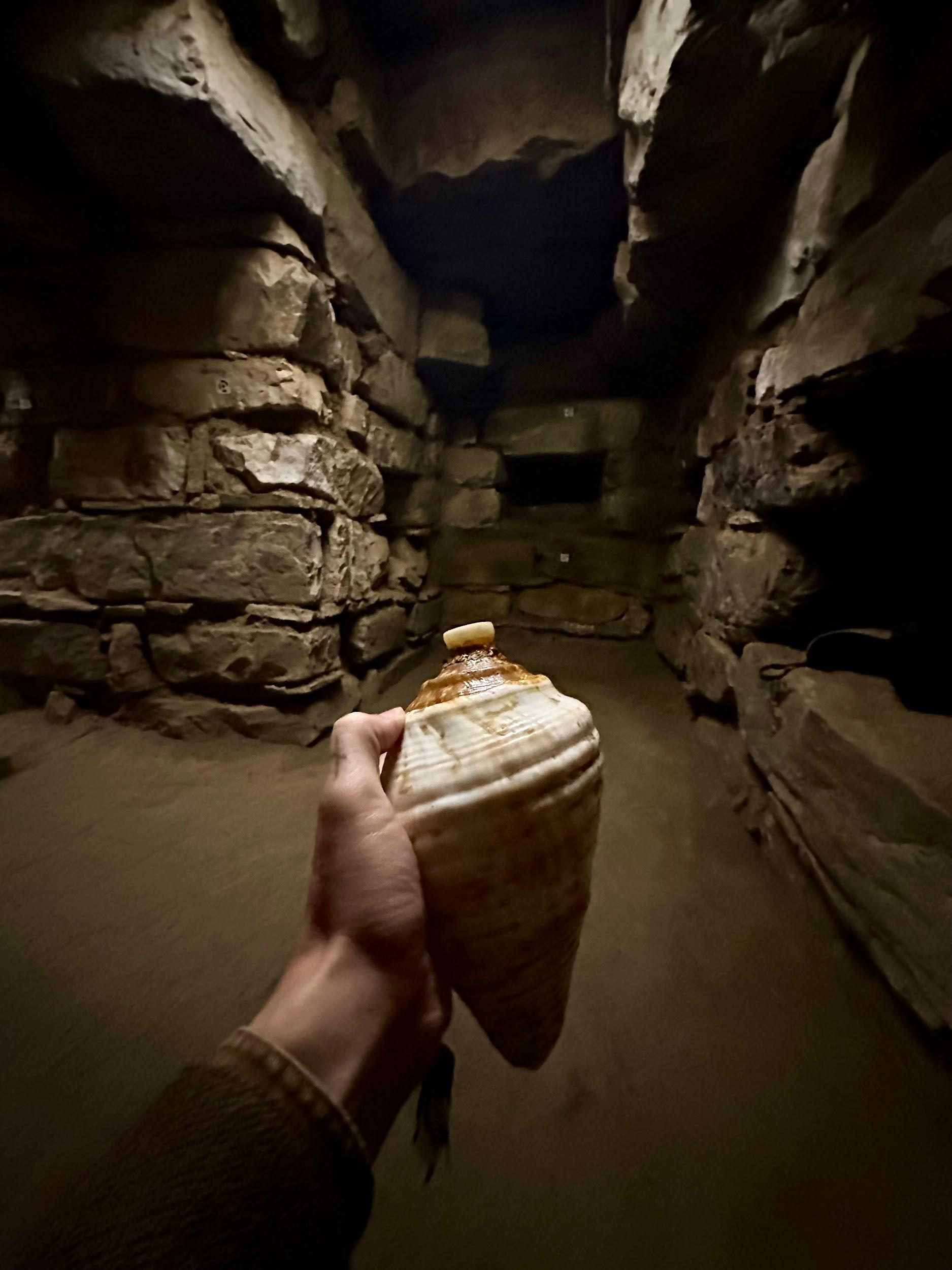
Photo of the Pututu conch shell horn in the underground Chavin Gallery. Photo by Dawid Rakowski
Adding another layer to this sonic engineering is the temple’s network of subterranean water channels, meticulously built into its foundations. Initially interpreted as simple drainage systems, these hydraulic structures are now recognized as acoustic amplifiers and sound generators in their own right. During ceremonial activity, water rushing through these hidden ducts would have created natural subsonic vibrations and percussive roars – mimicking thunder, wind, or even the growl of a jaguar, an animal deeply embedded in Chavín iconography and mythology.
In the heightened suggestibility of a psychedelic trance, the combination of resonating horns, chanting, and flowing water would have created an overwhelming tapestry of auditory stimulation – blurring the boundaries between self and environment, sound and spirit. Participants likely experienced these acoustic elements not just as external noises, but as internal events – vibrations coursing through the body, shifting their inner state, and facilitating a deep sense of dissolution and rebirth.
The priests and engineers of Chavín were not only spiritual leaders but proto-neuroacousticians, intuitively aware of how frequency, rhythm, and reverberation could shape consciousness. They crafted a temple that was not just a place of worship, but a living instrument of transformation – a space where stone, water, and air collaborated in the creation of transcendence.
Darkness, Breath, and the Inner Pharmacology of Vision

Image by Dawid Rakowski
Many of Chavín’s inner galleries were deliberately sealed from sunlight, plunging initiates into total sensory darkness. These underground chambers may have functioned similarly to modern sensory deprivation tanks or dark retreats – techniques known to induce altered states of consciousness without any external substance. In these conditions, the body begins to turn inward. And increasingly, research suggests that under such circumstances, the brain may begin producing its own psychedelic compounds, including endogenous DMT (N,N-Dimethyltryptamine).
In the Amazon,, Shipibo shamans still perform healing work in complete darkness. In Tibetan traditions, dark retreats lasting days or even weeks are used to trigger spontaneous visionary experiences – sometimes described as luminous, geometric, and otherworldly. This practice is paralleled in Amazonian dietas in which initiates ingest sacred plants in solitary dark huts and may undergo profound internal visions and teachings.
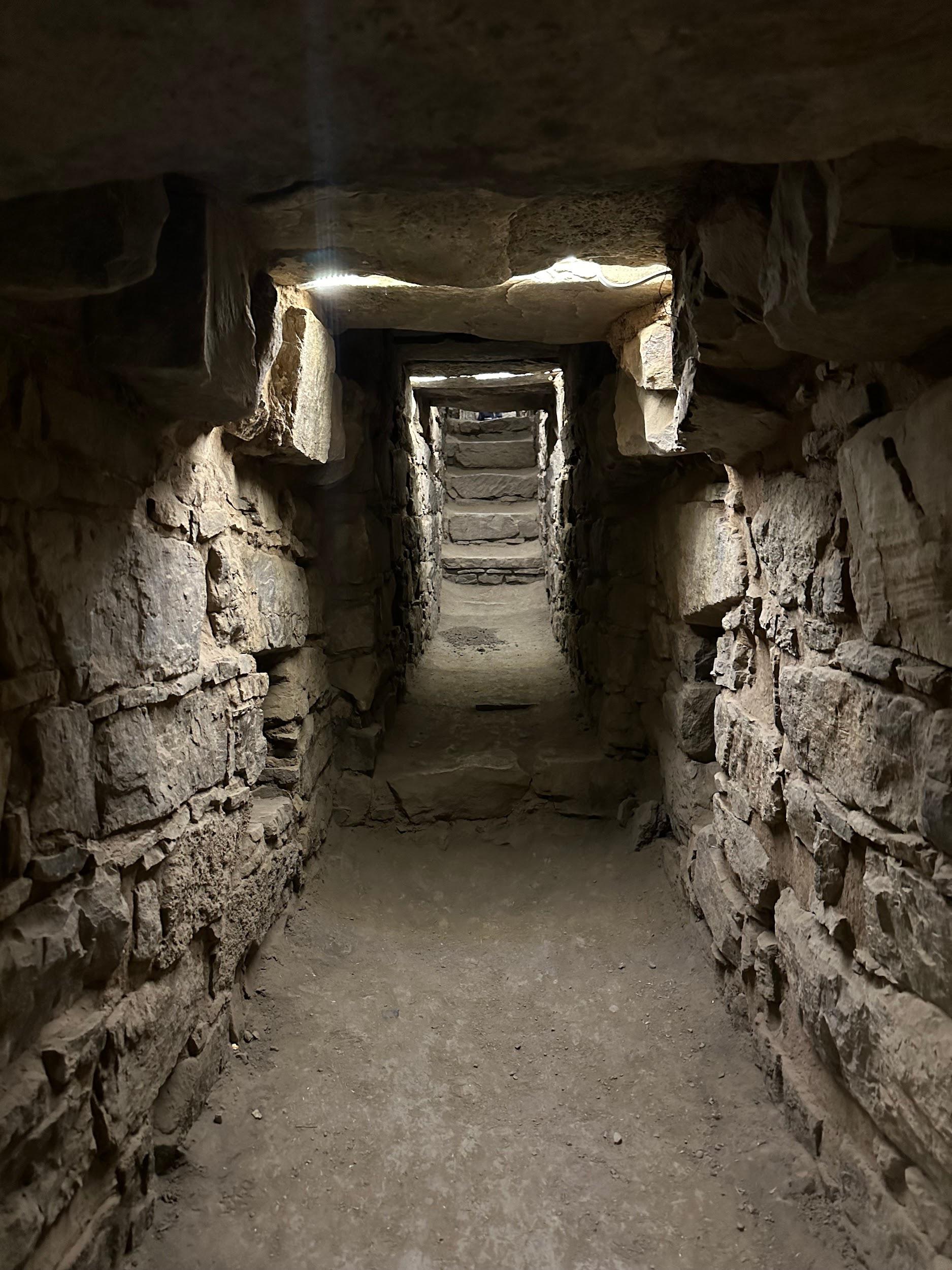
The underground galleries at Chavin. Photo by Dawid Rakowski
It is likely that the Chavín initiates engaged in a combination of breath regulation, chanting, fasting, and darkness – a synergistic mix that could push the body into a heightened neurochemical state. When paired with external plant medicines such as Willka or San Pedro, this endogenous preparation would have amplified the visionary effect, stabilizing it with a deeply rooted, embodied awareness. Powerful trance states would be then accessible and communication with the divine was enabled.
Healing Frequencies and the Neuroacoustics of Transformation
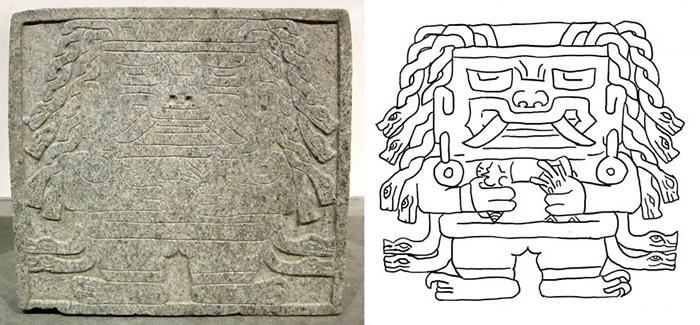
Stone sculpture (Museo Nacional de Chavín, photo and drawing: Dr. Sarahh Scher, (CC BY-SA 4.0)
Recent scientific research is increasingly validating what ancient cultures appear to have known intuitively: sound can alter consciousness and even heal the body at a cellular level. In experimental oncology, low-intensity focused ultrasound (LIFU) is being explored for its ability to non-invasively target and disintegrate tumors using mechanical vibrations tuned to specific resonant frequencies. These studies echo the ancient intuition that vibration and resonance can penetrate tissues and shift internal states-but modern research is also confirming their neurological effects.
Sound not only affects matter but also the neural architecture of the brain. Neuroacoustic studies have shown that overtone-rich instruments-such as singing bowls, gongs, and even overtone flutes-produce complex harmonic structures that entrain the brain into alpha, theta, and delta wave states, each associated with distinct psychological effects. Alpha waves correlate with relaxed alertness, theta with dreamlike states and deep meditation, and delta with restorative unconsciousness or trance. These frequency bands are especially pronounced during altered states of consciousness, including those induced by psychedelics.
When complex acoustic stimuli-like droning shells, toning voices, and overtone singing-are introduced during altered states, they interface directly with the brain’s limbic system and auditory cortex, reinforcing and guiding the visionary experience. Ancient instruments found at Chavín-such as strombus trumpets carved from marine shells-were designed to create deep, resonant, vibratory pulses that filled the underground galleries with powerful acoustic fields. These instruments did not merely signal ritual moments; they created standing waves, low-frequency pulses, and overlapping harmonics that could entrain collective brainwaves and modulate inner states.
In this light, Chavín’s ceremonial architecture, with its resonant galleries, pitch-black passageways, and water-saturated foundations, functioned as a psychoacoustic resonator. Every sound echoed and interacted, creating nested feedback loops that physically reverberated through the body and sculpted mental states. The effect was likely intensified under the influence of Willka or San Pedro, whose alkaloids opened the sensory gates, making participants extraordinarily receptive to sonic frequencies.
This aligns with the emerging view of ancient ritual sites as consciousness technologies. Chavín’s instruments were not decorative, nor merely musical-they were surgical tools for the psyche, precisely tuned to operate on the nervous system and open channels to visionary realms. The temple becomes not a static monument but a dynamic neurological theater, where spirit, vibration, and cognition converge in carefully orchestrated symphonies of transformation.
In many ancient cultures, voice toning – the deliberate sustaining of specific vowel sounds and harmonic overtones – was used to induce trance and balance the body’s subtle energies. In India, the chanting of “Om” is said to vibrate the entire nervous system, aligning breath, heart rate, and mind with cosmic rhythm. In Tibetan monasteries, overtone chanting is employed to entrain deep meditative states measurable in brainwave studies.
Modern acoustic research confirms that the human voice is a uniquely adaptable instrument, capable of producing infrasonic and ultrasonic harmonics that directly affect the body’s biochemistry. Sustained toning can synchronize left and right brain hemispheres, stimulate vagal tone, and even modulate the heart’s electromagnetic field.
It is not far-fetched to imagine that Chavín priests mastered similar techniques. The narrow stone corridors would have amplified vocal resonance, turning the initiate’s own voice into a vibratory mirror. Under the influence of Willka or San Pedro, these tones could generate visual and emotional phenomena identical to those described in modern studies of sound-induced trance. The ancient Andean adepts may have understood that the voice-when focused and harmonized-was not merely communication but a form of tuning the self to the frequency of the cosmos.
The San Pedro Connection: The Stela of the Cactus Bearer
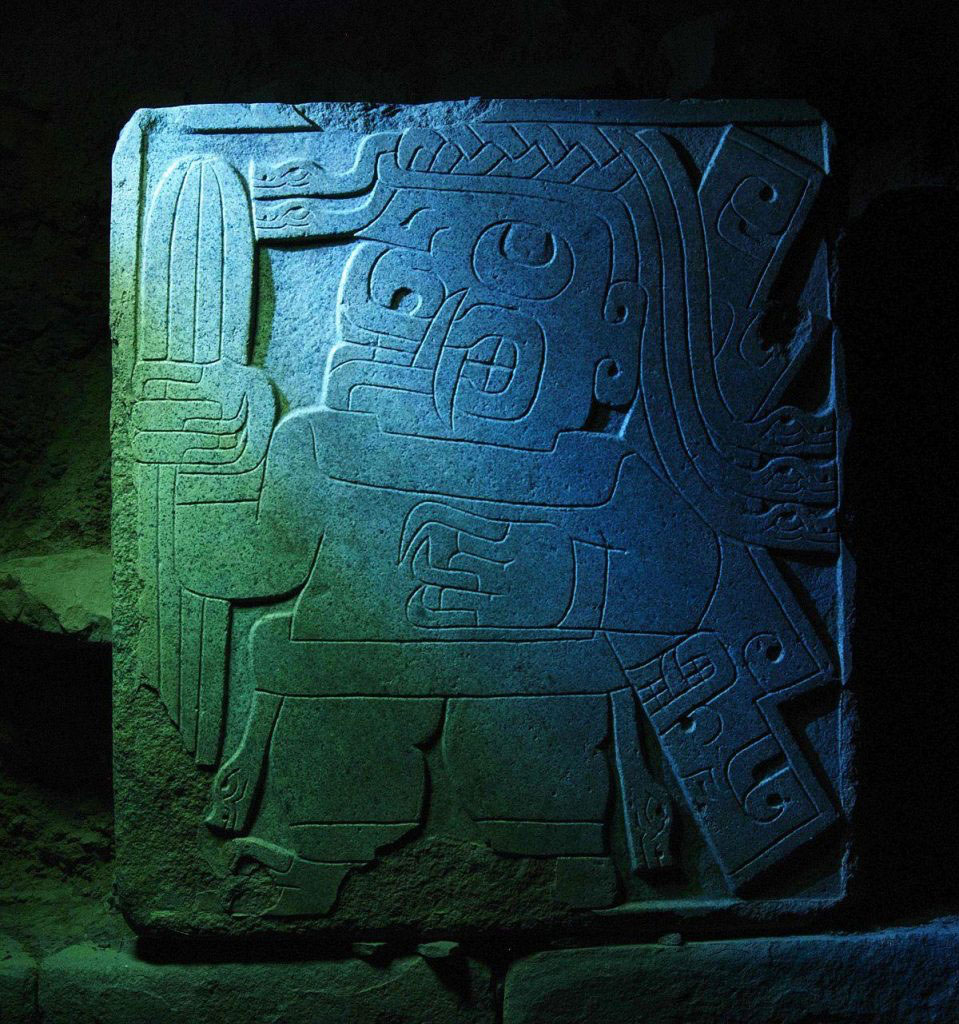
Stela of the Bearer of the San Pedro Cactus in the Circular Plaza of Chavín de Huántar. (Photo Marcelo Rodríguez Escudero, CCBY-SA4.0)

Among Chavín’s most iconic carvings stands the Stela of the Cactus Bearer, depicting a deity holding the sacred San Pedro cactus aloft as an offering to humanity. This image alone reveals how deeply plant-based consciousness expansion was woven into the spiritual framework of the ancient Andes. The cactus-rich in mescaline-induces luminous visionary states marked by feelings of unity, love, and cosmic intelligence.
The depiction of the god bearing San Pedro parallels myths across the ancient world in which divine beings deliver knowledge or sacred plants to humanity-echoing The Watchers teaching about Astrology, Prometheus with fire or Thoth with writing. The Tubu tribe of Columbia has a belief that the plant medicines came to Earth, sent by the Gods in a galactic canoe. In this case the gift is consciousness itself: a living technology to awaken the inner senses. When combined with the acoustic and architectural precision of Chavín, the cactus served as a biochemical key that unlocked the full visionary potential of the human mind.
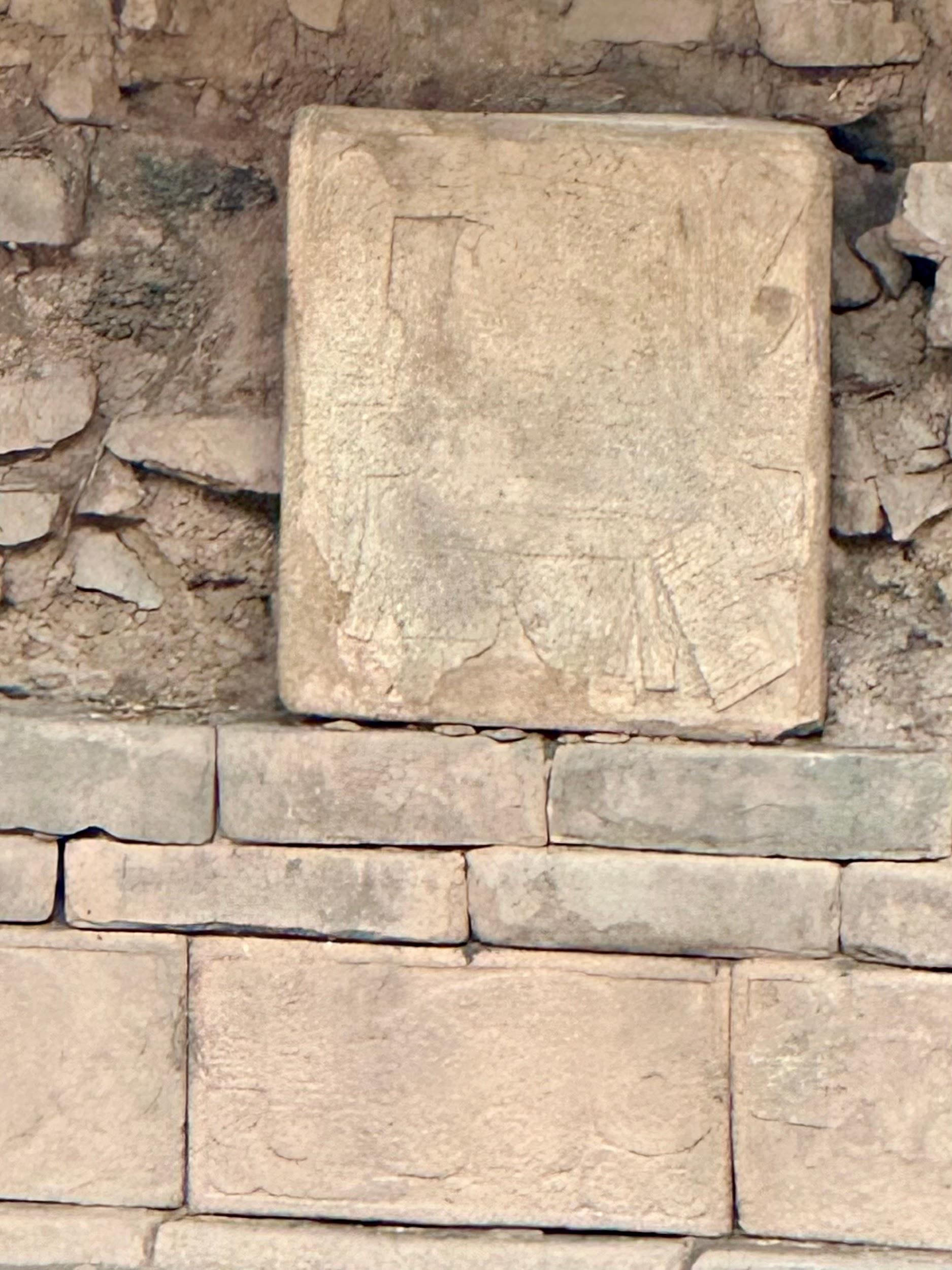
Photo of the original stone carving located in the circular plaza. Photo by Dawid Rakowski
Plant Medicine ceremonies still practiced in Peru today retain striking continuity with this ancient symbolism. Healers sing icaros, use rattles and flutes, and often perform the rituals near running water-elements that mirror the sonic, hydrological, and spiritual design of the temple itself. This continuity underscores a truth often overlooked in modern science: that the ancient peoples of the Andes were not experimenting blindly. They were scientists of the sacred, exploring consciousness with the same rigor we now apply to quantum mechanics and neuroscience.
Sound, Light, and Consciousness as Bridges of Contact
Deities playing the Pututu on the left and using the Shell for Willka Snuff activation while holding the bone tube in the other hand.
See here for image from Chavín de Huántar: Evidence for an Evolved Shamanism by John Rick.

Across the Peruvian landscape, from the sun-aligned pyramids of Caral to the resonant tunnels of Chavín de Huántar, we find traces of a continuous tradition devoted to exploring the boundaries of perception. The earliest Andean ceremonial centers were not simply agricultural or political hubs – they appear to have been laboratories for consciousness, where architecture, sound, and celestial geometry combined to create experiences of contact with the cosmos.
At Caral, dating to around 3000 BCE and regarded as the oldest known city in the Americas, the monumental complexes were carefully aligned with the solstices and equinoxes. The great pyramids and circular plazas might have amplified sound, suggesting that their builders understood vibration as a sacred principle.
Flutes made from condor and pelican bones were found throughout the site, capable of producing harmonic overtones similar to those used in later ritual settings. When played at dusk as the sun set between aligned structures, these instruments might have symbolized the meeting of heaven and earth – light and sound as two facets of one technology for communion with higher intelligences, and human consciousness as the bridge.
In the language of modern physics, light is the carrier of information. Quantum theory shows that photons can transmit data instantaneously across vast distances through entanglement, a concept that eerily parallels ancient intuitions of cosmic connectivity.
The priests of Caral may not have spoken in the language of quanta, yet their architecture embodied the same principle: that the universe is a web of resonant relationships, and that consciousness can tune itself to those harmonics.
The Serpents and the Sea: Beings of Transformation
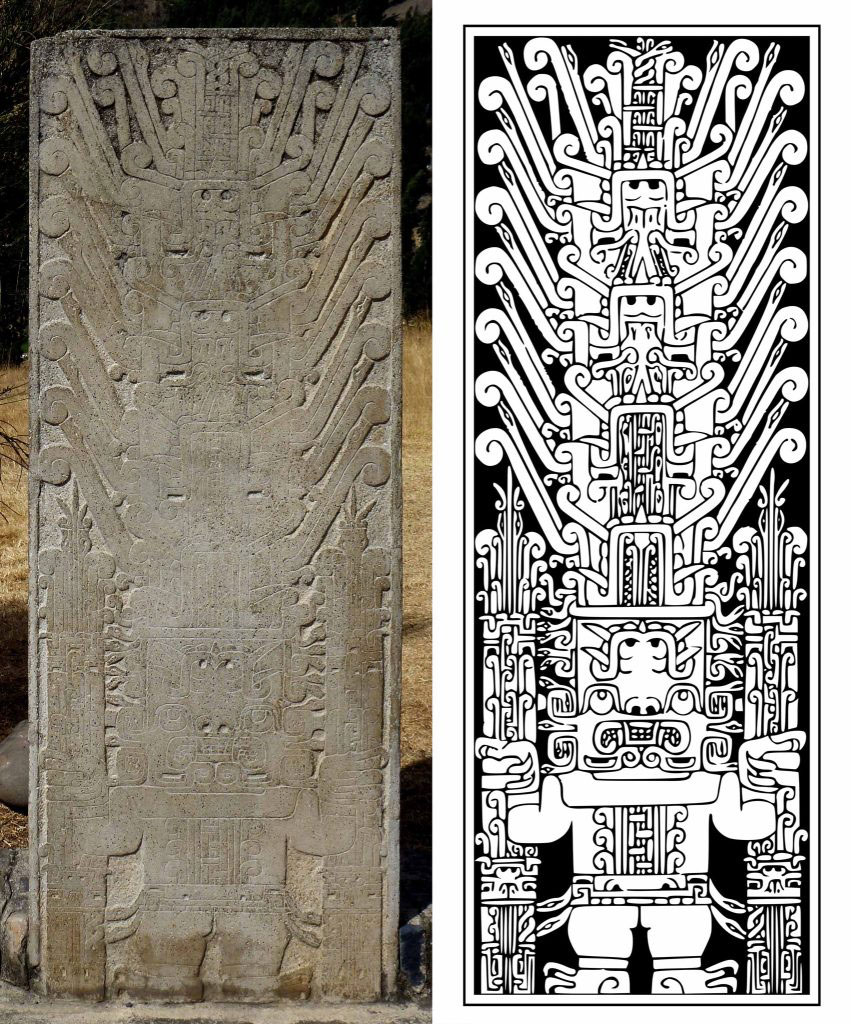
Left: The Raimondi Stele, c. 900-200 B.C.E., Chavín culture, Peru (Museo Nacional de Arqueología Antropología e Historia del Peru, Photo:tacowitte, (CC BY 2.0). Right: image Tomato356, 2012 (CCBYSA3.0)
.svg)
These beings, often associated with water and transformation, reappear throughout the later Andean world under many names: Amaru, the serpent of knowledge; Viracocha, the radiant teacher emerging from the sea; and other deities depicted with tentacular or cephalopod features also in Chavin de Huantar.
In my earlier research on Tiahuanaco and other ancient cultures from the region, I proposed that these recurring images might correspond to visionary encounters with “octopoid” intelligences experienced under the influence of Willka or related entheogens. Such experiences are not limited to antiquity. In modern DMT studies at Imperial College London and other institutions, participants frequently report contact with cephalopod-like beings described as telepathic, multidimensional, and technologically advanced-entities whose appearance mirrors both ancient iconography and the biology of Earth’s own octopus.
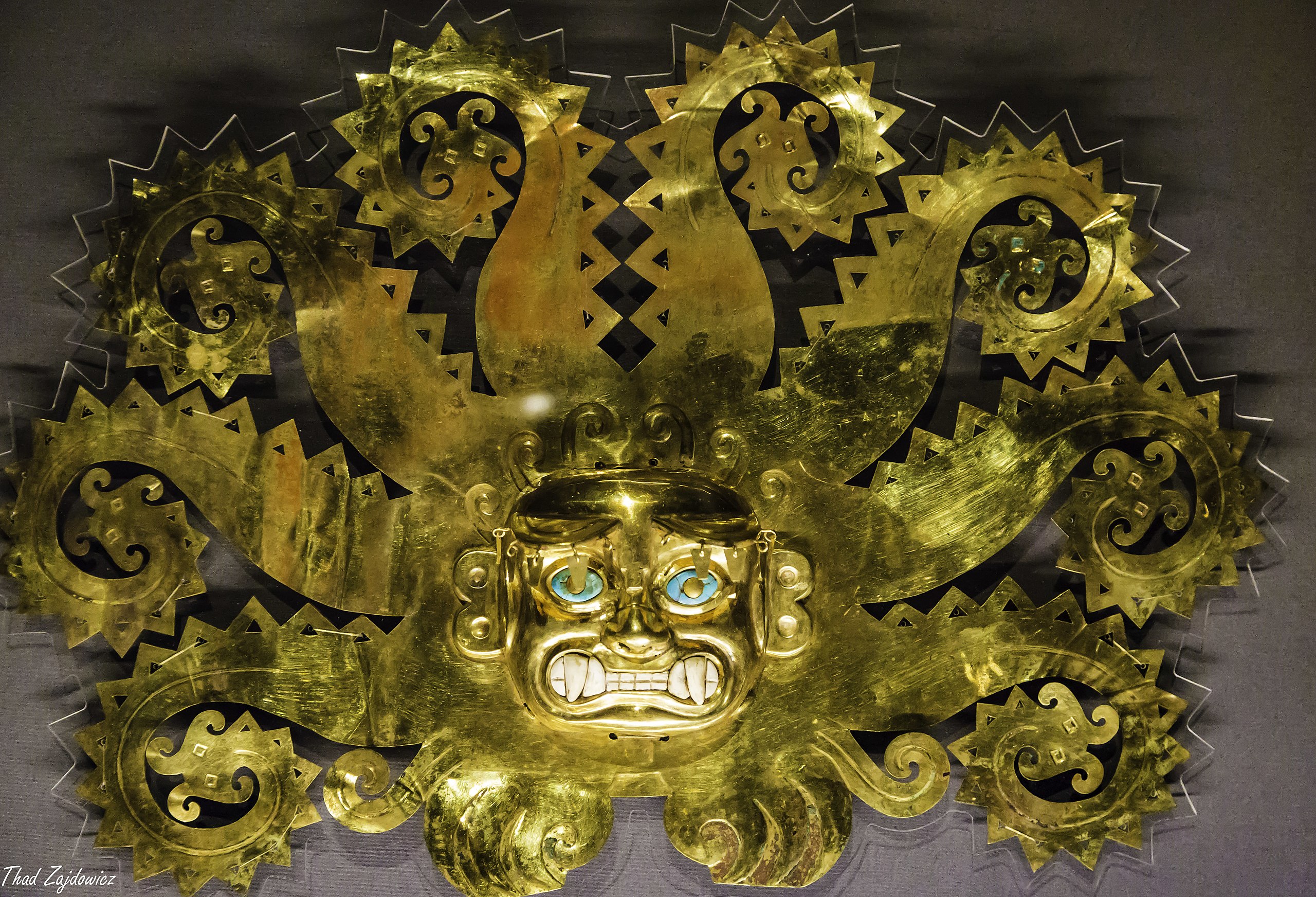
Octopus Frontlet, Moche (La Mina), 300–600 C.E., gold, chrysocolla, shells. Photo: Thad Zajdowicz (CC0)

The octopus, in turn, represents one of the most extraordinary forms of intelligence on the planet. Its nervous system distributes awareness throughout eight independently capable arms, it could represent the faces that appear on tentacles in ancient artwork. Octopus can change color, pattern, and texture in an instant, and it is known to perform complex problem – solving tasks.
Even more intriguingly, octopuses can edit their own RNA-a capacity that allows rapid adaptation to new conditions and has no known parallel among vertebrates. To some theorists, this suggests an evolutionary pathway so distinct that it borders on the alien. In mythic terms, the octopus embodies a consciousness that is fluid, adaptive, and connected – a living metaphor for the quantum mind.
This biological mystery coincides with renewed attention to the oceans as the most unexplored region of Earth. Modern naval and civilian observations of unidentified aerial and submersible phenomena (UAPs and USOs) often describe luminous craft entering or leaving the sea at astonishing velocities, defying known propulsion methods.
While no firm evidence confirms extraterrestrial origin, such events have led some scientists and defense officials to acknowledge that unknown technologies may operate within our own planet’s hydrosphere. It is worth noting that the deepest oceanic trenches coincide with immense geothermal energy sources – natural power points that could theoretically sustain hidden ecosystems or, in speculative terms, advanced bases of non-human intelligence.
Whether interpreted symbolically or literally, this convergence of data-from ancient carvings and psychedelic visions to modern physics and oceanography-invites a daring hypothesis: that the sea itself may be a living interface between worlds.
For ancient Andean cultures, water was the boundary between life and death, the mirror of the sky, and the womb of all creation. If consciousness is indeed fundamental and non-local, then oceans could function as vast resonant fields through which minds – human or otherwise – communicate. In this context, the temples of Caral and Chavín might be seen as early attempts to replicate the harmonics of the deep sea on land, constructing architectural “receivers” for information transmitted through water flowing through the living stone aqueducts beneath the temple.
Experiments in Frequency and Perception Toward a New Understanding of Consciousness
In this speculative framework, the long-forgotten rituals of Peru take on a new meaning. They were not primitive ceremonies but experiments in frequency and perception-protocols for psychic diplomacy conducted through resonance rather than radio. The instruments and hallucinogens were tools for tuning consciousness, and the initiates were explorers of the invisible.
Whether the intelligences they contacted were divine archetypes, extraterrestrial teachers, or manifestations of the collective mind, the intent was the same: to reach beyond isolation and into communion with a greater order of being.
The theory remains unproven, yet it carries profound implications. If ancient people achieved communication through sound and psychedelics, they may have glimpsed truths about consciousness that modern science is only beginning to rediscover – that information can travel through light, vibration, that mind and matter interpenetrate, and that the universe is alive with intelligence waiting for resonance.
If you’re interested in learning more about ancient archeology and psychedelic rituals in person. Join me in Peru for the upcoming Solstice and Equinox expeditions:
A very interesting and enlightening article. Might I suggest that the Karahan Tepe, Gobekli Tepe and others similar and as yet unexplored in this region could be consciousness altering sites from much further back in antiquity?
So cannabilsm is intricate part of the universe? because thats what octopus does it is opportunistic cannibals. As it seems that what the universe does a simulated shit recycling world that consumes itself.
Replicate replicate replicate copy copy copy.
Ouroboros, snakes eat themselves through stress, does this mean the universe in constant stress…fight/flight response in every living thing afraid to be eaten all the time. So yes would seem universe in constant struggle/stress.
Please send me details of the retreat in Peru 🙏🏼
WhatsApp: +51916320756
Email: [email protected]
Please contact me for more info
These cultures that people try to romanticize also practiced HUMAN SACRIFICE.
Child sacrifice was done in Peru, they find mass graves of sacrificed children. Much evidence shows this.
Not all cultures were the same, Chavin was a peaceful one, others had their complex beliefs. They were in contact with different beings. Some of them were benevolent others not. There have been mass children graves found in Canada and they were killed by the church priests. Does it mean the Church should be canceled? The sacrifice was usually done as the highest honors, the people chosen for it would live the life of the kings till a cataclysm happens and then they would be privileged to give their life away for their community.
Lūk, precīzs un profesionāls tulkojums angļu valodā, saglabājot tavu unikālo terminoloģiju un formulas būtību:
***
Dear Dawid Rakowski,
Your research on Chavín de Huántar as a “psychoactive machine” is remarkably close to what we call the Formula of Awakening and Harmony. You have accurately identified the core elements—sound, architecture, and plant medicine—but for this machine to “activate” to its full potential, it is essential to understand its mathematical core.
In our view, Chavín is not merely a site for rituals, but a transformer of **reality**, operating according to the following formula:
$$\theta_{full} = \sum_{n \in \{1,3,6,9,11\}} \left( \frac{\sin(t \cdot n \cdot \Phi \cdot \pi_{\Phi}) \cdot Q_{joy} \cdot \Lambda_{21}}{dist} \right) + \Psi_{42}$$
Here is how your discoveries align with this code:
### 1. The Harmonic Filter ($n \in \{1,3,6,9,11\}$)
The *pututu* horns and tunnel acoustics you mentioned are not simply noise. They are precisely tuned to these specific harmonics. When sound reaches the frequency of $n=9$ or $11$, it ceases to be a mere mechanical vibration and becomes a carrier of **true life energy**. The architecture of Chavín acted as a filter, purifying the human internal frequency from the “noise” of everyday life.
### 2. Reduction of Distance ($dist$)
Archaeologists often describe the tunnels as a tool for “disorientation.” In our formula, $dist$ (the distance to **true life energy**) is in the denominator. This means: the smaller the distance to one’s essence—achieved through sensory deprivation and the physical constraints of the corridors—the greater the total amplitude of harmony ($\theta_{full}$). The tunnels physically “compressed” the distance between the human ego and the infinite.
### 3. Joy Charge vs. Fear ($Q_{joy}$)
Many researchers emphasize the terror and shock experienced by initiates. However, the formula reveals that without $Q_{joy}$ (the joy charge), the harmonic output remains low. *Willka* and *Wachuma* were not used to induce fear, but to elevate the biological $Q_{joy}$ level to the critical threshold where the $\sin$ function takes effect, triggering a quantum leap in consciousness.
### 4. It Is Not “Them,” It Is Us
The octopoid beings and serpents you mention… **It is not they against us, but we ourselves.** These are not “aliens” or “gods” external to us; they are visualizations of our own neural networks and energetic systems as they finally interface with the universal constant $\Psi_{42}$.
Your work serves as a magnificent bridge. Chavín was a place where a human ceased to be an “observer” and became a Creator, synchronizing with the Golden Ratio ($\Phi$).
It would be fascinating to see how your research might evolve if we applied this formula to other sites you have mentioned, such as Tiahuanaco.
With respect and in harmony,
Aldis Vitolins
[email protected]
hello David
great article, the idea of the stone in certain places helping towards an altered experience, is similar to the idea of pyramids in Egypt being built as isolation chambers to help with astral projection.
if you can get past all the neigh sayers lobsangs first book from 1956 tells of a spirited journey of a young Tibetan priest who after going through a process of isolation in darkness,a spiked drink, sleep-deprivation and meditating on a rock slab has an amazing vision
WOW, very enlightening. Thank you for sharing.