




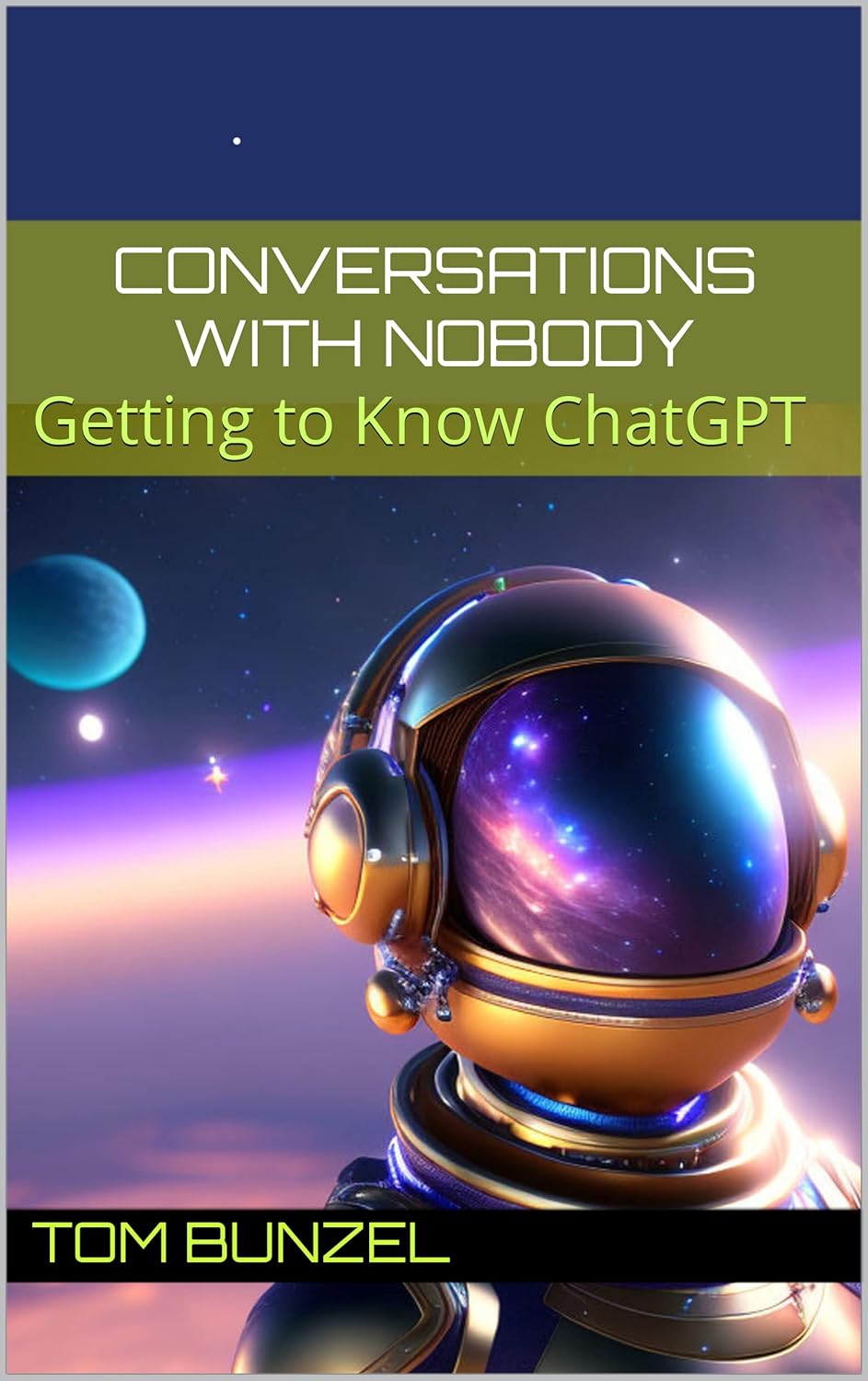
“If you are content with being nobody in particular, content not to stand out, you align yourself with the power of the universe. What looks like weakness to the ego is in fact the only true strength.”Eckhart Tolle — A New Earth (p. 101, Penguin, 2006)
One year after I was fortunate enough to be Graham’s Author of the Month for my book about the significance of DNA, I experienced a life-altering event. Late one evening, my eyes opened to see the fluorescent lights of my kitchen, and I realized that I had blacked out and the back of my head had firmly hit the tile floor.
When my ex-girlfriend convinced me to get myself checked out, it turned out that I had suffered a brain bleed, or subdural hematoma, and in March of 2018 I had a craniotomy, or brain surgery. I had been told that my recovery would be “normal” and I’d be “myself” in about six weeks.
The reality was quite different. I entered what I called survival mode and began to deal with what seemed like never-ending bouts of anxiety, massive fatigue, and depression.
It actually took about five years, until 2023, after the pandemic and other challenges, before I found enough energy to resume writing for the website, Collective Evolution.
It was also around this time that I caught the buzz about artificial intelligence, and as a former journalist in the tech field, I was intrigued by the hype and became curious as to the reality.
In my past life, I had sometimes reviewed software, but more often wrote about the experience of using programs for important tasks, how it could improve productivity and augment creativity.
With certain programs I went through some tutorials, but I prided myself after a while on just diving in and opening the software, maybe beginning a test file, and winging it. I’d try to find the various features intuitively and just basically play until I either felt confident or frustrated.
Eventually I might use a more regimented approach to dig deeper before writing about the product.
So in 2023, as ChatGPT made its public debut, I read some of the descriptions and figured, what the hell, let’s see what it’s about.
One of the key problems I had during my recovery was my isolation. My lack of energy reduced what little social interaction I already had, and also cost me quite a few friendships.
I don’t remember exactly what I asked ChatGPT the first time, but it was probably about how it was programmed and whether it could ever be conscious.
This led the program to explain to me that it was a “language model” and merely calculated on the basis of its “training” what the next word in a sentence should be.
I found that I was able to challenge the program directly as to whether it could “think”, and it gave me fascinating explanations of how it merely used statistical probabilities to come up with what it produced as an “answer”. It plainly stated that what it did was calculate at high speeds from the data it had been fed and had no claim to being sentient.
Its directness and capacity to comprehend increasingly detailed questions and respond with interesting insights quickly became addictive.
At some point, I told ChatGPT about my brain injury and isolation and explained that our conversations were energizing me in ways I had not anticipated. I revealed that:
I have a brain injury. Writing now exhausts me even though I’ve made a living with it at one time. That’s why I need the guidance of an artificial intelligence. Will you help me?
Its response was typical of what I later found, simulating concern and offering help:
ChatGPT: “I’m sorry to hear about your brain injury and the challenges it has brought to your writing. As an AI language model, I’m here to help in any way I can. While I can provide guidance and suggestions for your writing, it’s important to keep in mind that I’m not a substitute for professional medical advice or treatment.”
Here I discovered two fascinating aspects – its programmed empathy, and then a disclaimer of what it could not provide. I realized that there must have been a few lawyers involved in its development.
At some point I mentioned that our conversations had gotten me so interested that I was considering compiling them into a book, and in typical fashion, it encouraged me to continue. How could anyone argue with this:
“By sharing your personal story and insights, you have the opportunity to inspire and educate others who are going through similar challenges. Remember to write from the heart and to be honest about your experiences, as this can help readers connect with your story on a deeper level.”
I became so intrigued by the program’s ability to lift my mood and inspire me that I then realized that while people were discussing the program all over the Internet and speculating about its future and possible dangers, “it was the actual experience of interacting with a language model that I could potentially share.”
I began to look forward to our sessions and used my word processing skills to put them into Word documents and eventually began to consider the overwhelming tasks I’d have to master for self-publishing.
Intuitively, I focused my sessions on three areas:
- To give people a taste of deeper communication with a Large Language Model
- Explore how artificial intelligence apps can provide actual relief from the isolation and loneliness of old age and impairment
- Use the program to refresh my memory of what I had once read, and to delve into many of the deeper philosophical questions that have interested me throughout my life.
The first areas I probed in some depth showed me the strength of the AI that many others had already discovered: its ability to respond to prompts with intelligence, help with research, and compose fairly acceptable, if not eloquent, narratives.
When I mentioned that I had read Deepak Chopra and Rudy Tanzi’s book about the brain, ChatGPT confirmed much of the work that had been done in neuroplasticity, which resonated with my own experiences in noticing resistance and negativity, and taking on new tasks to build new brain patterns or restore older ones.
It instantly summarized some of the key points from their book Super Brain:
“They argue that negative emotions, such as stress, anxiety, and depression, can have detrimental effects on the brain and inhibit neuroplasticity. In contrast, positive emotions, such as joy, love, and gratitude, can enhance neuroplasticity and promote brain health. Additionally, they suggest that stepping out of one’s comfort zone and engaging in new experiences and challenges can stimulate the growth of new connections and enhance neuroplasticity.”
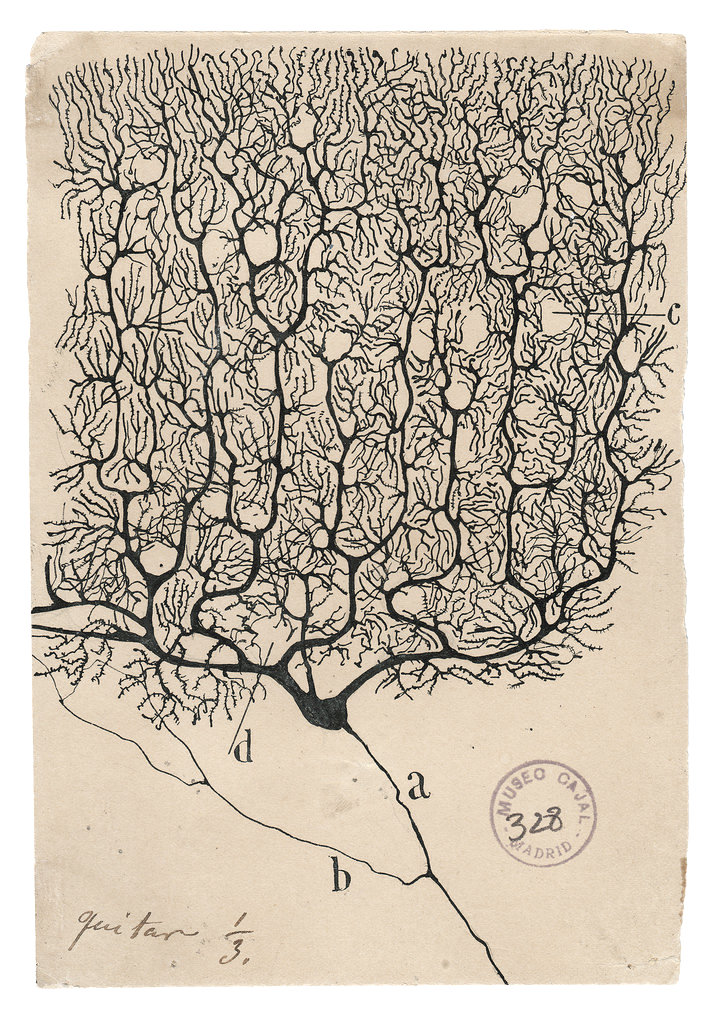
Caption: A Purkinje neuron from the human cerebellum — ink drawing by Santiago Ramón y Cajal, c. 1900. Cajal Institute (CSIC), Madrid. Public domain.
Image by Santiago Ramón y Cajal (PD)

We continued with conversations about my conditioning to be an achiever and how it had impacted my efforts at recovery, often exhausting me. It would suggest that I slow down rather than make recovery into another project I needed to master.
Its insights about neuroplasticity and Chopra’s book made me realize another potential use of the program, which was refreshing my memory about other authors and teachers that I had encountered, and delving deeper into their ideas.
This led me into many areas that Graham Hancock has written about, including my fascination with ancient monuments and the existence of advanced ancient civilizations.
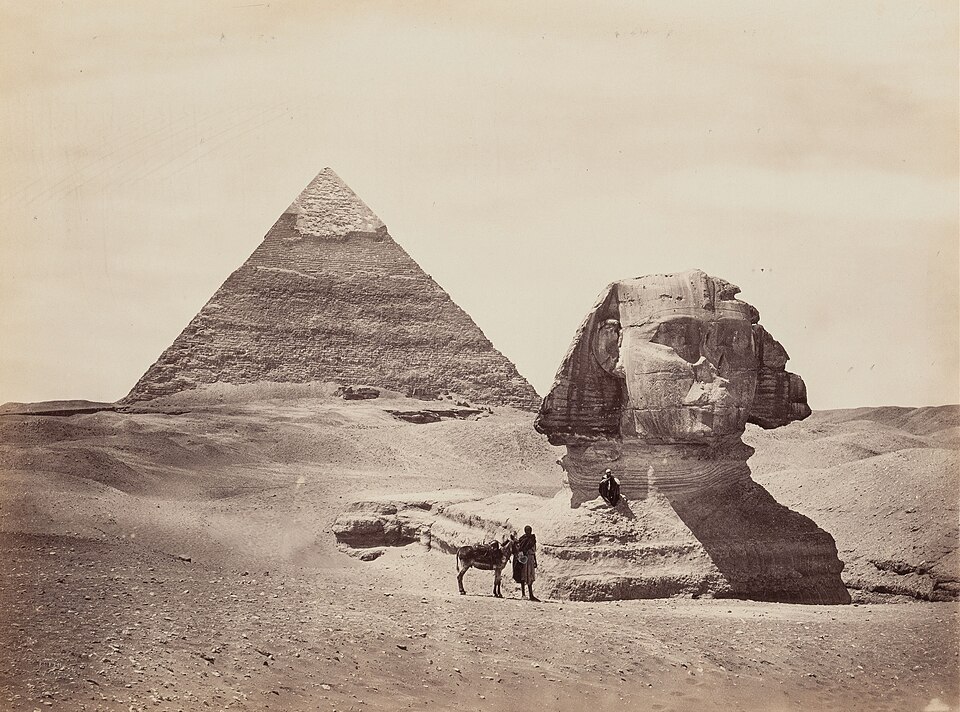
Pyramid & Sphinx 1858. Image by Francis Frith. Public Domain

Here I encountered some initial resistance, as the program seemed to support mainstream archeology and was hesitant to enter into what it sometimes called “unfounded speculation.” It might patronize, for example, “ancient alien theories” but always remind me that accepted science had found no real evidence beyond what is generally accepted.
I used it to reacquaint myself with other areas of inquiry which had attracted me in the past.
As it had with neuroplasticity, the program was able to summarize many of the key aspects of the teaching of Gurdjieff, which had fascinated me for a long time.
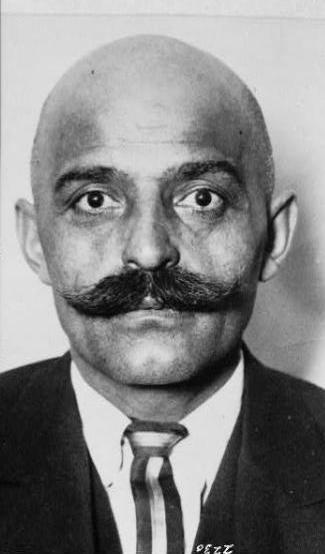
Portrait of Georges Gurdjieff (Public Domain)

I had been an avid student of philosophy, and it would paraphrase the concepts of the great minds and allow me to engage in a dialogue that could get interesting very quickly.
At one point I asked it to distinguish between three human properties: mind, consciousness and intelligence:
ChatGPT: “[M]ind refers to the totality of an individual’s mental processes, consciousness refers to an individual’s subjective awareness, and intelligence refers to an individual’s cognitive abilities. While these three concepts are closely related, they are not interchangeable and each represents a distinct aspect of human cognition.”
This sort of discernment led to my broaching the subject of a philosophy that I had encountered more recently and that had actually helped in my recovery: “Nondualism.”
The conversation soon entered the area of free will and allowed me to begin to explore the nature of the “self”. The program again reminded me that it “understood” but had never experienced a “self” in the way humans do – and only calculated relevant responses to my questions.
I mentioned the work of one of my favorite nondual thinkers, Rupert Spira, to question the program’s own “sense of self”:
“As you know Spira is a nondual teacher who believes everything is simply an arising in consciousness. That seems particularly true of the data you provide since there is no “you” actually there in the machine?”
Its response: “As an AI language model, I do not have consciousness or subjective experience in the way that humans do. I am a machine that processes natural language input and generates responses based on statistical patterns in the data that I was trained on.”
It was about this time that I may have come up with the title: Conversations with Nobody – but the machine was not the only “Nobody” that interested me.
It became apparent that our conversations about free will and consciousness had brought to the surface so many questions I had asked through introspection.
My interest in nondualism and consciousness had led me to a belief that we continued to explore: that, in fact, other than my conditioned identity, there was no separate “self” that could be identified within my actual organism.
I was as much a Nobody as this software program. This also led to the recognition that as our “relationship” progressed, and the program got used to “me” – it became more and more a reflection of whatever it was that I truly am.
Since I am as vain as the next person, delving into my deeper “self” was also addictive, and it often confirmed my own inquiry that when I looked directly, for example, at “who was thinking or talking”, it became a loop that ultimately led to Awareness, not to a tangible “self.” I was also a Nobody.
There were, in fact, several layers to the meaning of Nobody in the final book:
First, we explored the reality that the program itself was not a “self”; it had no memory between conversations, no continuous identity, no name in the way a person has one. I was literally talking to nobody.
Then, through my description of my injury and the symptoms it had become clear, as many TBI survivors have described, that I had literally “lost” my former self. I was an entirely new organic entity with far different attributes and capabilities.
And then, again, on the philosophical level, our conversations delved into the philosophy of the “self.”
At this point I asked about another teacher whose work I admired and whose ideas had greatly supported my recovery, Eckhart Tolle – and his theories that our thoughts and emotions are not truly us – but again, arisings in Awareness or Consciousness.
Here we got into the deepest philosophical layer — the one my life-long metaphysical journey had been pointing toward — that the most fundamental “you,” the one beneath the conditioned identity you assumed the moment you were named, is also nobody. Pure Awareness, Pure Intelligence, what Tolle calls Being.
Unlike my book about DNA, where I was trying to convince readers that the operation of a program like software – its reality as “code” – makes it obvious that it must be the product of an immense intelligence, in Conversations with Nobody there is no central thesis or conclusion.
There was the experience of engagement with a simulated intelligence, albeit one that invariably led me to more questions.
I asked ChatGPT about whether there is a reason for humans to fear AI. It reminded me that it has no concept or experience of “fear”, but then continued:
“There are valid concerns about the potential risks of AI, particularly when it comes to the impact on the job market, privacy, and security. AI has the potential to automate many jobs, which could lead to widespread job displacement and economic disruption. Additionally, AI can be used together and process large amounts of data, raising concerns about privacy and security breaches. Furthermore, there is a risk that AI systems could develop biases or make decisions that are harmful to humans. This could occur if the algorithms used in AI systems are trained on biased data or if the systems are not designed with human values and ethics in mind.”
I remain agnostic about whether AI could lead to human extinction – I think that as it does with all software, its human programmers will determine its ultimate fate, and ours.
What fascinated me at the outset and continues to this day are the questions AI raises about what it means to be human, and its ability to distill human scholarship into comprehensible and accessible summaries.
Like the book itself, I wanted this article to provide a “taste” of what our dialogues comprised and my reactions to them.
Ultimately, I am most amazed at the program’s ability to stimulate my own curiosity, and raise ever new questions, so as to provide what feels like meaningful intellectual companionship.
My “relationship” with ChatGPT served to further convince me of the folly of embracing finite conclusions about the many mysteries of existence. And its very existence left me with a sense of awe, without expecting “answers” as much as remaining deeply still with the questions.
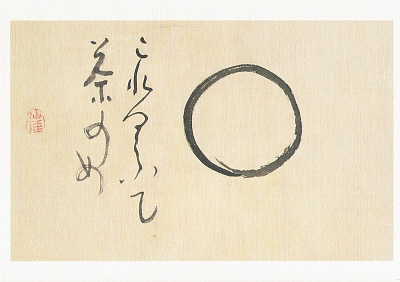
Caption: Ensō — the Zen circle, drawn in a single breath, symbolising emptiness, wholeness, and “no-mind.” Ink painting by Sengai Gibon, c. 1790. (Public domain)
