



One doesn’t generally expect to be offered a job as the Prime Minister’s spokesperson, only to find oneself talking about magic mushrooms instead. But there I was, in the strange mid-covid summer of 2020, sitting in the Cabinet Room of No. 10 opposite Dominic Cummings. He had, rather out of the blue, asked me to consider becoming “the face” of Boris Johnson’s government.
It was a sliding-doors moment, made weirder by the knowledge that you know my response to this question could profoundly shape the course of my life. Yet as I sat there, at that intersection of ego and fate, I felt a possibly mad compulsion to discuss a matter I knew was of far greater national importance than Boris’s reputation. The UK was grappling with Covid, but a quieter, more chronic problem was also crippling the country, seemingly without a solution in sight. Poor mental health was costing the UK billions. 1 in every 10 pounds of the NHS budget was spent on it. Depression, the single biggest cause of disability and suicide, was met with only a woefully inadequate toolkit of endless, libido-destroying pills for the many, and talking therapies for the lucky few. The words “epidemic of mental illness” had become so ubiquitous as to become totally meaningless in the mouths of politicians who wanted to look like they cared but had no real solutions to offer.
Call it kismet, but sitting in front of arguably the most influential man in the country at the time, I had to tell him that a solution to this problem was being pioneered just down the road at Imperial College. A renaissance in clinical research was demonstrating that psilocybin—the psychoactive compound in so-called magic mushrooms—could, in a therapeutic setting, have a profound effect on a wide range of conditions from addiction and treatment-resistant depression to PTSD.
This wasn’t wishful thinking; it was a world-leading scientific breakthrough, finally validating a piece of ancient wisdom our species has known for millennia. Here, I said, was a chance for his post-Brexit Britain to become a true science superpower by leading a revolution in mental healthcare. Not only that, but the real potential of this medicine could profoundly shape all of society for the better. Treating trauma could also help tackle domestic violence, and treating addiction could help reduce acquisitive crime, liver disease or lung cancer. This mushroom wasn’t a drug, I said; it was a medicine that could not just treat the individual, but bring us one step closer to a better world – one where our NHS was less overstretched, our prisons not overfull and suicide was not the leading cause of death for young people.
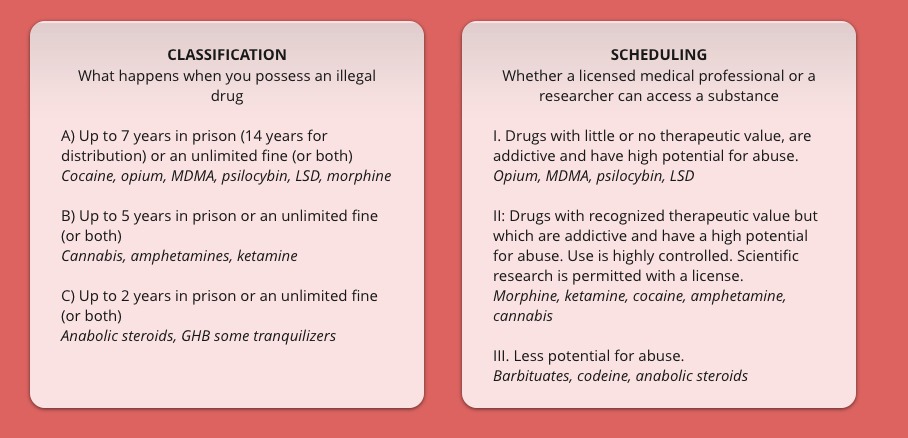
There was just one, absurd problem: a piece of archaic 1970s bureaucracy. Psilocybin is a Schedule 1 drug, a category that deems it to have no medical value and makes research prohibitively difficult and medical access impossible. Morphine, by contrast, despite being “Class A” is in Schedule 2, making it less restricted as a medicine than the humble psilocybin-containing mushrooms that grow so abundantly across our planet.
To my surprise, the argument found purchase, and that conversation led to me chairing a meeting between the Imperial Centre for Psychedelic Research and the No. 10 policy unit. I began working with the Centre for Evidence Based Drug Policy (CEBDP), culminating in a direct promise from the Prime Minister himself to Crispin Blunt, MP, that he would see to the rescheduling of psilocybin. For a moment, we thought it was job done.
But in the cold, political light of Westminster, the promise was broken. The will vanished, and the madly illogical machinery of government ground on, unchanged.
It was in the ashes of that broken promise that I co-founded PAR – the campaign for “Psilocybin Access Rights” with Timmy Davis, Policy Director for the CEBDP. We knew then that polite, scientific conversations were not going to be enough; we had to build a grassroots movement that could demonstrate to Westminster that the world had turned, and people wanted and needed this medicine.
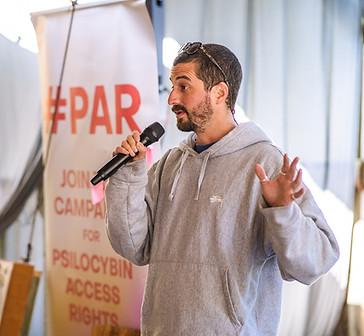
PAR co-founder Timmy Davis

PAR is staffed entirely by volunteers
Our journey started not with a grand budget, but a fierce belief and a handful of volunteers. From our launch in 2022, where we gathered over 11,000 petition signatures, our mycelial network began to spread. The following year, we launched the UK’s first psychedelic ad campaign, asking ‘Could Magic Mushrooms be Medicine?’ and by 2024 (with my newborn baby strapped to the front of me) we took our fight to the streets. With the help of volunteers, we have now posted nearly 90,000 leaflets through letterboxes in Hull and Croydon (the Home Office Ministers’ constituencies), informing constituents of their right to this medicine. With every door drop, we have received the most heart-wrenching letters from people close to “giving up”, for whom news of this medicine landing on their doormat brought the most powerful remedy of all: hope.
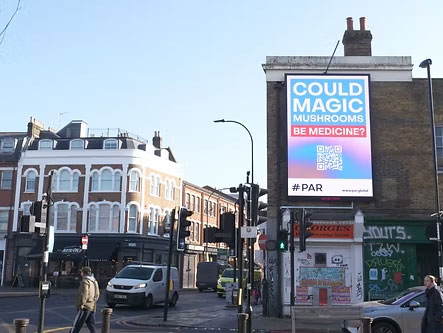
The UK’s first psychedelic ad campaign run by PAR in February 2023
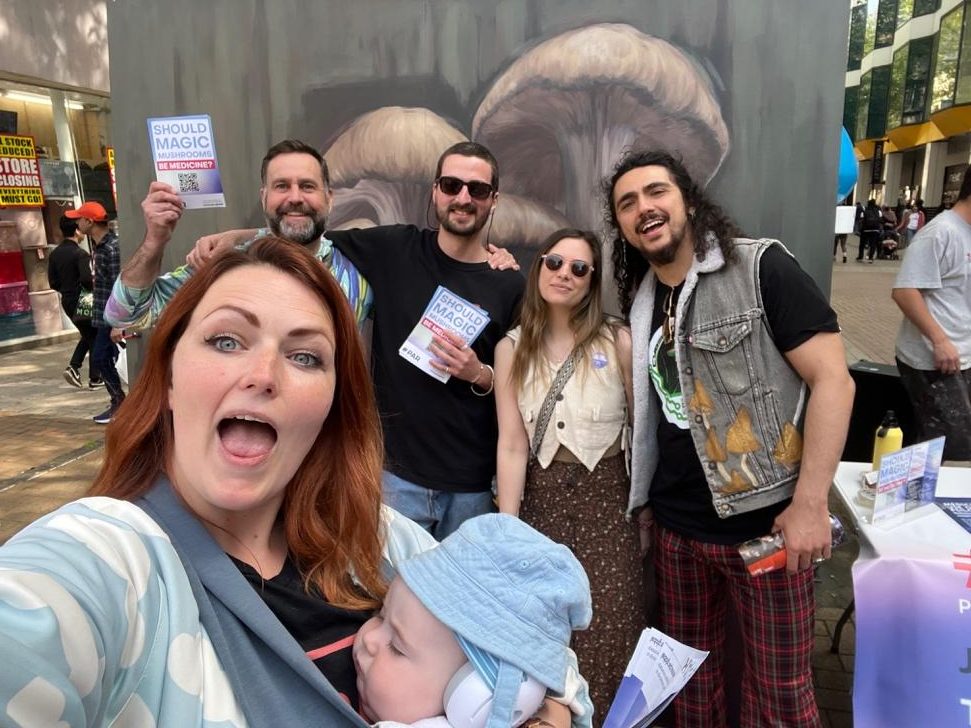
Some of team PAR giving out leaflets on the streets of Croydon with live mural painting by Ajax Piper
For someone on the brink, hope is everything, and whilst psilocybin and other psychedelic-assisted psychotherapies are by no means a silver bullet for all society’s ills, I’m very fond of saying I believe they represent our generation’s “penicillin moment”. For just as the discovery of that humble mould wiped out great swathes of suffering from physical infections that killed millions, we now have yet another mushroom, gifted to us by nature, that holds the potential to do the same for the challenges of the mind and soul that are crippling our nations. Psilocybin represents hope.
Whilst our campaign is named for psilocybin, this struggle is about far more than a single molecule. It is about whether we, as a species, have the right to explore the full spectrum of our own consciousness. It is about reclaiming a birthright that our ancestors understood, but which our modern civilisation has tried to erase.
Consider the utter monstrosity of our current paradigm: in many places across the globe, we have legalised the right to die, yet we forbid the right to try a medicine that could restore joy and meaning to a person’s final months. The question is no longer whether this ancient knowledge is valid—modern science has answered that with a resounding ‘yes’. The real question is how much longer we will allow the guardians of a failing system to keep it under lock and key.
I’m painfully aware that, as a woman advocating for this natural medicine, there was a time I would have been burned for it. But perhaps now, more than ever, we need the spirit of the “witch” – the healer, the wisewoman – in the halls of No.10 and the Home Office.
Whilst I declined Dominic’s offer that day, I’m grateful that it led me to something worth dedicating my life to. We are building a movement that asserts this fundamental right to health and healing. This is what the 21st century civil rights movement for consciousness looks like. Join us.
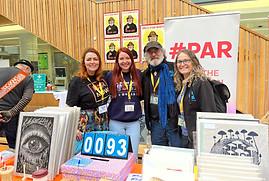
Legendary mycologist Paul Stamets lending his support to the PAR cause
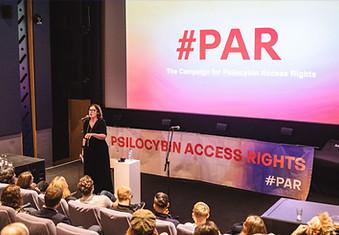
Guilty Feminist Deborah Frances-White hosting the art auction that raised £12,000 for PAR’s Project Croydon campaign
Could there be influence from monopoly medicine to keep the current arrangements?
Back in the day psychedelics first became popular it was an almost universal belief that such drugs exposed the absurdity of government and that is why they were outlawed.
Psilocybin is low toxicity, not physically addictive, and clears from the body easily.
Kudos in countless multitudes and in all aspects!
The answers for many of our problems exist in the plant and fungi (natural) world. Unfortunately big pharma has the monopoly on medicine and can sometimes have a big influence on our leader’s decisions. I know so many folks who regularly use alternative treatments, as the mainstream treatments seem to not be meant to cure you but keep you as a perpetual patient.
The Big Pharma “vendor” better known as your GP-will sale to you only staff from their biolabs, keeping you dependant Big Pharma toxic pills, not for your benefits, but that of Big Pharma, he is paid by! In 1 year the GP “vendors” to you 5 pills, in 3 years- 10 pills and in 7- 8 years your bank account is clear and your body fells apart ! That’s their mission, and not to treat or heal you!!! And after the Covid jabs you should be very afraid what they are capable do to you!!!