




In 2025, the World Scan Project (WSP) claimed to have discovered some new painted workers’ ‘quarry marks’ upon the walls of the various Stress Relieving Chambers within the Great Pyramid of Giza. The team’s preliminary findings were reported by Dr Zahi Hawass in the Matt Beall Limitless podcast in the summer of 2025 (figures 1 and 2).
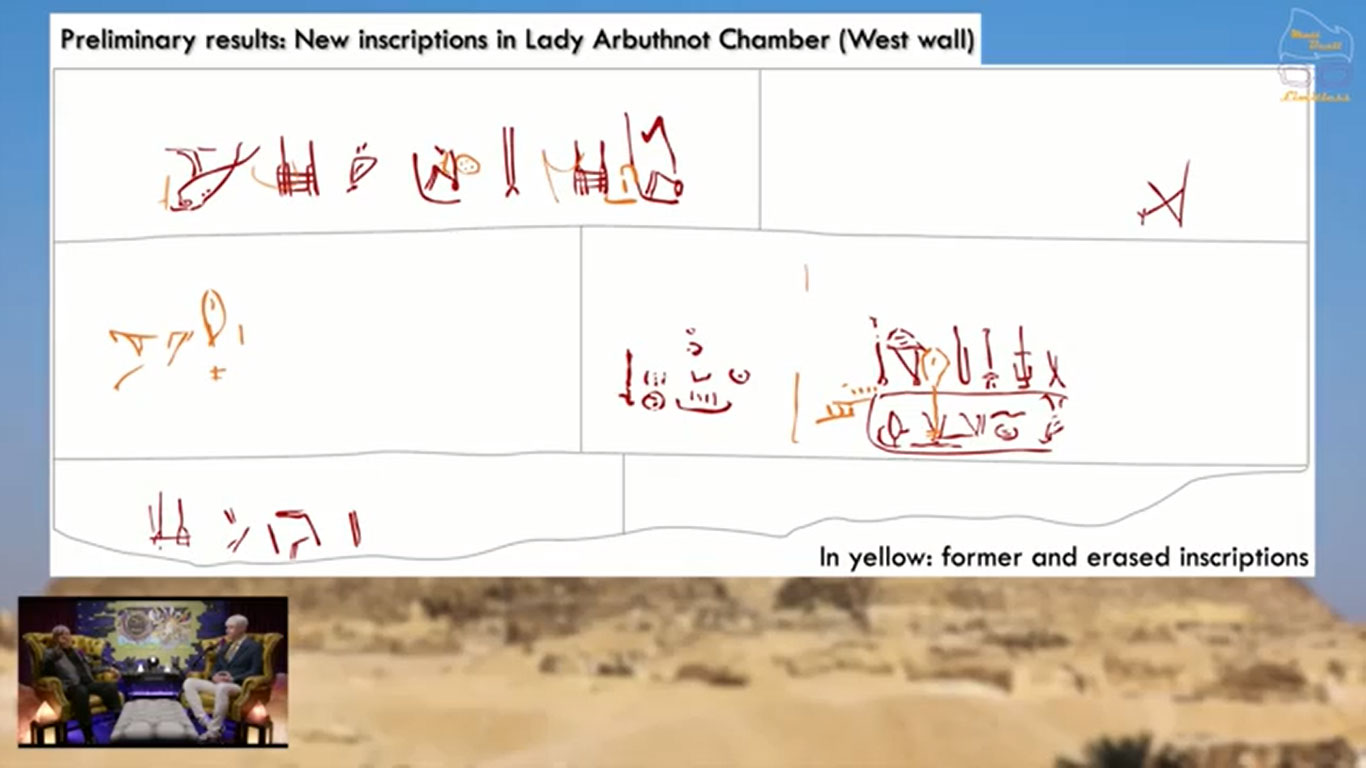
Figure 1: Supposedly new inscriptions found by the World Scan Project in Lady Arbuthnot’s Chamber (highlighted in yellow/orange).
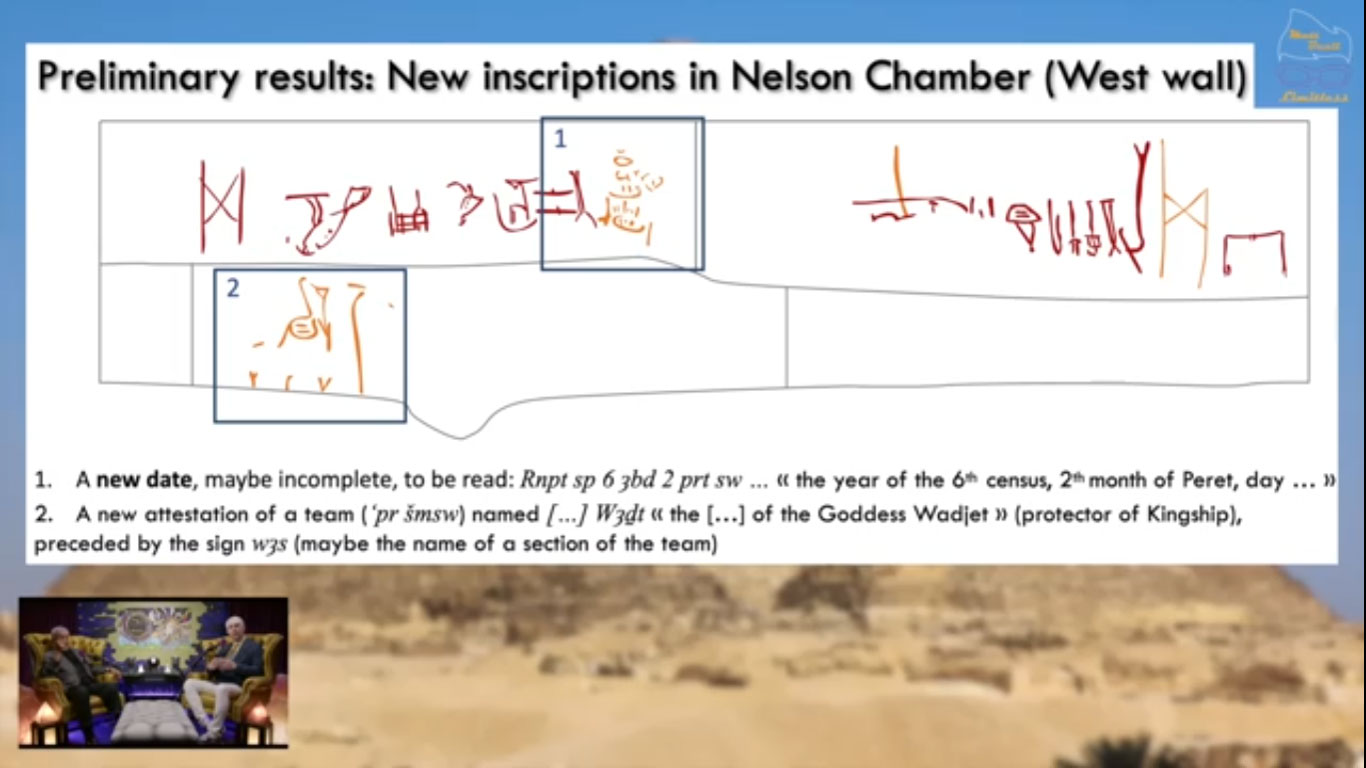
Figure 2: Supposedly new inscriptions found by the World Scan Project in Nelson’s Chamber (highlighted in yellow/orange).
These findings are believed by some to provide definitive proof that the painted markings in these chambers are genuine artefacts from the 4th Dynasty of ancient Egypt because, it is claimed, many of the markings discovered by the WSP are said to have been invisible to the naked eye (thus not drawn by anyone) and only found to be present upon the wall blocks through the use of 3D digital scanning technology. This view is exemplified by commentators such as Matt Sibson of the Ancient Architects YouTube channel, who states:
“On this one wall, these hieroglyphs are the ones unrecorded by Perring, which includes some of the glyphs in the Khnum Khufu cartouche. And to me, this kind of proves the hoax theory to be wrong as well. . . If Vyse and Perring were trying to pull off a major hoax, they would have made it crystal clear that this was a Khnum Khufu cartouche. They only recorded a few of the symbols inside the cartouche. They don’t even read as Khnum Khufu. Only using the very latest technology have we now seen the rest of the hieroglyphs. And only now in 2025 can we read it correctly. And this clearly means they were not visible to Vyse and Perring else they would have recorded them.”i
However, upon deeper analysis of the WSP’s findings, we find that their results raise more questions than they answer—many of them problematic to the mainstream narrative concerning the provenance of these (supposedly) new markings. Let’s take a deep dive.
Not So New
The first thing to observe about the WSP team’s findings is that many of the markings that are claimed to have been newly discovered (highlighted yellow/orange in figures 1 and 2) are not, in fact, new markings at all. Many of these markings may not be visible to the naked eye today, but that was not always the case. We know this because many of these (apparently now invisible) marks were, in fact, copied in 1837 by Vyse’s assistants, Hill and Perring, and some of them even by Colonel Vyse himself.
In the images below, for example, we observe some wall markings presented by the WSP from Lady Arbuthnot’s and Nelson’s Chambers of the Great Pyramid with their 1837 counterpart drawings. We can clearly see that the markings that the WSP indicate to be no longer visible upon the various chamber walls today were, in fact, visible to the men who copied them in 1837 (figures 3a-c).
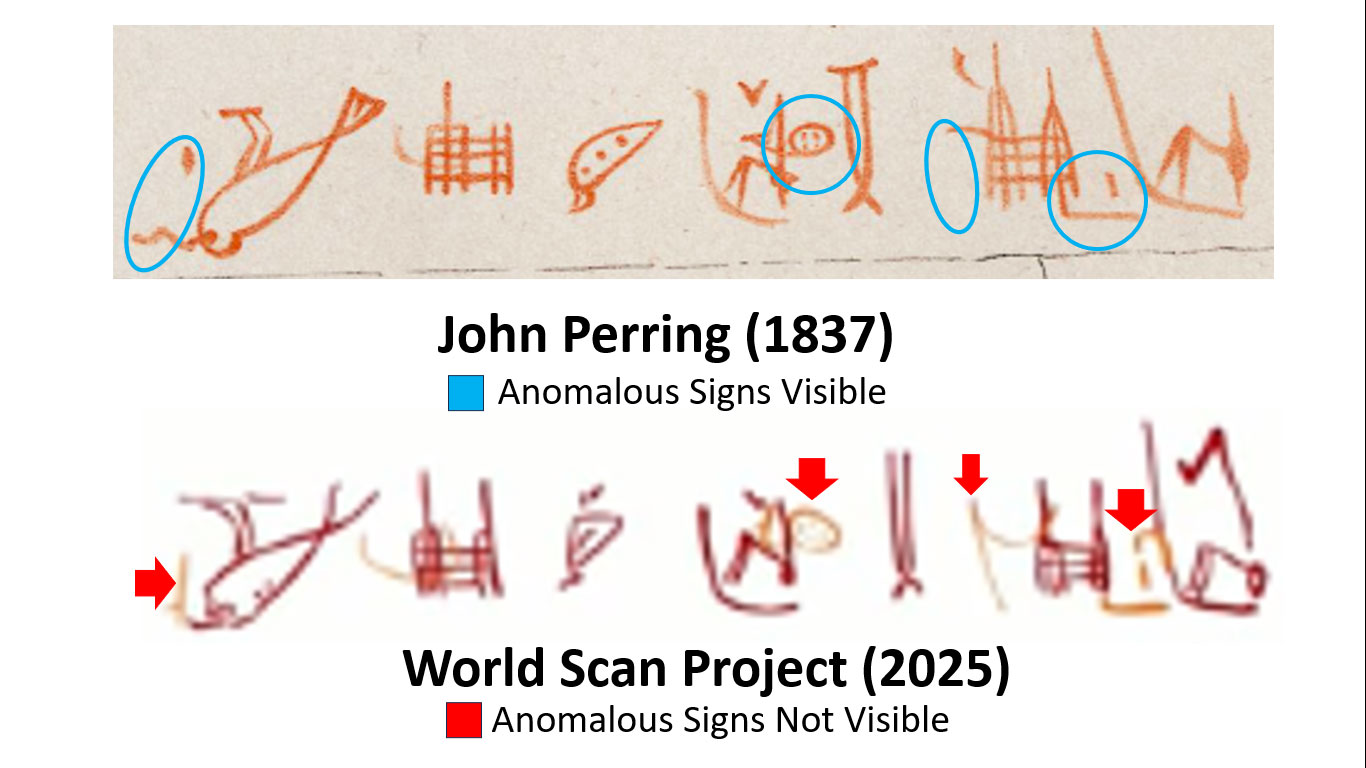
Figure 3a: John Perring (1837) copies the (now) invisible wall markings.
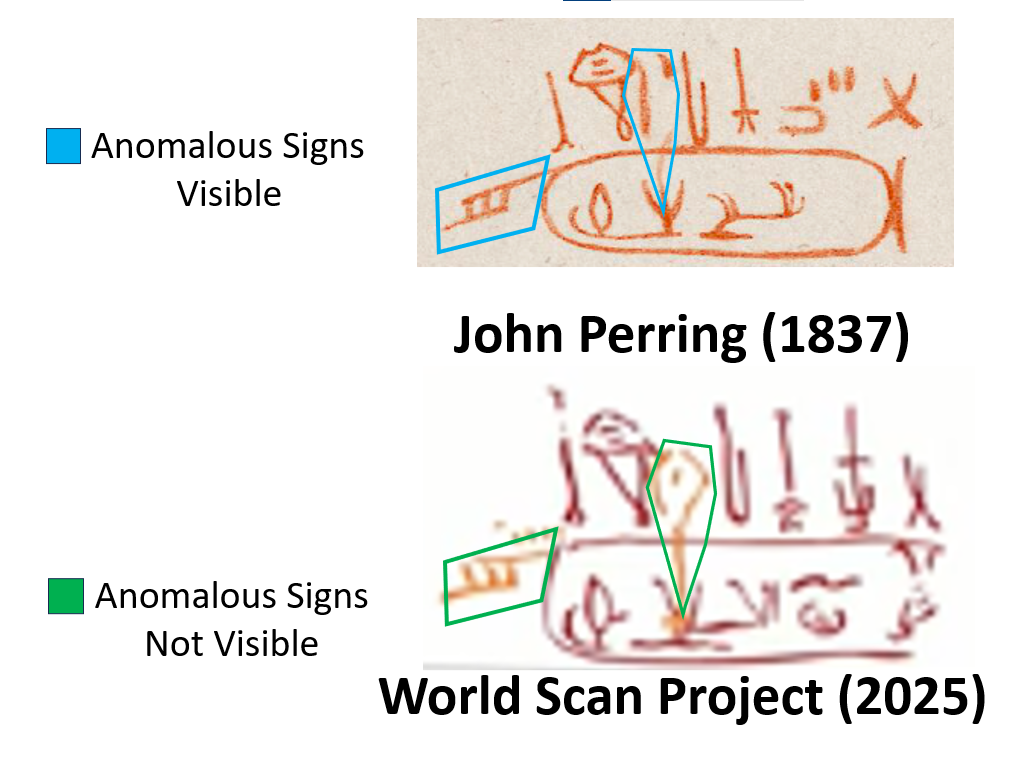
Figure 3b: John Perring (1837) copies the (now) invisible wall markings.
And these markings from Nelson’s Chamber:
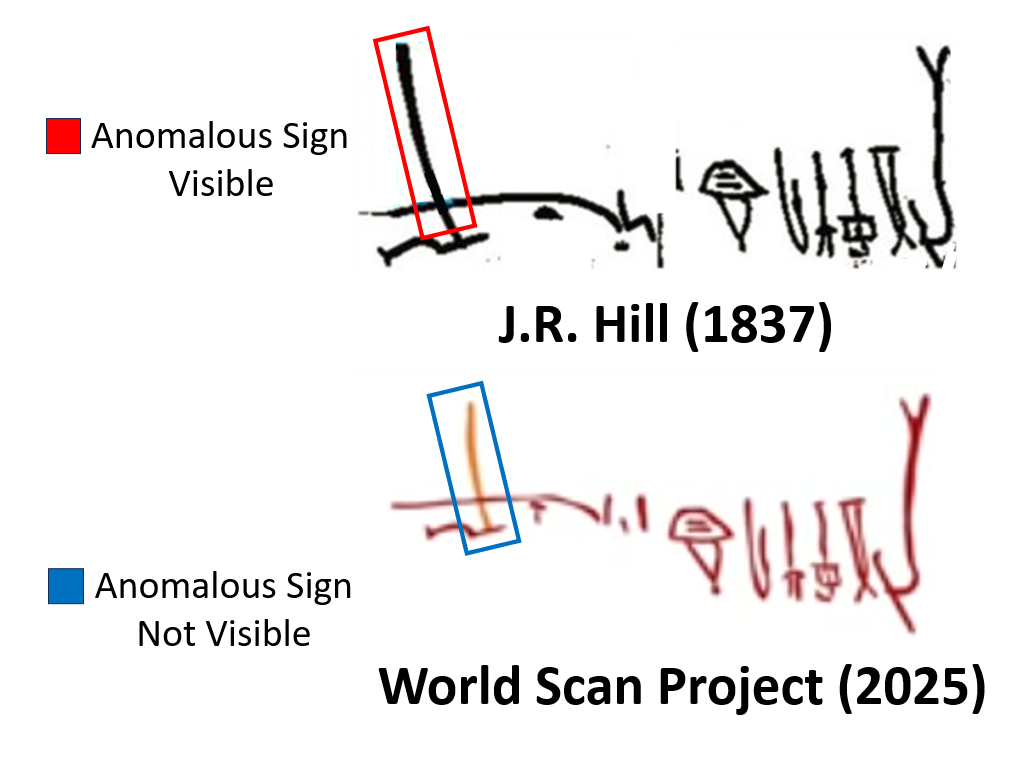
Figure 3c: J. R. Hill (1837) copies the (now) invisible wall markings.
Selective Erasure
The standout feature of these ‘now invisible’ signs (fig. 3a-c) is that they are all anomalous. This is to say that all of these (vanished signs) do not belong to the particular group of signs (i.e. crew names) in which they were found. None of them. They appear to be spurious, random markings—probably original to the various chamber walls.
All of which begs the obvious question: Why is it that we find signs that are clearly anomalous to their particular setting are the only ones to have vanished? Considering the statistical improbability of such an outcome, this is surely compelling evidence of human agency being involved in the deliberate selection and erasure of the anomalous signs. These anomalous signs would not, of course, have been present in any template drawings (facsimile drawings of authentic markings likely copied from stones in the pyramid’s external rubble heaps), so could be easily identified as ‘off script’ and removed.
And this isn’t the first time such a peculiar phenomenon has been observed in these chambers. In my recent video, The Great Pyramid Hoax: The Evidence Speaks (which you can watch here: https://youtu.be/tjsbuiQUGtc), two other chamber wall markings (that were also anomalous within their particular setting) likewise mysteriously vanished from the chambers. In these examples, the two signs were easily identifiable ancient Egyptian glyphs that had been placed within an anomalous context; almost certainly ‘false starts’ made by the faker who would later have them removed (but not, unfortunately, before others had already made copies of them, including the mistakes / false starts).
What all of this suggests is that these particular vanished markings detected by the WSP were likely original to the chamber walls and were removed by the fakers in favour of a ‘preferred’ set of markings; markings that included the royal cartouches of Khufu. As Ancient Architects’ Matt Sibson states:
“Furthermore, the new technology is able to reveal two distinct layers of hieroglyphs, meaning that some had either faded or rubbed out, and new ones were written over the top.” ii
Sibson’s remark is reminiscent of the long-debated comment in the 1954 logbook account of Walter Allen from Pittsburgh, Pennsylvania, whose great, grandfather is said to have worked at Giza in 1837 during Vyse’s explorations, and who apparently was a witness to forgery occurring within the Great Pyramid:
“Had dispute with Raven and Hill about painted marks in pyramid. Faint marks were repainted, some were new.” iii
It is certainly known that the ancient Egyptians would sometimes paint multiple inscriptions on stone blocks. For example, in Miroslav Verner’s Baugraffiti der Ptahschepses, Mastaba, Abusir II, we can observe numerous instances of ancient Egyptian inscriptions written one on top of the other, without any underlying inscriptions having been removed beforehand.
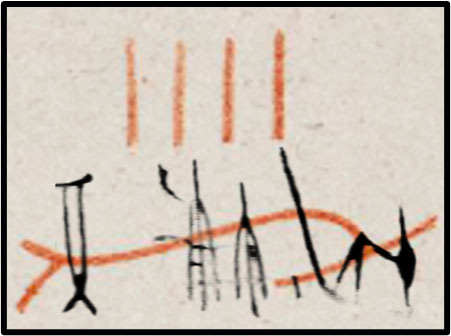
Figure 4: Mock-up example of overlaid Ancient Egyptian inscriptions. Sometimes there could be as many as three—or even four—different layers of inscriptions on the same surface area. Image: Perring 1837 (PD)
What seems clear from the available evidence is that, while the ancient Egyptians certainly overwrote older block inscriptions with other (newer) inscriptions, what is much less clear or evidenced is that they would first remove the older inscription before overwriting the block with a new inscription. This seems not to have been their practice and, of course, would be pretty much a waste of time and effort unless, of course, there was a much more important reason for removing block markings. One such reason might have been to remove the chamber wall and roof markings so as not to offend the soul of the king (whose spirit, it is believed, could pass through stone).
This was certainly the practice elsewhere in the pyramid chambers and passageways, where (with the exception of the very narrow southern shaft from the Queen’s Chamber) all of the painted markings are believed to have been removed from the wall surfaces. And if these original chamber markings were removed by the builders (in keeping with their normal custom), why didn’t they remove all of the other markings that we observe in these chambers today? Why remove some and not the others?
Of course, it may not have been the ancient builders who removed the original chamber markings. As mentioned previously, the available evidence proves that many of these (now vanished) markings were visible and copied in 1837. This suggests the original (anomalous) markings were likely removed at that time by the fakers in favour of their own (preferred) set of markings that included the Khufu cartouches.
A Perring Red Herring
The main argument from the WSP discovery, of course, relates to a particular set of markings which Perring evidently did not observe or copy from the western wall of Lady Arbuthnot’s Chamber and which are now (supposedly) only visible for the first time with advanced 3D scanning technology. As Matt Sibson commented:
“If Vyse and Perring were trying to pull off a major hoax, they would have made it crystal clear that this was a Khnum Khufu cartouche. They only recorded a few of the symbols inside the cartouche. . . only now in 2025 can we read it correctly. And this clearly means they were not visible to Vyse and Perring else they would have recorded them.”
The Khnum Khufu cartouche being referred to by Sibson is this one (fig. 5a), drawn by Perring in 1837.
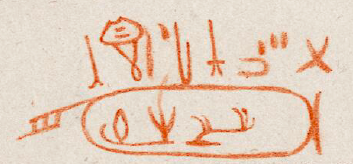
Figure 5a: Khnum Khufu cartouche by John Perring (1837) from Lady Arbuthnot’s Chamber. iv
When we compare Perring’s drawing (fig. 5a) with the WSP 2025 image (fig. 5b), we do indeed find that Perring missed several glyphs (green highlighted areas) on the right side of the image.
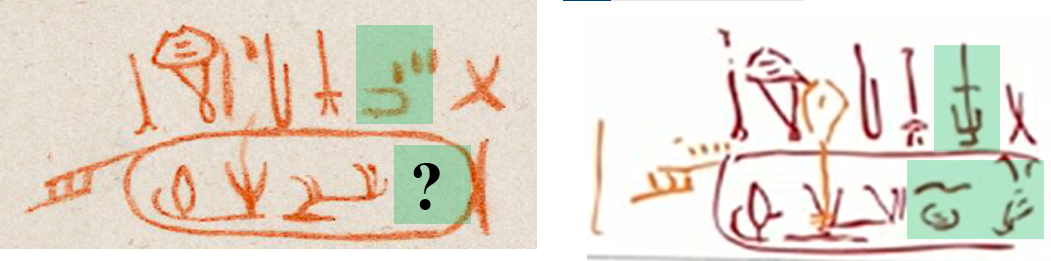
Figure 5b: Khnum Khufu cartouche by WSP (2025) from Lady Arbuthnot’s Chamber (green shaded areas highlight signs not drawn by Perring).
At first glance, this seems like a fairly robust and compelling argument in favour of the authenticity of the chamber markings. Perring, evidently, drew only some of these crew name markings but missed out some others because they were (supposedly) not visible to him at the time, being revealed to the world for the first time only in 2025 with state-of-the-art scanning technology. So the story goes.
But appearances can be deceptive.
The image below (figure 6) is of the same group of wall markings drawn by Egyptologist Alan Rowe in 1931, made almost a century after Perring and before WSP.
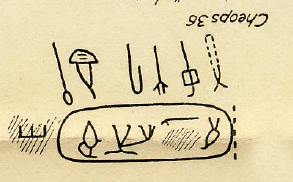
Figure 6: Khnum Khufu cartouche by Alan Rowe (1931) from Lady Arbuthnot’s Chamber. v
In his own drawing of the same group of signs, Alan Rowe includes three of the signs that Perring failed to observe on the chamber wall. What is also significant here is the block abrasion that Rowe highlights inside the cartouche at the approximate position where the disk sign (Kh) is observed in the 2025 WSP image. While Rowe could partially observe the anomalous sign on the outside left of the cartouche (fig. 6) through the wall abrasion there, it is evident that he could not observe any of the disk sign at the abraded area within the cartouche. (A small aside here. The WSP image colour key (fig. 1) indicates that only yellow/orange signs are no longer visible to the naked eye and require 3D scan technology to be able to ‘see’ them. But oddly, they have drawn all the missing Perring signs in red, suggesting these signs can all be observed without the use of advanced technology. Which is odd because Rowe recorded only wall abrasion at this location.
The pertinent question here, of course, is this: How could Perring have failed to observe any of these other signs when the WSP could plainly observe them (i.e., without the advanced technology) and Rowe, a hundred years later, evidently observed and drew three of them? And how did Perring observe a reed bar on the right side of the cartouche when this is missing from Rowe’s drawing (its absence indicated by the vertical dashed line), and which is also completely missing from the WSP image. Why wasn’t this missing part of the cartouche detected by the new technology?
In short, why was Perring able to observe marks in this group of signs that do not exist on the chamber wall today, while, at the same time, he managed to completely miss several signs that evidently were present upon the wall in 1837 (as Rowe’s drawing proves)?1
More significantly, however, how is it possible that Perring was able to observe signs that would almost certainly have been faint to him (the now vanished signs, upper fig. 3b) but could not observe the additional signs in this group that Rowe evidently could observe and copy? And, it seems, Rowe could partially observe only one of the faint (now vanished) signs in 1931 (fig. 6, left of cartouche)—but Perring observed and copied both. It hardly seems credible that Perring (a trained engineer and surveyor) could have observed and copied faint signs that Rowe evidently missed while failing to copy signs that Rowe seems to have had little difficulty in observing and copying.
Why is Perring’s drawing of these markings so significantly different from that of Rowe and the WSP? How can this contradictory (and baffling) situation reasonably be explained?
The answer may, in fact, be quite straightforward. It may simply be that the group of markings Perring copied from this chamber wall in 1837 was actually a work in progress and had only been partially completed (by the faker). It seems the faker halted midway through the creation of this particular group of wall signs and took a break, or perhaps this is when he exited the chamber to find a tool to remove his earlier mistakes (elsewhere in the chamber) and perhaps also to fix a silly error he appears to have made in copying this particular group of signs onto the chamber wall, which we shall consider shortly.
Given this, Perring could have made his drawing only of a partially completed (fake) work. The faker would later return to correct his mistake and finish painting this group of signs onto the chamber wall which, upon completion, would next be copied (differently) by Alan Rowe nearly a century later (fig. 6). The clues that indicate this is what likely occurred become apparent when we make a comparative study of the various images of this group of wall markings.
A Peculiar Gap
A cursory examination of the drawings of Perring, Rowe and the WSP reveals a peculiar gap between the S2 and S29 signs (figure 7).
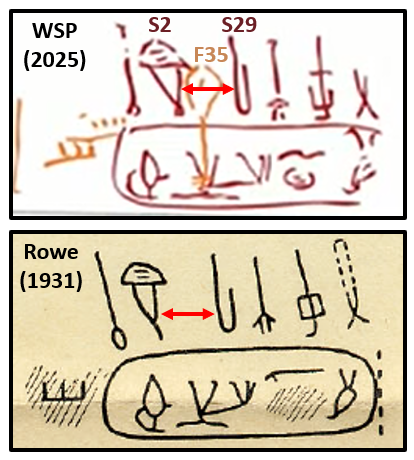
Figure 7: The space between the S2 and S29 signs seems inordinately large (compared with the spacing between the other signs), almost as though these signs were written on either side of a pre-existing F35 sign (that would later be removed).
The S2 and S29 signs seem to ‘bookend’ the middle (no longer visible) F35 sign (which is not part of this crew name group of signs). If an ancient Egyptian had removed the F35 sign to use this space to write a new inscription onto the block (as some have proposed), why would they place the replacement signs (S2 and S29) on either side of the F35 symbol that they had (supposedly) just removed? If the F35 sign had been removed in ancient times, the scribe could then simply paint the block as normal, using all the available space without having to create such a large gap between the S2 and S29 signs. In any case, an Egyptian scribe likely would not even have bothered removing the (presumably redundant) F35 sign at all but would simply have painted directly over it with the new signs he wanted (as was their practice).
From Perring’s drawing (fig. 3b, upper), the (now vanished) F35 sign was evidently present and visible upon the block in 1837, because Perring drew it (as well as the now vanished sign to the outside left of the cartouche). The question then is this: When did these anomalous signs disappear from the chamber wall? Both evidently existed in Perring’s day, but only one (the outside left of the cartouche sign) was partially visible to Rowe in 1931. It’s not easy to say, then, precisely when these marks vanished. However, there is evidence from another chamber that this disappearing act of signs may have occurred in 1837—and not gradually but suddenly.
Here, for example, we observe Hill and Perring’s drawing of the same group of wall markings (figure 8a) from Nelson’s Chamber, both drawn in 1837 and probably within days of each other.
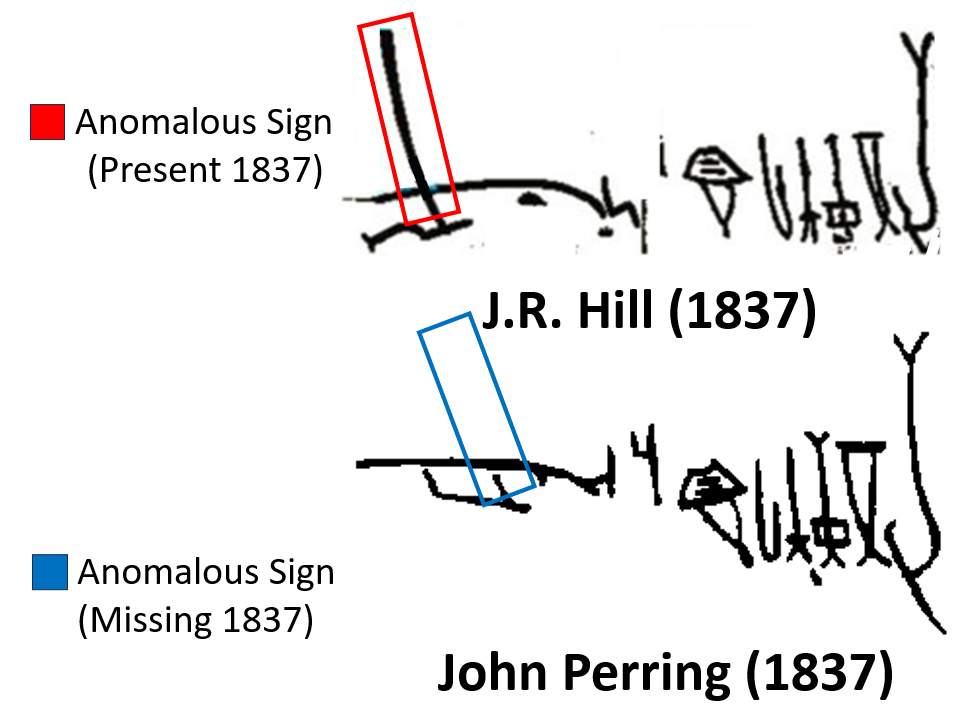
Figure 8a: The sign (in red box) was present upon the chamber wall when Hill drew it in 1837 but had vanished by the time Perring drew these signs (also in 1837).
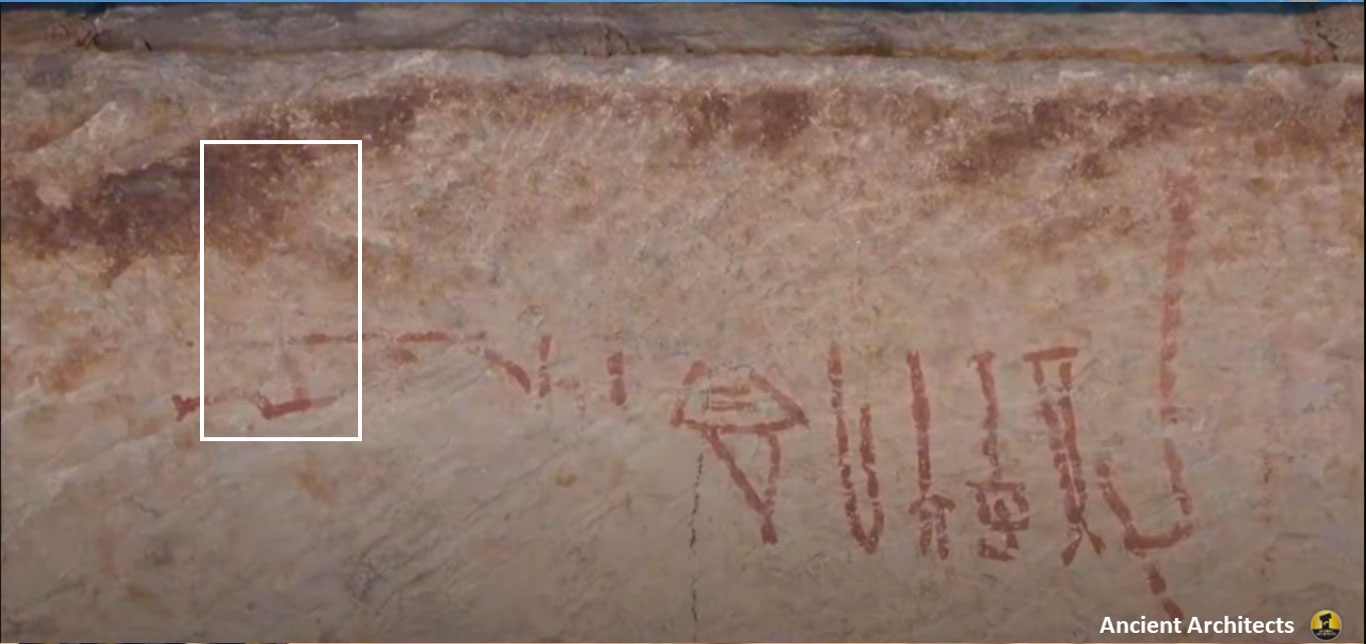
Figure 8b: The WSP photo of this group of signs. A small remnant of the anomalous sign (in white box) remains visible upon the wall at its lower end within the (partial) cartouche. The upper section of the sign is no longer visible to the naked eye. vi
This (now) missing sign in Nelson’s Chamber was also drawn by Colonel Vyse in his private journal and was, in fact, witnessed upon the chamber wall by several other men in 1837. And its former presence upon the chamber wall is now verified by the WSP digital scan, which detected traces of the sign (figure 8c).
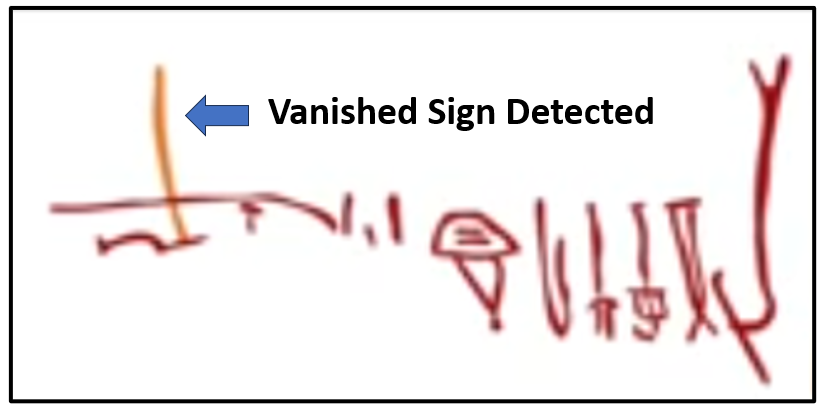
Figure 8c: Using state-of-the-art technology, the World Scan Project detected the presence of the vanished sign that was visible on the chamber wall in 1837, whereupon it mysteriously vanished.
If we compare the WSP photo (figure 8b) with John Perring’s image (figure 8a, lower), we can see that Perring is able to observe and draw the small lower section of the sign (within the partial cartouche). If Perring could observe and copy the small lower remnant of this sign, then why not also its upper part? It simply does not seem at all credible that Perring, in 1837, could observe the lower section of this sign and completely miss its upper part.
The point here is simply this. What we are looking at here is not a sign that gradually faded away over time, as some have suggested. This sign in Nelson’s Chamber was evidently present and visible upon the chamber wall one day and gone the next. An analysis of the WSP photo of this block (fig. 8b) shows no obvious sign of the block surface having broken away since, as noted, there exists a small remnant of this anomalous sign still within the cartouche at this wall location.
The evidence we have thus points to a possible conclusion that someone had this anomalous sign intentionally removed from the wall in 1837. And it stands to reason that if the fraudsters felt it necessary to remove this anomalous sign, then why not also all other such signs?
All of which suggests that the F35 sign (fig. 7, lower) may not have been removed in ancient times (or faded over time) but was perhaps intentionally removed from the chamber wall in 1837 (along with several other anomalous or otherwise ‘off script’ original markings that were not part of the Khufu narrative being created within the chambers).
But there is much more to this strange drawing of Perring’s to consider.
Making Space
Notice how in Perring’s drawing (fig. 9, lower right) there is insufficient room to insert all of the other cartouche signs (coloured blue).
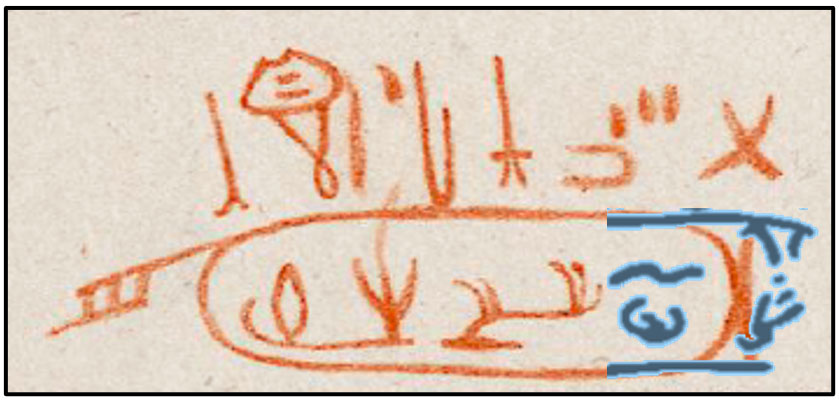
Figure 9: There is not enough room in Perring’s drawing to insert all of the other cartouche signs (highlighted in blue).
The Six-Legged Ram
Notice also in Perring’s drawing (fig. 10) that he draws three pairs of ram legs (highlighted in blue circles).
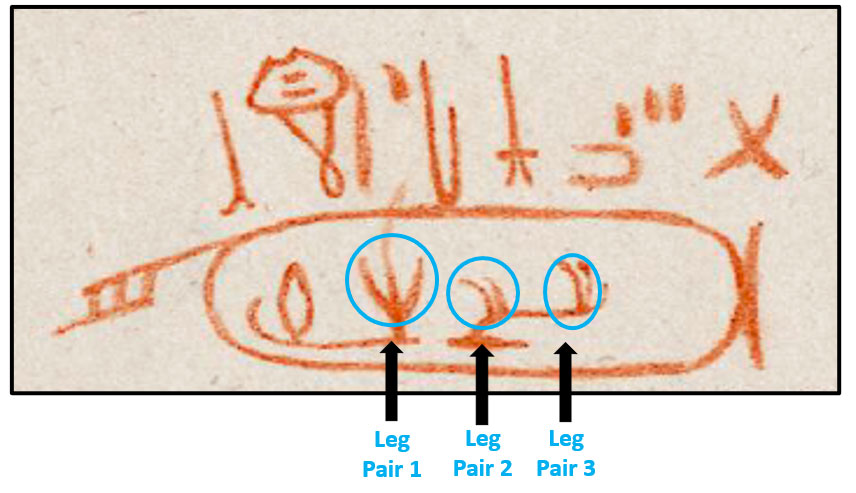
Figure 10: Perring draws three pairs of ram legs.
When we compare Perring’s drawing to that of the WSP and Rowe (figs. 5a-b), we observe in those other images only two ram leg pairs, not three. This extra set of forelegs—the ‘sign of fore’ (fig. 10, Leg Pair 1)—isn’t merely some random, spurious sign made by Perring but may, in fact, be the telltale sign that reveals to us exactly what happened with Perring’s drawing of these chamber wall markings in 1837, which we shall shortly see.
Misaligned Legs
Notice also the relative alignments of the ram leg pairs (figure 11).
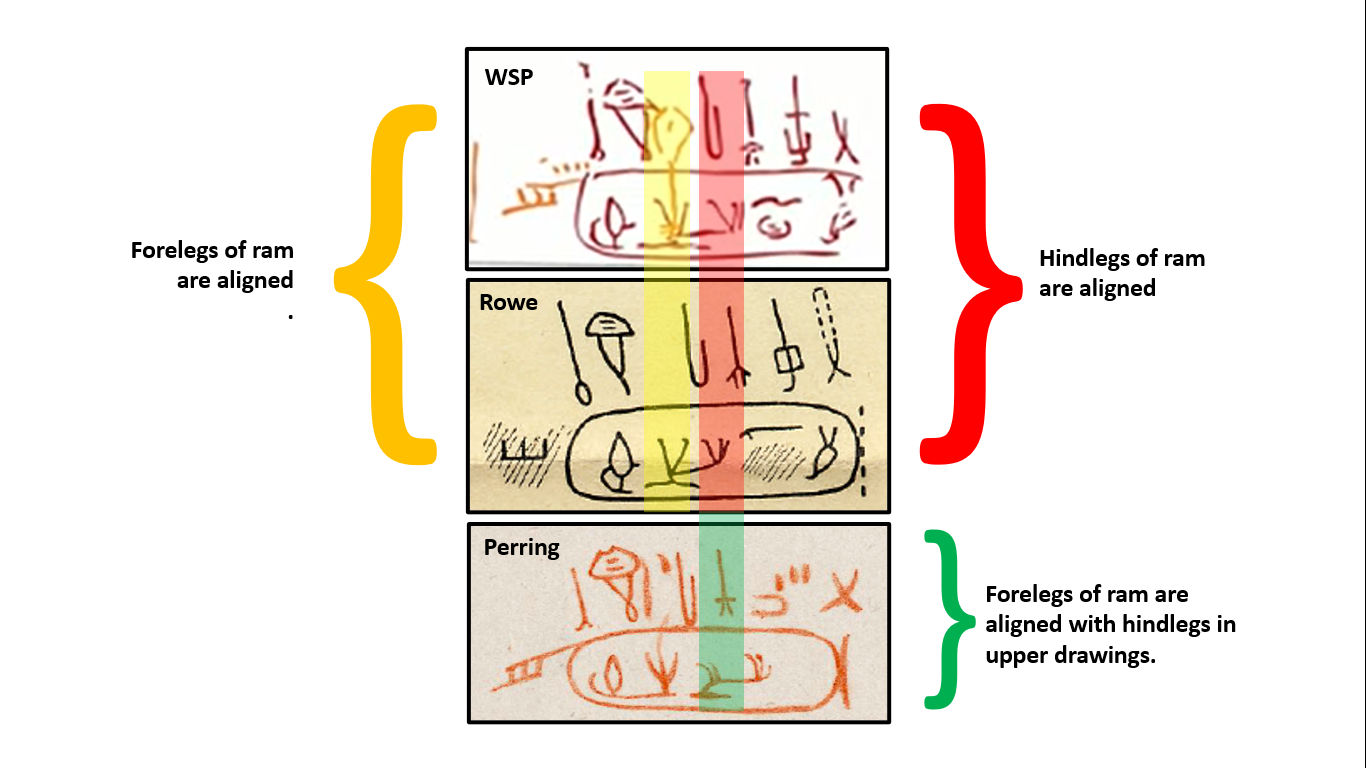
Figure 11: Relative alignments of the ram leg pairs shows Perring’s foreleg pair (green highlight) aligns with the hindleg pair in the WSP and Rowe images (red highlight).
With these observations, it is now possible to offer a hypothetical reconstruction as to how Perring’s bizarre drawing may have come about (fig. 12). Note: The left and centre markings (9 secs) may be remnants of the feet and tail along with the F35 sign of the ‘Good God’ gang name discovered by the WSP (see fig. 1, left side of middle row of wall blocks).
Figure 12: Hypothetical reconstruction of Perring’s drawings (animated).
And so, far from proving that these chamber markings are genuine artefacts—as some have claimed—this odd drawing made by John Perring could, in fact, be viewed as presenting one of the strongest pieces of evidence (his copying of a ‘work in progress’ and Rowe’s later copying of the finished piece) indicating that a hoax may indeed have been perpetrated within these pyramid chambers in 1837.
Other markings discovered in the chambers by the WSP, such as the ‘Good God’ and the ‘Goddess Wadjet’ present further peculiarities that may be considered in a future article.
© Scott Creighton 2026
Notes and References
1 It is worth mentioning here also that when this chamber (Lady Arbuthnot’s) was first explored by Colonel Vyse, along with Mr Raven (two pairs of eyes) in 1837, neither of them reported seeing any wall markings at all in this chamber. Not a single one. In fact, it wasn’t until three days later (after another more forensic inspection of the chamber walls) that the chamber’s markings were supposedly discovered. However, Perring, Hill and Rowe seem to have had little problem observing and copying most of this chamber’s wall markings and, indeed, many are easily observable today with just a simple hand torch. So why were they all evidently missed by Vyse and Raven during their first chamber inspection and only ‘discovered’ during a second inspection? If many of the marks can be observed today in this chamber with just a candle or torch, why not also in 1837?
i Matt Sibson, Ancient Architects, NEW Great Pyramid Hidden Hieroglyphs Discovered in the Relieving Chambers (2025), (https://www.youtube.com/watch?v=BtiP1VHgcMI) 8m 23s
ii Ibid, 7m 45s
iii Sitchin, Zechariah, Journeys to the Mythical Past, (2007), p.30.
iv Perring, John Shae, The Pyramids of Gizeh, From Actual Survey and Admeasurement, Part 1, Plate VI, Lady Arbuthnot’s Chamber, 1839.
v Reisner, George Andrew. Mycerinus: The Temples of the Third Pyramid at Giza.
Cambridge, Mass.: Harvard University Press, 1931, Plan XI (Cheops 36)
vi Matt Sibson, Ancient Architects, NEW Great Pyramid Hidden Hieroglyphs Discovered in the Relieving Chambers (2025), (https://www.youtube.com/watch?v=BtiP1VHgcMI) 11m 29s
Interesting Scott and thank you but do you have a view of what the faker had to gain through Inclusion of the cartouche?
By the word “faker” I am presuming that you mean Colonel Vyse (although it is doubtful that he carried out any of the wall painting).
If Col. Vyse could find — or appear to find — Khufu’s royal cartouche inscribed within the (hitherto) sealed chambers, then he would be the man to solve one of the greatest mysteries of the ancient world. He would confirm the ancient historian Herodotus, vindicate the orthodox chronology of Egypt’s dynastic past, and anchor the Great Pyramid to a known figure of the historical record — Khufu, builder of the mighty edifice, a son of the Old Kingdom and ruler of Egypt after the Biblical Flood (and not before it).
Such a ‘discovery’ would have assured Vyse’s legacy and (from his comments in ‘Operations’) it is evident that he was seeking (some might even say ‘desperate’) to make an important discovery before returning home to England as he would then be more than a mere adventurer or treasure seeker — he would be a confirmer of history, a revealer of truth. His name would go down in history. And it did.
To make sure I understand your proposal, are you saying that Perring recorded the in-transit hoax perpetrated by Vyse, and/or Hill, and Raven, but was himself innocent, and ignorant of it?
The newly detected gang in Nelson’s chamber is a gang also mentioned at the Wadi El-Jarf painted on some of the anchors alongside two other gangs (White Crown Gang and Lord of two Lands Living Ones) as the “Gang of the Followers of the Five Cobra-Mistresses” dwꜢ wꜢḏt šmsw Ꜥprw. I have not seen this gang mentioned in any of the other known marks found in Giza.
Reference: Pierre Tallet, Gregory Marouard, Damien Laisney (2024). Ouadi El-Jarf I-Les Installations Du Littoral, Vol II: Planches, IFAO, pp. 116-133, especially p. 132.
Hi Manu,
Thanks for dropping by.
Yes, for various reasons, I do not believe Perring was directly involved in the (potential) fakery though probably not entirely ignorant of it, being involved (imo) only tacitly so (i.e., turning a blind eye). A couple of those reasons are:
1) Perring was not present at Vyse’s Attestation Meeting (19th May, 1837) where his witnesses testified to the accuracy of Hill’s facsimile drawings against the actual wall markings. Perring was probably the person best placed to fulfill this role and it would have been an opportunity for Perring and the witnesses to cross-check Perring’s version of the drawings (some of which – as we know – were significantly different to Hill’s). Pointing to those differences could have been too awkward for Vyse, hence Perring’s absence from the meeting.
2) Perring published his own work a year before Vyse and published the true opening date of Lady Arbuthnot’s Chamber (6th May, 1837) – a fact, I believe, that caused problems for Vyse. (The opening date in the chamber’s Dedication Inscription and in Hill’s facsimile drawings from LAC gives 9th May, 1837. I seems to me that Perring clearly wasn’t buying into that false date and, I think, this caused a problem for Vyse (which wouldn’t have arisen had Perring also been directly complicit in any fraudulent activity).
Hope that clarifies things for you.
Best,
SC
Perring did not publish his own work. Perring was still in Egypt. The work in Perring’s name was part of the overall Vyse opus, as Piazzi Smyth explained:
“An enormous folio book or portfolio, usually termed Perring’s Plates of the Pyramids, and containing many excellent lithographs of them from his drawings; but the book was got up, and its letterpress edited by Colonel Howard Vyse, and includes contributions from Dr Birch, Mr Lane, and Mr Andrews as well.”
You have been told this, more than once.