



Newsdesk Archive
A new study published in the journal Science Advances by researchers at the IBS Center for Climate Physics (ICCP) at Pusan National University in South Korea shows that the patchwork of different ecosystems found in mountainous regions played a key role in the evolution of humans.
A new study published in the Quaternary Science Reviews has subjected the dirt dug from the cave to high-precision tests to find out what the environment was like tens of thousands of years ago.
Railroad construction through a farm on the Danish island of Falster has revealed a 5,000-year-old Neolithic site hiding an advanced technology—a stone paved root cellar. See the paper here.
A new study, led by Ph.D. candidate Vito Hernandez and Associate Professor Mike Morley from the College of Humanities, Arts and Social Sciences, has reconstructed the ground conditions in the cave between 52,000 and 10,000 years ago. The work appears in Quaternary Science Reviews.
Archaeological surveys led by scientists at Washington University in St. Louis suggest that coastal and underwater cave sites in southern Sicily contain important new clues about the path and fate of early human migrants to the island. See the study here.
A new study published in the European Journal of Neuroscience explores how this drug affects brain activity at the level of individual neurons.
Using the Zwicky Transient Facility (ZTF) telescope to survey large expanses of sky, a team of researchers led by the University of Maryland investigated a stream of space debris known to drift near Earth called the Taurid swarm.
Psilocybin’s potential to safely and effectively treat mental illness appears to be highlighted with every new study into its effects. Now, Monash University researchers have added more evidence to the growing pile. The study was published in the journal Translational Psychiatry.
Image from: Brocken Inaglory (Wikki Commons)
A recent study published in the Journal of Psychopharmacology highlights the potential synergy between meditation and psychedelics. Meditators who received a combination of DMT and harmine reported greater mystical experiences, non-dual awareness, emotional breakthroughs, and lasting increases in well-being compared to those given a placebo.
A 2,800-year-old burial in Siberia that contains the remains of an elite individual, who was buried with at least one sacrificed human and 18 sacrificed horses, appears to belong to a culture closely related to the enigmatic Scythians, a new study finds.
The findings raise questions and shed light on snail consumption and the antiquity of culinary traditions in Tunisian societies. The findings are published in the journal Archaeological and Anthropological Sciences.
If you want to pinpoint your place in the Universe, start with your cosmic address. You live on Earth->Solar System->Milky Way Galaxy->Local Cluster->Virgo Cluster->Virgo Supercluster->Laniakea.
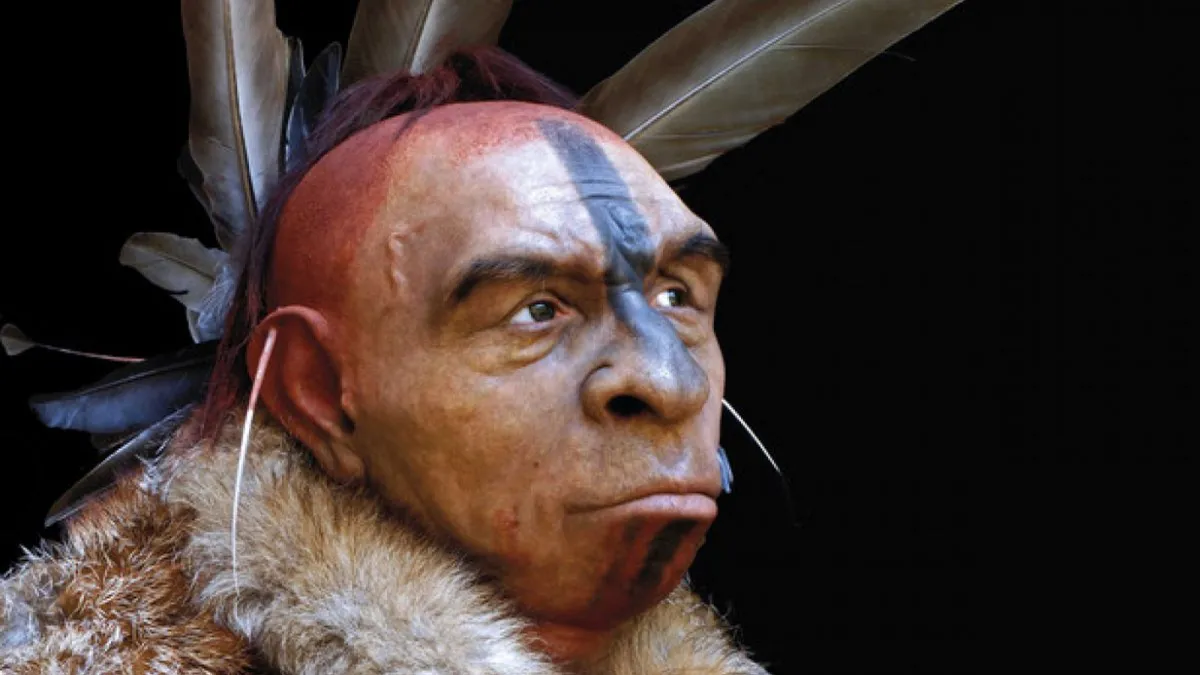
A complex picture of how Neanderthals died out, and the role that modern humans played in their disappearance, is emerging.
Using information from inside the rocks on Earth's surface, we have reconstructed the plate tectonics of the planet over the last 1.8 billion years.
The huge asteroid that hit Earth and wiped out the dinosaurs 66 million years ago was not alone, scientists have confirmed. A second, smaller space rock smashed into the sea off the coast of West Africa creating a large crater during the same era.
When an asteroid slammed into Earth 66 million years ago, it caused a mass extinction. Now, researchers have evidence that this catastrophe ushered in the invention of agriculture by ants. See the paper here.
Across the United States, the second Monday of October is increasingly becoming known as Indigenous Peoples Day. In the push to rename Columbus Day, Christopher Columbus himself has become a metaphor for the evils of early colonial empires, and rightly so.
A couple of congressmen are asking for your assistance to better understand how to safely incorporate psilocybin and MDMA into therapy.
Humans use smiles and laughter to communicate playfulness. Now, the behaviour has been confirmed in a species of dolphin, too. The research is published in the journal iScience.
A comet that has not been seen from Earth since Neanderthals were alive and kicking has reappeared in the sky, with astronomers saying it might be visible to the naked eye.
Dennis McKenna and anthropologist Wade Davis are working together to organize a movement dedicated to ending the vilification of the coca plant, and the persecution of its consumers.
The existential threat from a large meteor is real, but two next-generation telescopes are about to make us safer.
Fossils found in Brazil are leading palaeontologists to re-write the evolution of mammals...The findings are detailed in a paper published in Nature.
New research published in The Planetary Science Journal suggests that the moon was captured during a close encounter between a young Earth and a terrestrial binary—the moon and another rocky object.
Journalist and best-selling author Graham Hancock’s new 6 x 40-minute documentary series Ancient Apocalypse: The Americas, will be released on Netflix on Wednesday 16th October. See the Official Clip here.
A cheese found in northwestern China is 3,600 years old and is the subject of a paper published today in the journal Cell.
A boom in vegetation at the end of the last ice age may have created so much pollen, it blocked mammoths' sense of smell. A new study suggests this drove the beasts to extinction, but not everyone agrees.
In a recent study published in the journal Scientific Reports, the use of new bioarcheological methods has allowed the identification of chromosomal sex from the study of DNA and the analysis of a protein known as Amelogenin present in the tooth enamel.
Archaeologists have analyzed textiles from the ancient city of Huacas de Moche, Peru, showing how the population's cultural traditions survived in the face of external influence. See the study here.
The book "Norell and Strange" offers a compelling allegory for the psychedelic industry, especially in its relation to mysticism and magic.
Scientists have grown an ancient seed from a cave in the Judean Desert into a tree — and it could belong to a locally-extinct species with medicinal properties mentioned several times in the Bible
Computers truly are wonderful things and powerful but only if they are programmed by a skillful mind. Check this out… there is an algorithm that mimics the growth of slime mold, but a team of researchers has adapted it to model the large-scale structure of the Universe.
Despite being a solitary creature, the day octopus (Octopus cyanea) has sometimes been spotted hunting with inter-species groups of fish. Scientists assumed that the octopus is in charge of the hunting pack, but a new study finds that influence is actually shared around, depending on the situation.
Scientists, as well as Hollywood movie producers, have long looked to nuclear bombs as a promising form of defence should a massive asteroid appear without warning on a collision course with Earth. Now, researchers at a US government facility have put the idea on a firm footing, showing how such a blast might save the world in the first comprehensive demo of nuclear-assisted planetary defence.
Archaeological fieldwork in Morocco has discovered the earliest previously unknown farming society from a poorly understood period of northwest African prehistory. This study, published today in Antiquity, reveals for the first time the importance of the Maghreb (northwest Africa) in the emergence of complex societies in the wider Mediterranean.
Using drones and AI, a team led by archaeologist and anthropologist Masato Sakai of Yamagata University in Japan has discovered a jaw-dropping 303 more in just six months – nearly doubling the known number.
A recent study published in the journal Dreaming sheds new light on the relationship between near-death experiences and dreaming. The research found that individuals who have had a near-death experience (NDE) report more frequent and vivid dreams, including lucid dreaming, out-of-body experiences, and even precognitive dreams, compared to those who have not come close to death.
In a new study, the team drew on a wide range of evidence—from medical studies of modern equestrians to records of human remains across thousands of years.
Fifty million years ago, lush rainforests blanketed modern-day Antarctica, Australia, New Zealand and the tip of South America. Now, researchers have discovered new fossils that reveal which plant species populated these forests and how they adapted to life near the South Pole.
A newly discovered fossil site in the northeast US provides a glimpse into an ancient ecosystem nearly 100 million years older than the first dinosaurs. The exceptionally well-preserved find is described in Nature Communications.
Known as the Pitted Ware Culture (PWC), this waterfaring Neolithic group of hunter-gatherers lived in Scandinavia between 3500 and 2300 B.C., according to the study, published Aug. 26 in the Journal of Maritime Archaeology.
A direct comparison between the experimental psychedelic drug psilocybin and a standard SSRI antidepressant shows similar improvement of depressive symptoms, but that psilocybin offers additional longer-term benefits. The work is presented for the first time at the ECNP Congress in Milan. A related paper will appear in the journal eClinicalMedicine to coincide with the conference presentation.
At various sites on the Ab?eron Peninsula and Gobustan Reserve in Azerbaijan, archaeologists have found six designs carved into the surfaces of rocks. Dating to around 2000 BCE, they each resemble the hallmark pattern on which the ancient board game Hounds and Jackals is based. The research has been published in the European Journal of Archaeology.
According to a study published this week, an asteroid roughly the length of a city bus will be captured by Earth’s gravitational pull and orbit our planet for about two months, becoming a “mini moon”.
A team of researchers have analyzed human remains from the Oakhurst rock shelter in southernmost Africa and reconstructed the genomes of thirteen individuals, who died between 1,300 and 10,000 years ago, including the oldest human genome from South Africa to date. Their study is published in the journal Nature Ecology & Evolution.
New research suggests that black holes may actually be "frozen stars," bizarre quantum objects that lack a singularity and an event horizon, potentially solving some of the biggest paradoxes in black hole physics.
African rock art depicting a mythical tusked creature may mirror the look of fossils of real-life ancient mammal relatives called dicynodonts. See the study here.
Scientists have discovered what they call a ‘third state’ between life and death, where some cells of an organism survive even after the organism dies. They don’t just survive – they develop new capabilities they didn’t have in the organism’s life, according to a study published in the Physiology journal.
When modern humans emerged from Africa, they explored far more than just new places. They encountered other human species, and in the Zagros Mountains of Iran, they did a heck of a lot more than just say hello. This research was published in Scientific Reports.
Remember to look skyward to see the moon when it will be about 27000km closer to Earth than usual
A recent study published in Translational Psychiatry adds a new layer to this understanding by investigating how ketamine impacts brain function, specifically focusing on high-order interactions in brain activity.
In an article recently published in Latin American Antiquity, Dr. Jill Mollenhauer argues that the Gulf Lowland Olmec, one of Mesoamerica's earliest major civilizations, sometimes incorporated aesthetic and ritual practices associated with their rock art into their sculptures...
Some chapters of human history are more poignant to revisit than others...But other chapters, like those describing the loss of our ancient ancestors, are harder to recover as time passes. A chance finding of bones in a cave is revealing clues of a much older tragic mystery.
Researchers in Gabon studied tropical plants eaten by wild gorillas - and used also by local human healers - identifying four with medicinal effects. Laboratory studies revealed the plants were high in antioxidants and antimicrobials. One showed promise in fighting superbugs. The research is published in the journal PLOS ONE.
The discovery, published September 11 in the journal Cell Genomics, could shed light on the still-enigmatic reasons for the species' extinction and suggests that late Neanderthals had more population structure than previously thought.
Archaeologists investigating caves in Malaysia ahead of their flooding for a hydroelectric reservoir have discovered more than a dozen prehistoric burials they think are up to 16,000 years old.
An international team of geneticists has found evidence that this famous cautionary tale never actually happened. The study was published in Nature.
The plot has thickened on the mystery of the altar stone of Stonehenge, weeks after geologists sensationally revealed that the huge neolithic rock had been transported hundreds of miles to Wiltshire from the very north of Scotland.
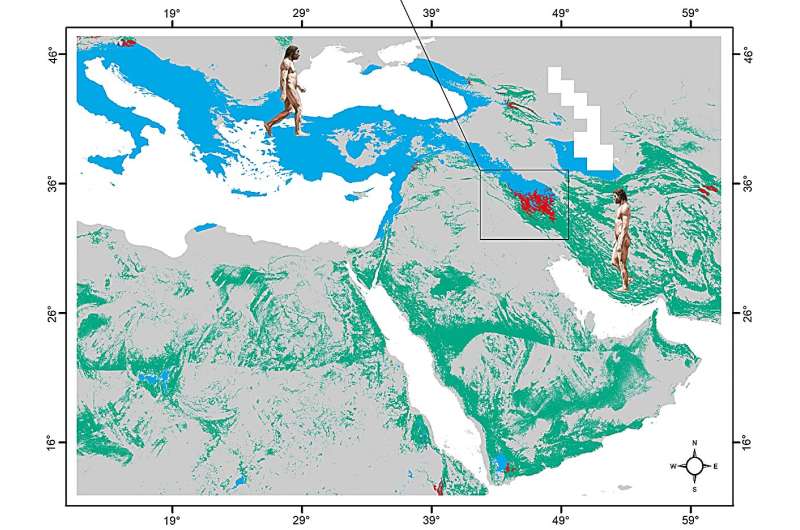
In their paper published in the journal Scientific Reports, the group describes how they used ecological niche modeling and a geographic information system to identify the locations of Neanderthals and Homo sapiens living in parts of Southeast Europe and Southwest Asia and the places where they most likely interacted.
Tetrahydrocannabinol (THC), the main active ingredient in cannabis, has been shown to reverse conventional signs of brain aging in mice – a discovery that could help in finding ways to keep our brains healthier and sharper for longer as we get older. The research has been published in ACS Pharmacology & Translational Science.
Fragments of the protein collagen have been found preserved in dinosaur fossils 80 million to 195 million years old. But this shouldn’t be possible...A new study in ACS Central Science has described the protective chemistry responsible for collagen’s extraordinary longevity.
An interdisciplinary research team from the University of Cologne's Institute of Geophysics and Meteorology and the Department of Prehistoric Archaeology has developed a new model, the "Our Way Model."...the results have been published in an article titled "Reconstruction of human dispersal during Aurignacian on pan-European scale" in Nature Communications.
A recent study published in Clinical Pharmacology & Therapeutics challenges conventional wisdom about the interaction between cannabidiol (CBD) and tetrahydrocannabinol (THC), revealing that it may be not only incorrect but actually the opposite of what is commonly believed.
The largest moon in the solar system was struck by an ancient asteroid 20 times bigger than the rock that clattered into Earth and ended the reign of the dinosaurs 66m years ago, research suggests. See the study here.
"By growing mycelium into the electronics of a robot, we were able to allow the biohybrid machine to sense and respond to the environment," says senior researcher Rob Shepherd, a materials scientist at Cornell. This research was published in Science Robotics.
Scientists are getting very close to bringing a few iconic species, like woolly mammoths and dodos, back from extinction. That may not be a good thing.
A doughnut-shaped region thousands of kilometers beneath our feet within Earth's liquid core has been discovered by scientists from The Australian National University (ANU), providing new clues about the dynamics of our planet's magnetic field. The research is published in Science Advances.
Yet the scars of our past aren't always easy to distinguish from more mundane tides that advance cosmic evolution, leaving researchers to speculate which patterns are evidence of cataclysmic events and which are typical signs of ageing. This research was submitted to Astronomy & Astrophysics and is available on the preprint server arXiv.
New geoarchaeological research shows that metalworking in ancient Egypt led to significant contamination in a nearby port.
A new study led by the University of South Florida has shed light on the human colonization of the western Mediterranean, revealing that humans settled there much earlier than previously believed. This research, detailed in a recent issue of the journal, Communications Earth & Environment, challenges long-held assumptions and narrows the gap between the settlement timelines of islands throughout the Mediterranean region.
Study described as ‘necessary first step’ in discovering whether dogs and humans can use push-button devices to communicate.
A study by researchers from the Insper Research Institute in São Paulo and the University of Bonn now shows an interesting side effect: where the measures were implemented, not only did deforestation decrease, but so did the number of homicides.
Astronomers have traced the origins of 200 meteorites to five impact craters in two volcanic regions on Mars, known as Tharsis and Elysium.
Since the end of the last Ice Age, growth of the human population has been far from uniform, marked instead by periods of rapid expansion followed by sharp declines. The reasons behind these fluctuations remain only partially understood. See the study published in the Journal of the Royal Society Interface.
The significance of ancient human fossils found in Africa is undeniable. But new research questions whether African fossil sites tell the whole story. See the study here.
In the deep human past, highly skilled seafarers made daring crossings from Asia to the Pacific Islands. It was a migration of global importance that shaped the distribution of our species — Homo sapiens — across the planet.
A ruined building in Kafr El Sheikh was where ancient Egyptians once stood, gazing at the stars above.
A new paper published in the Proceedings of the National Academy of Sciences focuses on testates to better understand the evolution of ecosystems on Earth and predict what the planet may look like in the future.
A new study has found that the Neolithic humans who built Menga were highly skilled, highly knowledgeable, and adept at solving complex engineering problems. The research has been published in Science Advances.
Scientists have mapped the path of an ancient underwater avalanche which travelled 2,000km across the seafloor off the northwest coast of Africa. The new study appears in Science Advances.
Mysterious zones in the deep mantle where earthquake waves slow to a crawl may actually be everywhere, new research finds.
The long-lost divinatory list represents the oldest-known compilation of lunar eclipse omens from Babylonia – an ancient culture in Mesopotamia famed for its astrological beliefs...The study was published in the Journal of Cuneiform Studies.
High doses of psilocybin—the active ingredient in magic mushrooms—appears to have a similar effect on depressive symptoms as the selective serotonin reuptake inhibitor (SSRI) drug escitalopram, suggests a systematic review and meta-analysis published in The BMJ on the 21st of August.
A "stunning" tomb found on an isolated moor in southwest England could help archaeologists understand what life was like 4,000 years ago in the Bronze Age.
The Moon’s south pole was once covered in an ocean of liquid molten rock, according to scientists. The findings back up a theory that magma formed the Moon's surface around 4.5 billion years ago.
A recent research published in the journal Heliyon suggests that LSD might modulate how the brain processes pain. The study reveals that LSD can alter the brain’s pain neural network, offering potential insights that could influence future research in cognitive science and pharmacology.
The first comprehensive review of tooth ablation in Taiwan from the Neolithic to the modern era has been conducted. The research, published in the Archaeological Research in Asia journal, aims to fill gaps in our knowledge of the origins and development of the practice in Taiwan.
A new neuroimaging study has revealed how the powerful psychedelic N,N-dimethyltryptamine, commonly known as DMT, alters the brain’s primary visual cortex, potentially explaining the intense visual distortions experienced by users. The findings arde published in NeuroImage.
Population sizes declined sharply during the coldest period, and in the West, Ice Age Europeans even faced extinction, according to the study published August 16 in the journal Science Advances.
A new study has cleared up misconceptions about the extinct dodo, identifying the reference specimen for the species and showing they were fast and powerful.
A trio of evolutionary biologists at Harvard University's Museum of Comparative Zoology has learned more about the evolutionary history of tardigrades by studying two fossils embedded in amber. Their study is published in Communications Biology.
Researchers analyzed Stonehenge's Altar Stone and determined that its chemical makeup is similar to that of stones found in northeastern Scotland. The finding is part of a new study published Wednesday (Aug. 14) in the journal Nature.
The excavation of a recently discovered rock shelter site called Abric Pizarro has turned up thousands of artifacts dated to between 65,000 and 100,000 years ago, including stone tools and animal bones that can tell us a lot about the Neanderthal way of life during a period for which few remnants remain. The research has been published in the Journal of Archaeological Science.
In the deep human past, highly skilled seafarers made daring crossings from Asia to the Pacific Islands. It was a migration of global importance that shaped the distribution of our species—Homo sapiens—across the planet...For the first time, our new research published in Antiquity provides direct evidence that seafarers traveled along the equator to reach islands off the coast of West Papua more than 50 millennia ago.
Scientists have discovered a reservoir of liquid water on Mars - deep in the rocky outer crust of the planet. The findings come from a new analysis of data from NASA’s Mars Insight Lander, which touched down on the planet back in 2018.
New research from the University of Southern California shows that cannabis might help some people stop or cut down on their opioid use.
In stark contrast to the severe environmental destruction that we see all around us, our excavations reveal the ancestral Maya's profound respect for nature and animals.
Resin is solidified tree sap. The resin artifact was dated with the University of Oxford's radiocarbon accelerator to about 55,000 to 50,000 years ago. The archaeologists don't suggest it was art. They suggest it was the prehistoric version of a matchstick.
Scholars have finally deciphered 4,000-year-old cuneiform tablets found more than 100 years ago in what is now Iraq. The tablets describe how some lunar eclipses are omens of death, destruction and pestilence. See the paper published recently in the Journal of Cuneiform Studies.