



Despite growing evidence in its favor, The Younger Dryas Impact Hypothesis has been under constant attack for the past 20 years. In this article, Dr Chris Moore, Research Professor at the University of South Carolina, responds to a pseudoskeptical article by Dr Mark Boslough, Research Professor at the University of New Mexico, published in Skeptical Inquirer on 29th September 2025 (https://skepticalinquirer.org/exclusive/the-problem-with-inadequately-reviewed-fringe-science/). The aim of Dr Moore’s response is to correct the record, highlight basic norms for scientific debate, and call out rhetoric that misrepresents active, peer-reviewed work on the Younger Dryas Impact Hypothesis (YDIH).
Pseudoskepticism is the appearance of scientific skepticism without its core discipline. Instead of testing claims against evidence with an open, provisional mindset, it assumes the conclusion (often incorrectly) and selectively deploys doubt, rhetoric, or shifting demands to defend that conclusion.
This response addresses key points in Mark Boslough’s Skeptical Inquirer article (2025). The aim is to correct the record, highlight basic norms for scientific debate, and call out rhetoric that misrepresents active, peer-reviewed work on the Younger Dryas impact hypothesis (YDIH).
Below are quotes from Boslough’s article, followed by responses that draw on Powell’s analyses of ethics and scientific communication (e.g., “Data vs. Derision” and “Peer Review and the Pillar of Salt: A Case Study.”. The focus is on evidence and argumentation, not personalities.
Image by Luke Hancock (CC0)
Quote
“My own research topic, the physics of planetary impacts and airbursts, has also been the subject of inadequately reviewed literature. The Younger Dryas impact hypothesis, YDIH, claims that the impact of a swarm of comet fragments about 12,900 years ago caused an abrupt climate shift, massive burning, and extinction. It is associated with ‘catastrophist pseudoscience’ according to David Morrison, 2010, and described as ‘pathological science’ by Clark R. Chapman, Morrison, and Alan W. Harris, 2025. Jay Melosh, who literally wrote the book on impact cratering, compared it to the Piltdown hoax.” (Boslough 2025)
Response
Branding a live, peer-reviewed research program as “pseudoscience,” “pathological,” or “Piltdown-like” shifts attention from methods and results to reputations. Powell notes that such labels are ethically problematic because they bias evaluation and dampen open inquiry; the right standard is to engage the actual claims and data (Powell 2025, Journal of Academic Ethics). He also shows how early pejoratives helped cement a perception of irreproducibility even as later work reported replications of key markers, hence his call to separate rhetoric from the evolving evidence (Powell 2022, Science Progress). In short, these labels fit a broader pattern in which reputational framing is used in place of testing the strongest current evidence. The question is whether the evidence does or does not support a cosmic event at the YD boundary.

Quote
“Like cold fusion and climate denial, the YDIH is rejected by virtually all experts. But reports of its death might be exaggerated. It appeals to segments of the public that subscribe to the conspiratorial notion of a ‘mainstream narrative’ that is propped up by a ‘scientific establishment.’ It has been comprehensively refuted, Holliday et al. 2023, but continues to be promoted by fringe science influencers and celebrities such as Joe Rogan and Graham Hancock.” (Boslough 2025)
Response
Declaring “comprehensive refutation” and “near-universal rejection” while substantial peer-reviewed counterevidence exists is an example of premature closure. Powell documents that widely cited non-replications were followed by independent replications across multiple sites, including a large multi-site microscopy study reporting impact spherule peaks where earlier work had reported none. That track record contradicts blanket “irreproducible” claims and argues for method-centered testing rather than sweeping dismissals (Powell 2022, Science Progress). Ethically, claims about consensus or refutation should be grounded in the comment–reply literature, not asserted in a magazine piece (Powell 2025, Journal of Academic Ethics; Powell 2023, Research Ethics). By our count, on the order of ~150 supportive or replicating papers, ~80 critical papers, and ~67 neutral/mixed items in mainstream journals, an active debate, not a done deal. Obviously, dozens of experts who have authored these many papers do not reject the YDIH, and neither do the peer-reviewers.
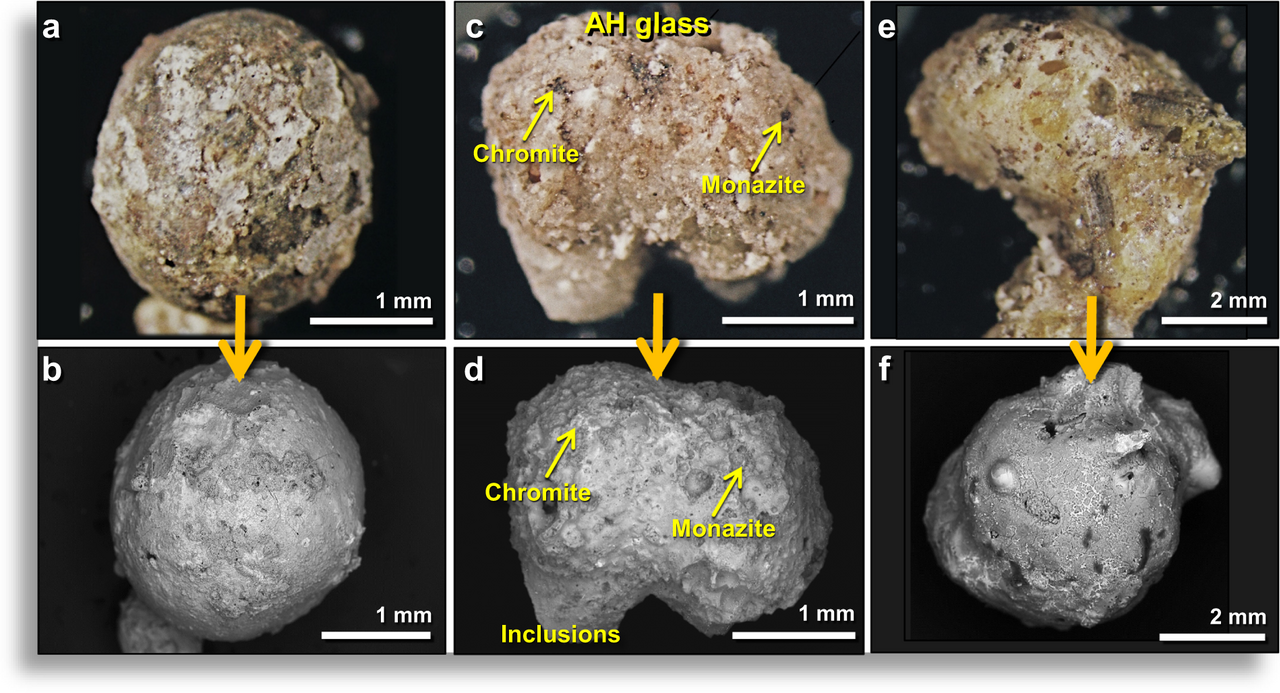
Abu Hureyra meltglass, by Andrew M. T. Moore et al. (CCBYSA4.0)

Quote
“Also like with cold fusion and climate denial, scientists who lack relevant subject matter expertise have been tricked by the YDIH. Otherwise, it is unlikely that anything related to the YDIH would have been published anywhere other than the 2006 new age book Cycle of Cosmic Catastrophes, released by publisher Inner Traditions, which focuses on astrology, alternative medicine, and other branches of pseudoscience.” (Boslough 2025)
Response
This is guilt-by-association plus competence discounting. What matters are protocols and reproducibility, not the venue of every popular book or the backgrounds of all coauthors. Powell details multiple independent replications of YDB microspherules and explains why early negative studies used approaches that would systematically undercount the diagnostic fraction (Powell 2022, Science Progress). Reputational shortcuts are no substitute for head-to-head tests of methods and measurements. Teams of scientists with diverse backgrounds have conducted this research and found the same type of evidence at many YD sites across multiple continents. And historically, some of science’s most important advances have come from researchers working across or outside traditional disciplinary boundaries.
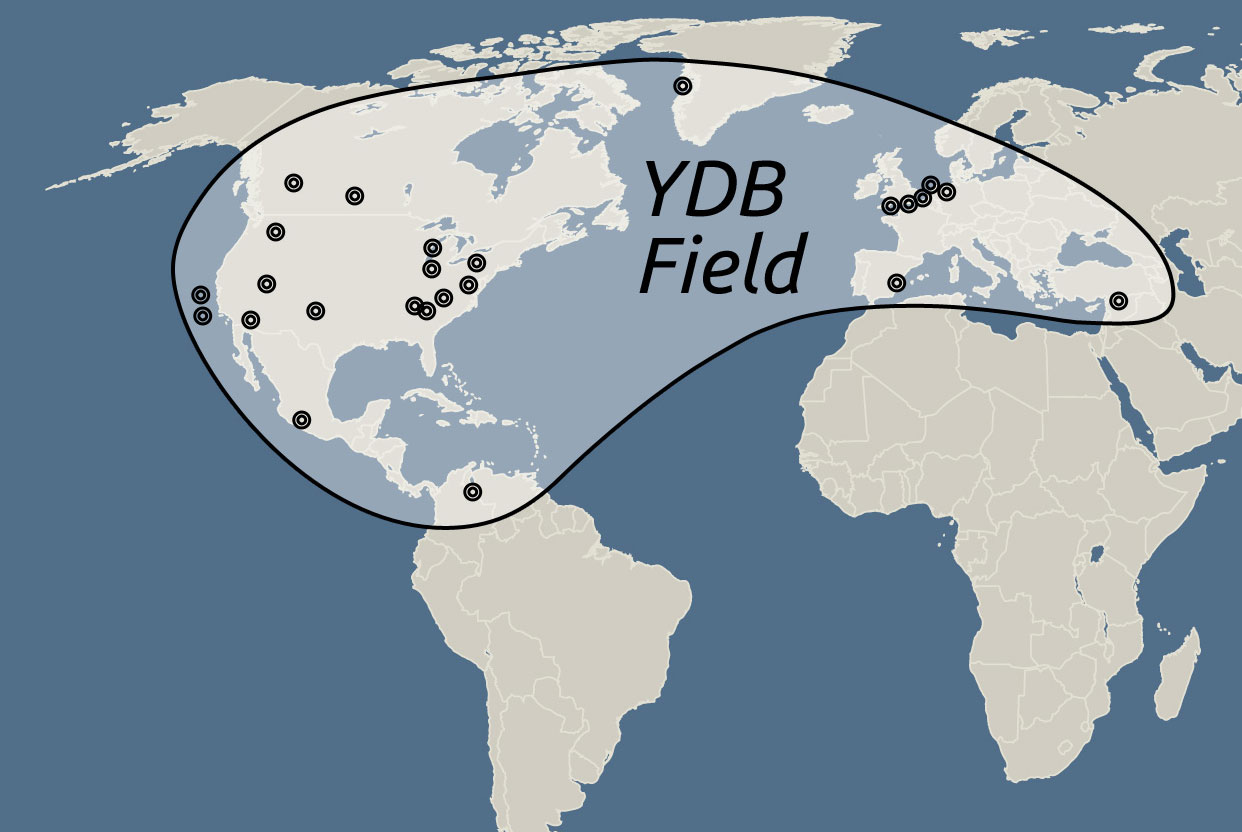
The Younger Dryas Boundary strewn field. The area enclosed by the dotted line defines the current known limits of the YDB field of cosmic impact proxies spanning more than 50 million square kilometers. Source: America Before, figure 25.3
Quote
“Once the authors of CoCC recruited James Kennett, a paleoclimatologist and member of the National Academy, they had access to the pal review track of publishing in the Proceedings of the National Academy of Sciences, PNAS. Kennett found a willing personal editor” (Boslough 2025).
Response
Process-misconduct allegations need documentation in the proper forum. If PNAS procedures were misapplied, the right route is a formal journal process or a peer-reviewed Comment with specifics (manuscript IDs, dates, editor actions). As Powell notes, raising venue-policing accusations without verifiable particulars biases readers while avoiding accountable adjudication (Powell 2023, Research Ethics). Meanwhile, the core scientific questions are being tested in journals via multi-site microscopy and geochemistry (Powell 2022, Science Progress). Repeating “pal-review” tropes in media doesn’t resolve evidentiary debates. Scores of peer-reviewed papers in other journals validate the evidence for a cosmic event at the YD boundary.
Quote
“Geologist and former university president James Powell… His problem is hindsight bias… A decade later, Powell appears unable to admit that his YDIH horse never made it out of the gate.” (Boslough 2025)
Response
“Never made it out of the gate” is a quip, not an argument. There’s an ongoing stream of peer-reviewed papers in mainstream journals that support the hypothesis. Powell’s 2022 article assembles a timeline showing how early negative findings were amplified and later followed by direct replications at the same sites when appropriate protocols were applied (e.g., size sorting, adequate aliquots, SEM/XRF confirmation). That’s a methods-driven case, not hindsight bias (Powell 2022, Science Progress). Let’s keep the discussion on data and procedures.
Quote
“Red flags about the YDIH were already present by the time Powell learned about it. The originator of the hypothesis and collector of most of the evidence, Allen West, had been convicted of fraud…” (Boslough 2025)
Response
Boslough has repeatedly and publicly claimed that West was convicted of fraud, including in statements to a New York Times reporter who covered the Younger Dryas impact controversy. That claim is false. While working as a field geologist in California, West was involved in a misunderstanding concerning state licensing requirements and was charged with a minor misdemeanor – a regulatory violation, not fraud, as Boslough has alleged. The court ultimately found West not guilty, and all charges were dismissed. Certified court documents confirming this dismissal were provided to the New York Times reporter, who accurately reported the not-guilty verdict in the article. Boslough was also interviewed for the same story and was therefore aware of the court’s findings. Despite this, Boslough has continued to repeat the false claim in subsequent public venues, including his recent Skeptical Inquirer article. Repeating an allegation known to be false misleads readers and crosses the line from legitimate scientific debate into reputational defamation. We therefore urge Boslough, and all participants in this discussion, to adhere to verifiable facts and to confine criticism to evidence, data, and methodology rather than personal mischaracterizations.
Quote
“Powell doubled down with another book in 2020 and an absurd accusation in 2022 that the YDIH was the victim of premature rejection by specialists…” (Boslough 2025)
Response
“Premature rejection” describes a recognizable pattern: early high-profile negatives, sweeping condemnations, and then disregard of direct replications and improved protocols. Powell shows how this dynamic shaped perception even as multi-site studies reported diagnostic evidence (Powell 2022, Science Progress; Powell 2025, Journal of Academic Ethics). The corrective is straightforward: debate details in the literature, where claims must be specific and answerable.
Quote
“Later that year, Powell objected to my Skeptical Inquirer article… He quoted Carl Sagan… Powell failed to understand that the logical corollary is that if it’s relevant to the argument, it’s not ad hominem.” (Boslough 2025).
Response
That “corollary” isn’t a norm in scholarly practice. “Relevance” is elastic; you can always argue that a person’s motives, reputation, funding, or past mistakes are relevant, but letting that in turns debate into judging people instead of testing claims. The professional route is to challenge data, methods, and reasoning with specific, testable points in peer-reviewed venues. Powell argues that keeping disputes inside comment–reply channels ensures claims are particularized and can be answered (Powell 2023, Research Ethics).
Quote
“Name calling and smear campaigns… critics are described as crazy, unhinged, and retarded.” (Boslough 2025)
Response
If that language appears anywhere, it should be cited and stopped. Powell’s ethics analysis is even-handed: pejoratives from any side bias readers, chill inquiry, and erode trust. The fix is to move criticism into journals under comment–reply or adversarial collaboration, where rhetoric is bounded and evidence is central (Powell 2025, Journal of Academic Ethics).
Quote
“A few years later, Bunch and West published a pal-reviewed PNAS paper… They did not cite any physics-based models… They also failed to disclose… They recently created a vanity journal… where they self-edit, self-review and republish…” (Boslough 2025)
Response
Each of these allegations needs specific evidence and the right venue. If PNAS handling was irregular, submit a formal complaint or Comment with documentation so editors can assess it (Powell 2023, Research Ethics). Models are useful to understanding but not required for publishing evidence or potential implications. Evidence is presumably closer to fact and models are simply representations of observer understanding in light of potentially inadequate evidence. Models do not create evidence; evidence constrains and modifies models. If key physics models were omitted, file a Comment identifying the models, why they matter, and how they would change interpretation, i.e., content critique in the literature, not assertions in a magazine (Powell 2023, Research Ethics). Claims of undisclosed “railroad slag” or other provenance issues should go through COPE-style correction pathways with sample IDs, figures/tables, and policy citations. As for calling Airbursts & Cratering Impacts a “vanity journal,” that’s an accusation of editorial malpractice; the test is evidence (e.g., editor-authored papers without independent review), not labels. Without documented findings vetted in journals, broad accusations risk substituting reputation for the actual evidentiary record (Powell 2025, Journal of Academic Ethics; Powell 2022, Science Progress).
Quote
“Qualifications, competence, objectivity, and honesty are critical attributes for researchers and are relevant for assessing their work. Misconduct, incompetence, bias, misrepresentation, and data tampering should not be swept under the rug…” (Boslough 2025)
Response
Agreed, integrity matters, and any alleged misconduct should go through formal channels with due process. But the scientific question here still comes down to whether diagnostic markers, age control, and stratigraphic context replicate. Powell documents direct replications at numerous sites and explains why early null results were method-limited (e.g., inadequate size sorting, too-thick samples, small magnetic aliquots, lack of SEM/XRF to distinguish true YDB spherules from look-alikes) (Powell 2022, Science Progress). Absent formal findings, public insinuations about misconduct risk replacing analysis with accusation, something ethics guidance warns against (Powell 2025, Journal of Academic Ethics). Conclusions should rest on transparent methods and reproducible results.
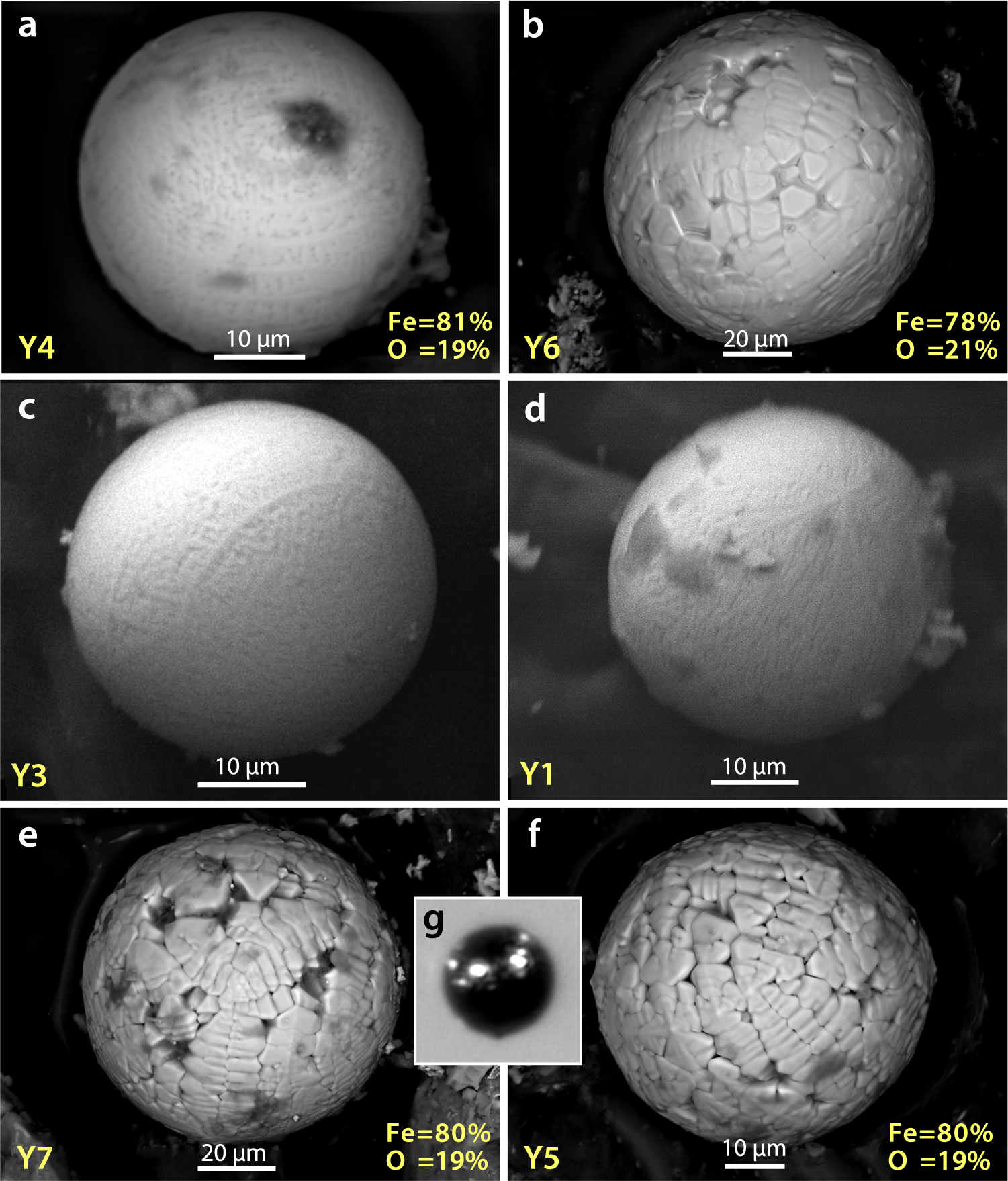
High-temperature Fe-rich impact-related spherules. Pino et al, 2019 (CCBYSA4.0)
.png)
Closing note on ethics and process
Speaking personally, I’ve published many peer-reviewed papers and have never encountered the level of ad hominem, derogatory language, appeals to authority, and reputation-focused commentary that I have observed from Boslough and other opponents that have marked the YDIH. Over multiple years, Boslough’s public campaign has misrepresented facts and crossed into personal defamation. From my perspective, this latest non-peer-reviewed critique, like others, feels personal rather than methodological. We can and should do better.
Let’s steer the discussion back to scientific forums where claims are peer-reviewed and rebuttable. Productive disagreement should build knowledge, not erode collegial trust. The practical standard is simple: data over derision. Robust criticism belongs in comment–reply where claims must be specific, evidenced, and answerable. Person-focused rhetoric, venue slurs, and sweeping “refutation” claims in non-reviewed outlets are ethically problematic because they bias readers, suppress inquiry, and swap adjudication for reputation (Powell 2025, Journal of Academic Ethics; Powell 2023, Research Ethics).
References
Boslough, M. 2025. The Problem with Inadequately Reviewed Fringe Science. Skeptical Inquirer, Online Exclusive, September 29, 2025 (https://skepticalinquirer.org/exclusive/the-problem-with-inadequately-reviewed-fringe-science/).
Powell, J. L. 2022. Premature Rejection in Science, The Case of the Younger Dryas Impact Hypothesis. Science Progress 105(1):1–43 (https://journals.sagepub.com/doi/10.1177/00368504211064272).
Powell, J. L. 2023. Peer Review and the Pillar of Salt, A Case Study. Research Ethics 19(1):78–89 (https://journals.sagepub.com/doi/full/10.1177/17470161221131491).
Powell, J. L. 2025. Data vs. Derision: The Ethics of Language in Scientific Publication. Journal of Academic Ethics 23:807–814 (https://link.springer.com/article/10.1007/s10805-024-09555-2).
Original publication of the article on Academia: https://www.academia.edu/144343094/Pseudoskepticism_Isnt_Skepticism_A_Response_to_Mark_Boslough
You forgot about the 2 impact craters in northern Greenland buried below the ice. Accoding to Copilot:
**The two known impact craters in northern Greenland are the Hiawatha Crater and the possible second crater near it, sometimes referred to as the “second Greenland crater” or “second impact structure.”**
Here’s what we know about each:
### 🌀 1. **Hiawatha Crater**
– **Location**: Beneath the Hiawatha Glacier in northwest Greenland
– **Diameter**: ~31 kilometers (19 miles)
– **Discovery**: Announced in 2018 after radar surveys revealed a circular depression under the ice
– **Age**: Estimated to be less than 2.6 million years old, possibly as recent as 12,000 years
### 🌑 2. **Second Greenland Crater (Unnamed)**
– **Location**: About 183 kilometers (114 miles) southeast of the Hiawatha Crater
– **Diameter**: ~35 kilometers (22 miles)
– **Discovery**: Identified in 2019 using satellite and radar data from NASA’s Operation IceBridge
– **Status**: Still considered a *possible* impact crater pending further confirmation
Unlike Hiawatha, the second crater hasn’t been officially named yet, and its impact origin remains under investigation. If confirmed, it would be the 22nd-largest impact crater on Earth.
You may have reservations about the style of this non-scientific article by Boslough. Nevertheless, we have chosen to discuss an opinion piece here rather than a genuine academic publication. I am curious to see whether it would also be possible to refute the substance of Boslough’s peer-reviewed papers discussing the YDIH. Complaining about the style is at the bottom of the list of arguments; addressing the essential content, the central propositions, for example, is much more interesting.
You can complain about the style in which he refutes the YDIH, but that does not make the refutation any less true. This is just another round of “I am being treated unfairly”, appealing to the emotions of readers who are susceptible to the Galileo gambit.
But he did not refute it. It is very much proven. And we can certainly complain about lies suggesting otherwise.
It is a common tactic of magazines such as Skeptical Inquirer, which usually mock on social media and use ad hominem attacks. It is not new, but unfortunately they have a lot of control in media outlets such as Scientific American and are even capable of pressuring authors and retracting articles (without evidence of fraud) simply because they “contradict” their worldview. Hence, they have been responsible for retracting articles such as Séralini’s in Food and Chemical Toxicity, articles on acupuncture, homeopathy, or experimental parapsychology.
A typical rhetorical tactic of theirs is to compare everything to “the flat Earth.”
They really have an absurd belt on Facebook, X, Instagram, YouTube, and Blue Sky, using bullying and repeating myths. Their classic response to any new evidence is to dismiss it as “quackery,” defame, report accounts, censor, insult in very offensive ways, and use ridiculous excuses such as “such articles are not scientific consensus, the journal is not high impact.”
Debates with them are based on humiliation and fabricating myths about things that most people superficially understand or take from Wikipedia or Grok.
This aged well.
Very well done.